

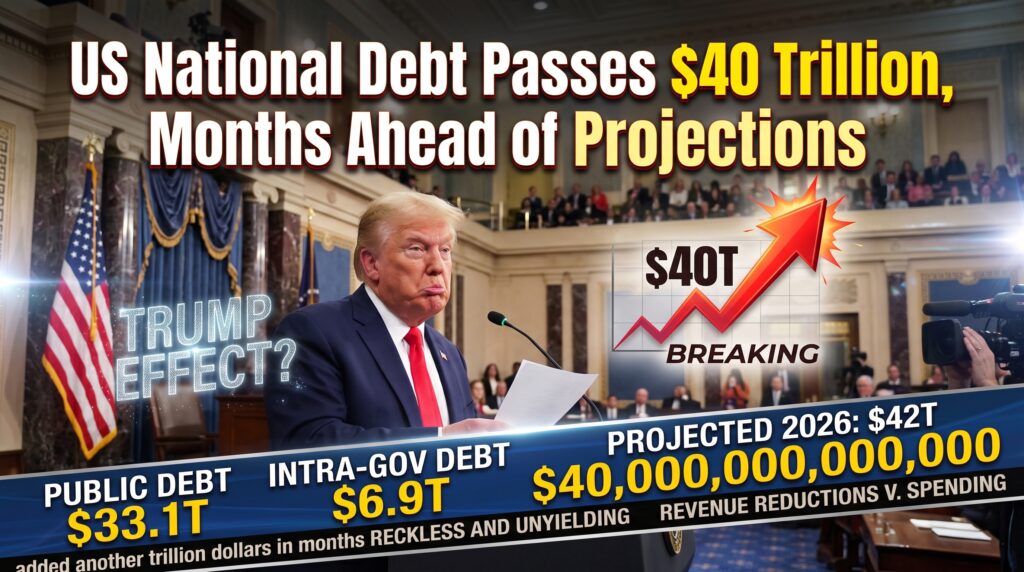
The U.S. national debt passed $40 trillion this week, according to Treasury Department figures released Wednesday. That’s roughly $117,000 for every person in the country, or about $297,000 per household. It’s also a milestone that arrived faster than almost anyone expected: the Congressional Budget Office projected back in 2023 that the country wouldn’t hit this number until fiscal year 2028.
For context on how fast this has moved: the debt crossed $30 trillion just four years ago. It crossed $20 trillion in 2017. It’s roughly doubled since January 2017, with about a third of that increase tied directly to pandemic-era spending under both the Trump and Biden administrations.
Why This Time Came Sooner Than Projected
Part of the acceleration comes down to something specific: billions of dollars in lost revenue after a set of Trump-era tariffs were invalidated in court, removing income the government had been counting on. The debt alone rose by $1 trillion in just the last five months. Add that to the structural issue that’s been building for decades, the government spending more than it collects, especially on Social Security, Medicare, and now interest payments, and the timeline moves up.

That interest line deserves its own attention. The government now pays more than $1.2 trillion a year just in interest on existing debt, more than it spends on national defense. That’s not money going toward any program or service. It’s money going toward the cost of past borrowing, and it grows automatically as the total debt grows and as interest rates stay elevated.
What This Actually Means for Prices
The connection between national debt and the price of groceries isn’t as direct or immediate as some framing suggests, but it’s not nothing either. Heavy government borrowing adds to overall demand in the economy and can put upward pressure on interest rates and inflation over time, particularly when the Federal Reserve is also trying to manage price stability. It’s one input among several, not the sole cause of higher prices at the register, and it’s worth being skeptical of any single explanation, from either political direction, that claims it’s the whole story.
What’s harder to dispute is the trajectory. Economists are already discussing $50 trillion as the next milestone, and nothing currently on the table in Washington, from either party, meaningfully changes the trend of spending outpacing revenue. That’s less a partisan talking point than a math problem neither side has shown much appetite to actually solve.
Watch: What the $40 Trillion Milestone Means
What do you think? Does a number this large actually change how people think about the economy day to day, or does it stay abstract until it shows up somewhere concrete? Let us know your thoughts in the comments on BeezLoop.com!
Related from BeezLoop: Bond Market Yields Hit Highest Level Since 2007, Signaling Higher Rates Ahead, A New Bill Would Tax Social Security Above $184,500 in Wages and Over a Third of Trump Voters Say They’re Facing Their Worst Cost-of-Living Crunch Yet.