
Twenty-one states, the District of Columbia and several big cities sued the Trump administration Friday to block its rollback of fuel economy rules for new cars and trucks. The new standard requires automakers to average 34.9 miles per gallon by 2031. The Biden-era target was 50.4 mpg.
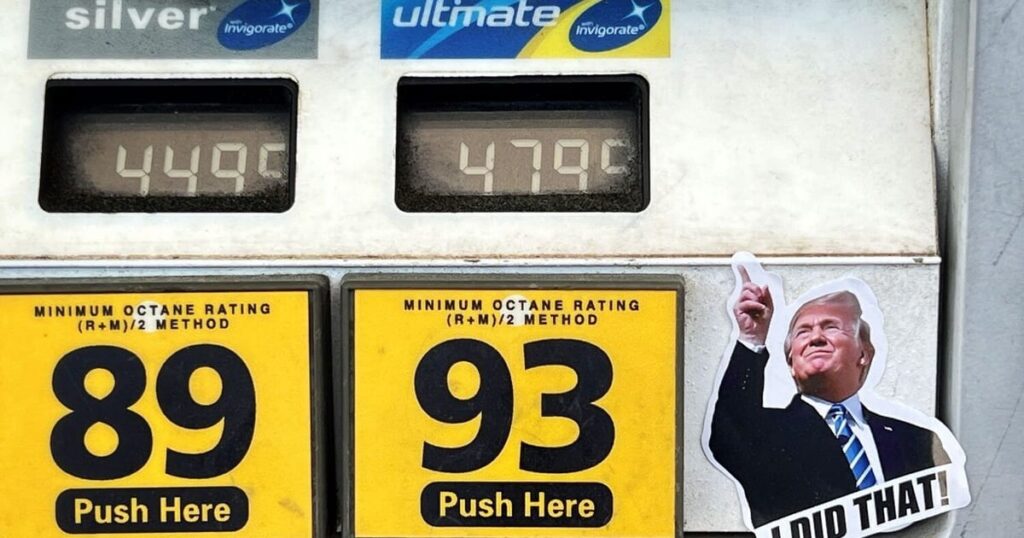
The administration says looser rules will make new cars cheaper. Its own numbers say they’ll cost drivers more at the pump. With gas over $4 a gallon, that trade is now the center of the fight.
What did the Trump administration change about fuel economy rules?
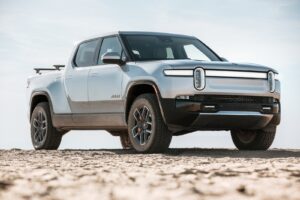
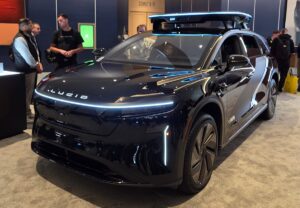
On Monday, the Transportation Department finalized new corporate average fuel economy (CAFE) standards for model years 2022 through 2031. The headline is the 2031 target dropping from 50.4 mpg to 34.9 mpg. The rule also ends the credit-trading program between automakers in 2028, which has been a big source of money for EV makers like Tesla and Rivian.

Here’s the department’s own math, as reported by CNBC:
- New car prices: automakers save an average of $1,289 per vehicle in compliance costs.
- Fuel costs: drivers pay more than $1,600 more for gas over the life of each vehicle.
- Gas use: up 4.6%, about 121 billion more gallons, through 2050.
Put those first two lines side by side and the average buyer comes out about $300 behind, before counting today’s higher gas prices.
Who is suing, and what do they argue?
California Attorney General Rob Bonta is leading the coalition. It includes Arizona, Colorado, Connecticut, Delaware, Hawaii, Illinois, Maine, Maryland, Massachusetts, Michigan, Minnesota, New Jersey, New Mexico, New York, North Carolina, Oregon, Rhode Island, Vermont, Washington, Wisconsin and D.C., plus New York City, Chicago, Denver and San Francisco. They filed in the U.S. Court of Appeals for the First Circuit, where challenges to these rules go directly.
Their main argument is about how the government did the math. The 1975 law behind CAFE requires standards at the “maximum feasible” level. The states say NHTSA reached a low number by pretending the millions of EVs already on the road don’t exist, “leading to a flawed, dramatically distorted analysis.” They say the new standards require less efficiency than the U.S. fleet actually achieved in 2021, and that NHTSA “tries to paper over nearly $220 billion in lost fuel savings.”
The president started a war that has created volatility in oil markets, disrupted global energy supplies, and left families and businesses paying the price at the pump. Yet, the Trump administration is attempting to gut fuel economy standards and force Americans to spend billions more on gas.
California Attorney General Rob Bonta
The Environmental Defense Fund and Public Citizen filed a separate challenge the same day.
What does the administration say?
Joe Biden and Pete Buttigieg illegally twisted mileage standards to create an electric vehicle mandate, jacking up car prices for American families and forcing manufacturers to produce vehicles no one wanted.
Transportation Secretary Sean Duffy, to Courthouse News
Duffy said the new standards let automakers “produce the cars that fit families’ needs at a lower price.” Stellantis welcomed what it called “more achievable targets that are better aligned with market realities.” The administration has also scrapped the $7,500 federal tax credit for new EVs.
The BeezLoop Take
The administration has a real point about sticker prices. New cars are brutally expensive, and rules that push automakers toward costly technology show up in what you pay at the dealer. A $1,289 savings per car isn’t nothing.
But the government’s own analysis says you give that back and then some at the pump, and that estimate was made before the Iran war pushed gas past $4. Cutting mileage standards during an oil shock is like canceling your insurance in a hurricane because the premium went up. The cheaper car costs more to drive every single week.
The states’ legal argument is strong, too. Telling regulators to ignore the EVs already on the road isn’t a policy choice so much as a way to make the arithmetic come out lower. Courts have been skeptical of agencies that set the answer first and build the model to match.
The question for the First Circuit, and for anyone buying a car this year: what does a vehicle actually cost over the years you own it, not just on the day you sign?
Related: Gas is over $4.10 and the price is being set in the Strait of Hormuz, and why the car you are shopping for lives on a website the automaker does not control.
Sources: Minnesota Attorney General (coalition release) · CNBC · Courthouse News Service · Al Jazeera