
A federal judge on Friday ordered the Trump administration to stop building border barriers in Texas’ Big Bend region. U.S. District Judge Kathleen Cardone in El Paso issued a preliminary injunction that halts all “ground-disturbing activities” in the Big Bend Sector while a lawsuit plays out. That puts more than $6 billion in border wall contracts on hold.
She also suspended the federal waivers that had let the government skip environmental and historic-preservation laws to build faster. Marfa Public Radio reported it’s the first time a court has done that in the waiver lawsuits over this region.
What exactly did the judge block?
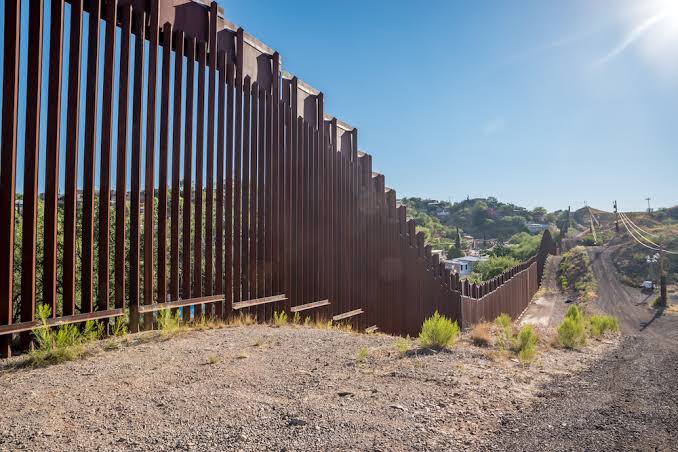
Cardone ordered that the government “shall not build border barrier or related infrastructure, or engage in any construction of ground-disturbing activities, in the Big Bend Sector” unless it complies with environmental law. According to Marfa Public Radio, the order reaches areas within one mile of the Rio Grande, Big Bend National Park and Big Bend Ranch State Park.

The plan wasn’t one wall. It was five contracted projects mixing steel bollard fencing, vehicle barriers, roads, lights and surveillance sensors across a stretch of border known for canyons, river guides and almost no people. The Texas Tribune counts the contracts at more than $7.5 billion.
To get the injunction, the plaintiffs had to show they’d probably win. Cardone found they “are likely to succeed on the merits of at least one of the claims” and would suffer “serious, irreparable harm” without the order.
Who sued, and why?
The Center for Biological Diversity filed the case in April on behalf of two clients: Friends of the Ruidosa Church, a group restoring a historic church in Presidio County, and Danny William Miller, a Rio Grande river guide and landowner in Redford who stands to lose property. Miller testified the wall would turn his business into “a tour of the military industrial complex, rather than a tour of the wilderness.”
The core argument goes after the government’s justification. Customs and Border Protection used waivers by calling Big Bend an area of “high illegal entry.” Expert testimony in the case said the sector covers 28.5% of the southwest border’s miles but accounts for about 1.3% of apprehensions, an “extraordinarily distant last place,” Marfa Public Radio reported.
The harm reaches far beyond the landscape itself.
Zeynep Graves, attorney, Center for Biological Diversity
Why has Big Bend become such a fight?
Because opposition crossed party lines early. When the plans became public in January, ranchers, river outfitters, local officials and park advocates pushed back, and six lawsuits have now been filed. In August, video of bulldozers cutting roads inside the national park set off an outcry. CBP Commissioner Rodney Scott ordered a pause on August 17 so he could “evaluate the terrain and listen to local leadership”. Texas Republican Sen. John Cornyn also urged officials to hear from local leaders before going further.
CBP has said it remains “confident in our legal authorities to secure the border.” Not every challenge has gone the plaintiffs’ way. A day earlier, a different judge refused a temporary restraining order in a separate Big Bend case.
The BeezLoop Take
This ruling doesn’t say the government can’t secure the border in Big Bend. It says the government has to follow the same environmental and preservation laws as everybody else unless it can actually show the emergency it claimed. On the government’s own numbers, it couldn’t. A sector with more than a quarter of the border’s miles and around 1% of its apprehensions is hard to call an area of high illegal entry with a straight face.
The waiver power is meant for places where speed really matters. Using it to rush billions of dollars of construction through one of the quietest stretches of the border, inside a national park, is the kind of overreach that tends to lose in court. It also cost the administration something that’s harder to get back: the support of conservative ranchers and local officials who usually back border enforcement.
Here’s the fair counterpoint. Low apprehension numbers can partly reflect terrain doing the work, and border officials argue a gap anywhere invites traffic. That’s a reasonable argument for cameras and patrols. It’s a weak argument for bulldozing roads through a national park without an environmental review.
The question now is whether the administration appeals to the Fifth Circuit, and whether contractors keep billing while the work sits still.
Related: Border security money is paying for Trump’s ads, and the accountability story at DHS is still the $220 million.
Sources: Texas Tribune · Marfa Public Radio · Big Bend Sentinel · U.S. Customs and Border Protection, Aug. 17 statement