

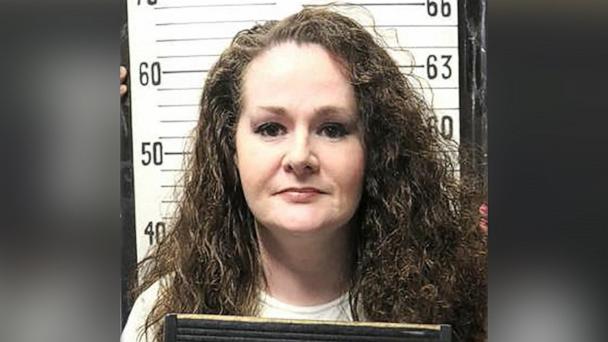
Tennessee put Christa Pike on a gurney Wednesday night and gave her two doses of pentobarbital. She did not die. Witnesses heard her snoring. She was taken out by ambulance, and the governor has now halted executions in the state for the rest of the year.
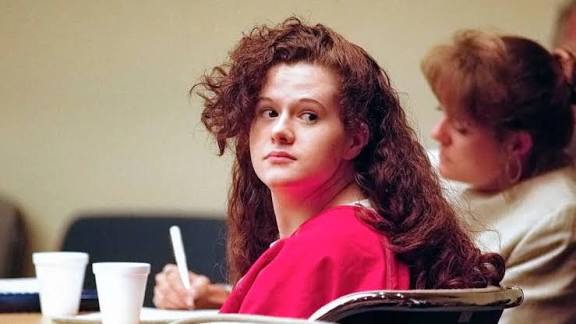
What happened in the execution chamber?
- 7:27 p.m. The curtains were raised. Pike, 50, was strapped to the gurney.
- 8:26 p.m. A second dose of pentobarbital was administered.
- 8:53 p.m. The microphone was cut off and media witnesses were escorted out.
Pike remained alive after both doses. Witnesses reported she was snoring audibly. She was taken from the prison by ambulance to a hospital.
Her condition after that was not disclosed to her own attorneys.

Before the drugs were administered, she spoke.
I’m going to leave this world the way I spent most of my life and that is in love.
Christa Pike
During the procedure, according to witness accounts, she asked officials whether her arm was supposed to feel that way.
Has anyone survived a lethal injection before?
No. That is what makes this different from the long list of executions that have gone wrong.
Robin M. Maher of the Death Penalty Information Center called it singular and unparalleled, noting that no one had previously survived after receiving lethal injection drugs.
Botched executions are not rare. Prolonged ones, failed IV placements and visible suffering have been documented for decades. A person going through the full administration of the drugs and remaining alive is a different category of event.
What has the state said and done?
Gov. Bill Lee ordered a comprehensive, third-party review to determine exactly what occurred, and halted the remaining execution scheduled in Tennessee this year.
The Tennessee Department of Correction says it followed every step of the state’s lawful, established execution protocol approved by the Attorney General’s Office.
Both of those can be true at once, and that is the problem. If the protocol was followed exactly and the person did not die, the failure is in the protocol.
This is the second one this year
In May 2026, Tennessee called off the execution of Tony Carruthers after staff spent more than an hour failing to insert an IV line.
Two failures in five months, in the same chamber, under the same protocol.
Her lawyers warned about this specific thing
This is the part that should be unavoidable in any account of Wednesday night.
Pike had asked to be executed by firing squad instead of lethal injection. Her legal team argued she had small veins and a blood condition that could make placing an IV line difficult, creating a risk of a prolonged and painful death.
- The state disputed it.
- The Tennessee Supreme Court rejected the related Eighth Amendment claim, agreeing with a court-appointed special master that the medical argument had not been established.
- Hours before the execution, the U.S. Supreme Court vacated a Sixth Circuit stay and allowed the state to proceed. Justices Sotomayor, Kagan and Jackson dissented.
Then the state administered two doses of pentobarbital and she survived.
The BeezLoop Take
What Christa Pike did to Colleen Slemmer in 1995 was monstrous, and nothing that happened Wednesday night changes it. This is not an argument that she deserves sympathy over her victim. It is an argument about whether a state can do the thing it says it can do.
Tennessee said it could. Its own Supreme Court was told, in writing, that this woman had veins and a blood condition that made lethal injection risky, and it concluded the claim had not been established. The U.S. Supreme Court cleared the way on a procedural finding about timing without touching the merits. Then the protocol ran exactly as written and produced a living woman snoring on a gurney at 8:26 at night. Every institution that was asked to check this got it wrong, in sequence, and the only reason anyone knows is that reporters were in the room until the microphone was cut.
The Department of Correction statement is the most alarming document to come out of this. It is not a defense, it is a confession: the protocol was followed exactly and the execution failed anyway. There is no version of that sentence that reassures anybody. If following the rules produces this, the rules are the problem, and Tennessee has now run the same rules into the ground twice in five months after an hour of failed IV attempts on Tony Carruthers in May.
The part with no precedent is what happens to Pike now, and nobody has an answer. She was sentenced to be executed. The state executed her, in the sense that it did everything the sentence authorized, and she is alive in a hospital. Attempting it again raises an Eighth Amendment question that American courts have barely touched since 1947, when Louisiana sent a teenager back to a chair that had already failed once. That the comparison is to 1947 tells you how far outside the map this is.
And her attorneys were not told her condition. Whatever anyone believes about capital punishment, a state that has just failed to kill someone does not get to decide her lawyers have no standing to know whether she is alive.
What happens to Christa Pike now?
Nobody has said. There is no new execution date. The governor’s review has no announced timeline, and the state has not disclosed her medical condition.
The question underneath it is one American courts have almost no modern law on: whether a state may attempt an execution a second time after the first one failed while being carried out.
The question
If Tennessee followed its protocol exactly and the woman lived, what exactly is the review going to review? And can a state that has already tried once be allowed to try again?
Related: a San Diego jury convicted a man of murder without ever finding a body.
Sources: NPR · ABC News / AP · Death Penalty Information Center · Tennessee Department of Correction · WATE on the execution protocol