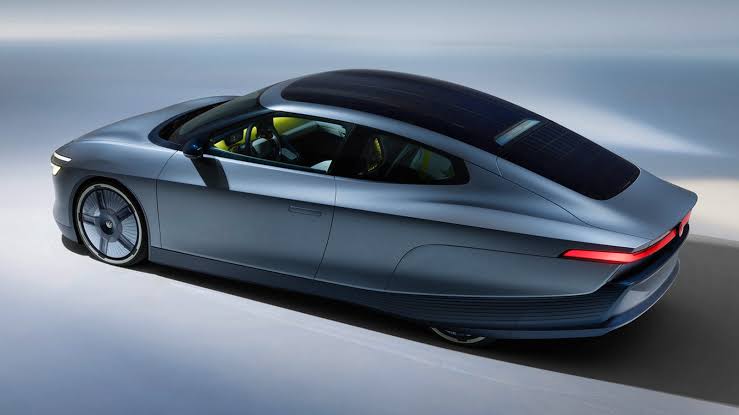
Volkswagen says its new Mission Efficiency prototype drove 794 miles on a single charge in company testing, with 102 miles of estimated range still left in the battery when the drive ended, putting its real-world range at more than 870 miles. The car did it using a 52-kWh battery smaller than what many mainstream EVs carry today — the achievement comes almost entirely from aerodynamics, not battery size.

How did a small battery go this far?
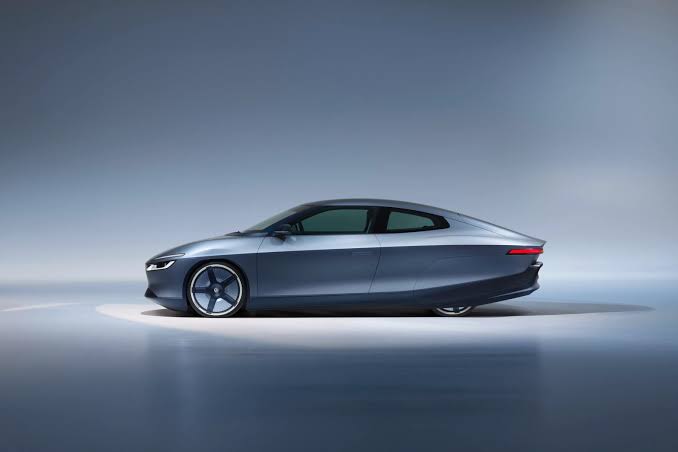
The Mission Efficiency’s teardrop shape gives it a drag coefficient of 0.158, lower than any other road-legal vehicle on the market, which Volkswagen says is the real driver behind the range figure. The car hit 9 miles per kWh in testing, with energy consumption of 7.51 kWh per 100 kilometers including charging losses. Volkswagen calls the car a spiritual successor to its XL1, an ultra-efficient model from the mid-2010s that used a tiny 1-liter engine instead of a battery; the Mission Efficiency keeps the XL1’s obsession with slipping through air but swaps the engine for electric motors borrowed from the ID Polo supermini, producing 135 horsepower and 195 pound-feet of torque.
What would you actually give up to drive one?
Quite a bit. This is a two-door, 2+2 coupe with roughly 17 cubic feet of cargo space, and Volkswagen says the rear seats are really only sized for passengers up to about 5-foot-3 — a practical trade-off for the extreme aerodynamic shape. It also carries a 370-watt solar panel running from the roofline down to the tailgate that powers onboard electronics without drawing from the main battery, and it’s built on the MEB+ platform Volkswagen already uses for production EVs, which matters because it signals the technology could realistically make it into showrooms rather than staying a one-off concept.
The timing matters too. EV sales growth has stalled well below earlier industry forecasts, driven by high vehicle prices, high interest rates, and the expiration of the federal $7,500 tax credit, and automakers have collectively absorbed tens of billions of dollars in writedowns walking back earlier EV plans. A concept that gets meaningfully more range out of a smaller, cheaper battery is a direct answer to exactly the cost and range-anxiety problems that have been slowing EV adoption down.