
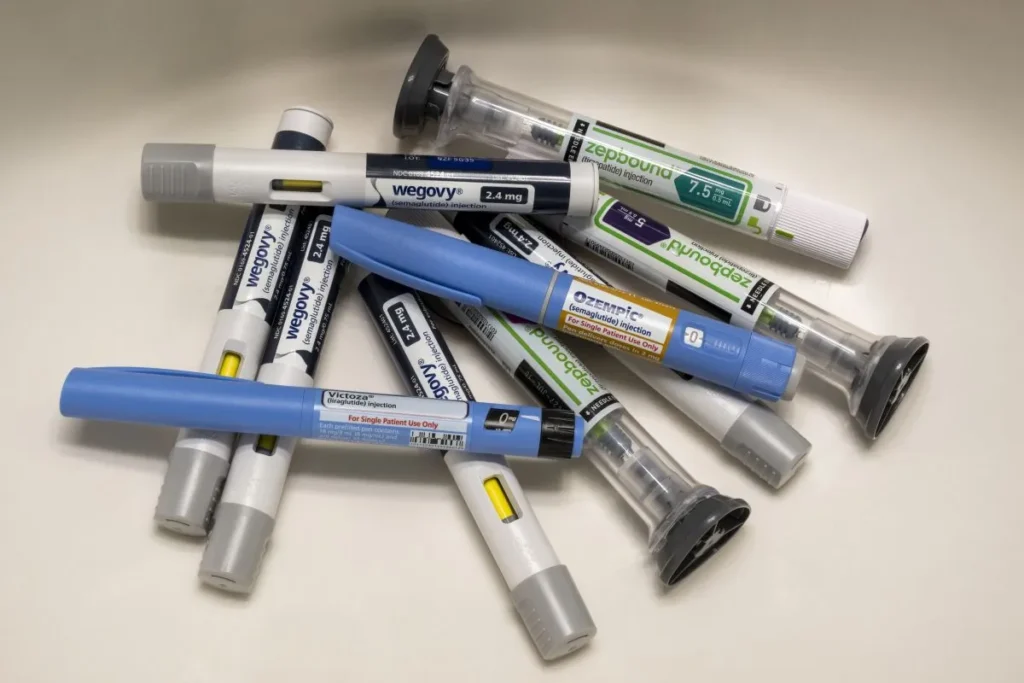
Eight days ago we laid out which employers were cutting weight-loss drug coverage and who would lose access. The results are now measurable, and they’re bigger than expected. Use of GLP-1s for weight loss among commercially insured patients has fallen by more than half.

Between 2025 and the first quarter of 2026, about 112,000 fewer commercially insured people were using a GLP-1 for weight loss. That’s a 52% decline, and it cut annualized spending by $662 million.
That’s the whole story in one number. When coverage went, most people stopped. The cash price was never a real alternative for the majority of them.

Massachusetts is the clearest test case
The state offers something close to a controlled experiment, because so many of its major plans dropped the benefit at once.
The Group Insurance Commission, MassHealth, Blue Cross Blue Shield of Massachusetts, Point32Health and Mass General Brigham Health Plan have all discontinued coverage of GLP-1s specifically for weight loss. Not for diabetes. For weight loss.
Usage fell accordingly. The people who kept taking them were, overwhelmingly, the people who could absorb about $1,000 a month.
What has changed since our last piece
Three things are new, and they matter if you’re heading into open enrollment.
The threshold trick. Some plans didn’t drop coverage outright. They raised the bar, covering the drugs only above a BMI of 40. Obesity is clinically defined at 30 or higher, so that quietly excludes a large share of people who qualify medically while letting the plan say it still covers the drug.
The premium math is now explicit. These drugs are the single largest contributor to the record increase in employer-sponsored insurance costs expected next year. Premiums are rising 6% to 7%, more than double inflation. That’s the number employers are pointing at when they cut.
The scale of the drop-off. Before, we could tell you who was at risk. Now we know what they did about it, and mostly what they did was stop.
The problem with stopping
The clinical evidence is consistent that most people regain weight after discontinuing a GLP-1. The drug suppresses appetite while you take it. It doesn’t while you don’t.
So a coverage cut isn’t a pause, it’s usually a reversal. The plan paid for the expensive ramp-up period and then stopped paying right before the part that would have made it worth the money.
The BeezLoop Take
Employers aren’t villains here and the arithmetic is genuinely hard. At roughly $1,000 a month per person with no natural endpoint, in a year when premiums are already climbing at double inflation, no benefits manager was going to absorb this quietly. Anyone framing it as pure corporate cruelty is skipping the math.
Our position: the sequencing is what makes this indefensible. Paying for a year of treatment and then cutting it buys the costly part and discards the benefit. If these drugs are worth covering, they’re worth covering continuously. If they aren’t, the honest call was never to start. And a BMI-40 threshold isn’t a clinical judgment, it’s a budget line wearing a lab coat.
What we still don’t know: whether the manufacturers’ direct-pay pricing and coming generic competition reset this within a year or two. If they do, these coverage decisions will look like panic. If they don’t, we’ve just watched the creation of a two-tier system where the most effective obesity treatment in decades is available to people who can pay cash, and that sorting happened without anyone voting on it.
What to do before January
Open enrollment materials arrive in the next several weeks. Read the formulary rather than the plan summary, and look for two specific things: whether weight loss is listed as a covered indication at all, and what BMI threshold applies if it is.
If it’s gone, ask about the diabetes indication if you have that diagnosis, and check manufacturer direct-pay programs before assuming full retail is the only option. This is also landing on top of the higher costs people are already carrying since ACA subsidies expired, and it cuts against the broader drop in drug prices we covered this month. Aggregate prices falling doesn’t help when your specific drug moves off formulary.
Sources: GBH News · The Washington Post · Mercer