

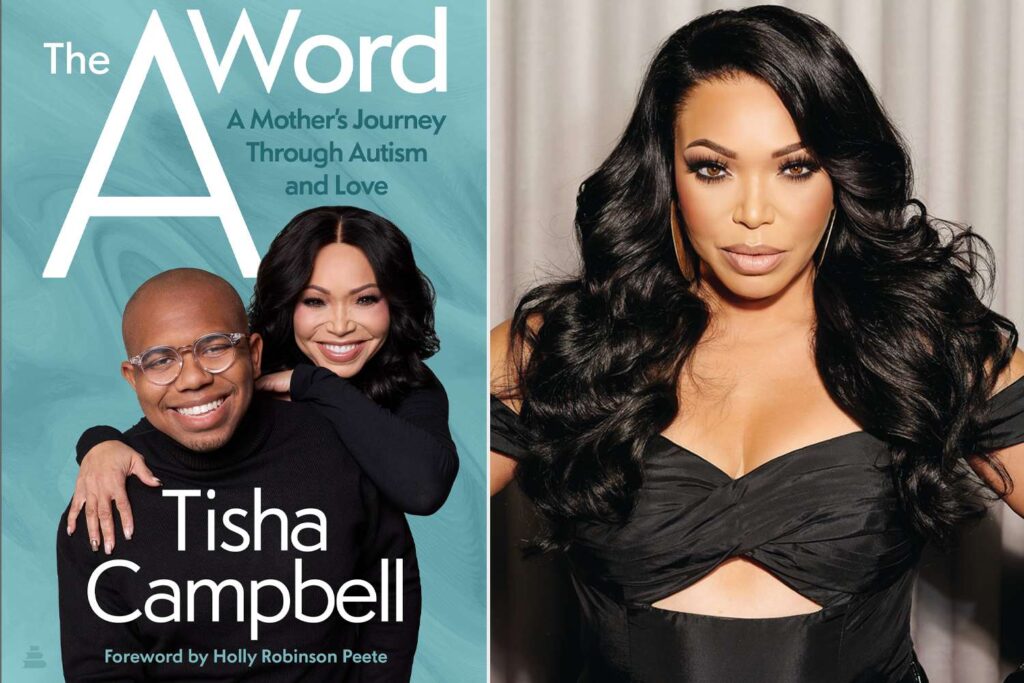
Tisha Campbell, 57, says she has been diagnosed with both autism and ADHD, a combination sometimes called AuDHD. She spent years writing a book about raising her autistic son. The diagnosis came after she finished it.
What she described
Campbell said her therapist encouraged her to get tested after noticing patterns in her behavior and nervous system responses. She saw two separate specialists and completed twelve assessments with each, twenty-four in total, before receiving a Level 1 autism designation alongside ADHD.
Her memoir, The A Word: A Mother’s Journey Through Autism and Love, was released September 15 and documents raising her son Xen, diagnosed at 18 months. Her own diagnosis isn’t in the book. She has described the result as relief rather than upheaval, saying she understands herself better and no longer needs to hide parts of herself.

Why diagnoses come so late
Campbell fits a pattern common enough to have a shape. An adult, usually a woman, gets diagnosed after a child in the family does. The child’s assessment describes traits the parent recognizes in themselves, and a lifetime of coping gets reframed.
The reason it works that way is unflattering to the diagnostic history. Autism criteria were built largely on observations of boys, and presentations that didn’t match went unrecognized for decades. Someone who made eye contact, did well at school and had friends was screened out, whatever it cost them to manage it. That cost has a name in the community, masking, and it’s effortful in a way that doesn’t show from outside.
Level 1 is the designation for someone who lives independently and may need support with social communication, sensory processing or adapting to change. It’s also the presentation most likely to be missed entirely, because independence gets read as absence of difficulty.
The interesting part of this story isn’t a celebrity disclosure. It’s that a diagnostic system missed someone for 57 years while she was successful, working publicly, and raising a child whose own diagnosis came at 18 months. The same family, two very different detection timelines, decades apart.
We would read Campbell’s twenty-four assessments as its own finding. That’s a substantial burden of time and money, and most adults who suspect this won’t clear it. What she received at the end of that process was mostly self-understanding, which is real, and which the system currently makes expensive.
The open question
If a diagnostic system can miss someone for 57 years, what does it mean when we describe conditions as becoming more common, and how would we tell a genuine increase from a population finally being seen?
What happens next
Watch whether adult assessment becomes more accessible, since cost and wait times are the practical barrier rather than awareness. For anyone recognizing themselves in this: a diagnosis in adulthood changes very little practically and sometimes a great deal personally, and it’s worth being clear with yourself about which you’re looking for.
Campbell has described the result as clarity rather than upheaval, saying she now knows herself “so much better” and no longer has to hide parts of herself from the people around her.
Related from BeezLoop: The CDC Says One Person Died of Measles This Year, Porsha Williams Had 21 Fibroids Before an Emergency Hysterectomy and RFK Jr.