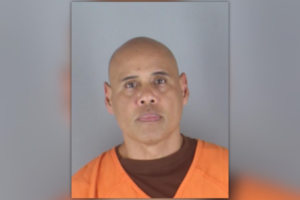


A Multnomah County grand jury indicted Jesse Lee Calhoun on Wednesday in the death of a sixth woman. He was already facing five murder counts. The part of this that deserves more attention than it gets: Oregon let him out of prison early, and the state has never fully explained how he cleared the review.

The new charge is first-degree manslaughter in the death of Elizabeth “Libby” Gibson, 32. Prosecutors say she died on or about November 18, 2022. Her body has never been found.
That date matters. If the timeline holds, Gibson would be the first of the deaths, not the last.

The women
Five other women were found dead in and around the Portland metro area between February and May of 2023: Kristin Smith, Joanna Speaks, Charity Perry, Bridget Webster and Ashley Real. All were in their twenties and thirties. The cluster set off fears that a serial killer was working the area.
Calhoun, 41, has been charged with five counts of second-degree murder and four counts of abuse of a corpse. He has pleaded not guilty to all of it, and he has not been convicted of any of these deaths.
District Attorney Nathan Vasquez said at a briefing that people continuing to come forward is what moved the case. “We will not stop,” he said. “We will do everything in our power to hold him accountable.”
How he was out
This is the part worth sitting with.
Calhoun was serving a four-year sentence from a 2019 conviction on charges that included assaulting a police officer, attempting to strangle a police dog and burglary. He was released about a year early, in 2021, after his sentence was commuted.
The reason for the commutation was that he had fought wildfires in 2020 through an Oregon prison firefighting program. Governor Tina Kotek revoked the commutation in 2023, once investigators began looking at him in these deaths.
He was arrested in June 2023 on parole violations. Release decisions made years earlier keep resurfacing this way. We looked at a version of it when the Menendez brothers’ parole hearing was moved up to March 2027.
The BeezLoop Take
Prison firefighting programs are not the problem, and we would resist the easy version of this story. Incarcerated crews do dangerous, badly paid work that states depend on, and rewarding it with time off a sentence is defensible. Oregon burns, and somebody has to go.
Our position: the issue is the review, not the reward. Trading a year of prison for a fire season is a policy choice. Trading it without a public, documented standard for who qualifies is an administrative one, and it is the part nobody has accounted for. A man convicted of assaulting an officer got a year back, and the record of how that decision was reached has never been laid out in the detail the families are owed.
What we are not saying: that the commutation caused these deaths. Calhoun has pleaded not guilty and the state still has to prove its case, on six deaths now, including one with no body. A commutation is not a conviction and hindsight is not evidence of negligence. But Oregon revoked it in 2023, which tells you the state itself concluded something in that file deserved another look.
What happens next
A manslaughter count is lighter than murder, and charging it here suggests prosecutors believe they can prove Calhoun caused Gibson’s death but not that it was intentional. With no body, that is a genuinely hard case. Watch whether it gets tried alongside the other counts or on its own, because that decision will shape everything. We have written before about how the system punishes what it can prove rather than what happened, and this is that problem in its starkest form.