
Iran offered to reopen the Strait of Hormuz within a week. Trump said no on Saturday. Diesel is sitting at a record $6.529 a gallon, and Hormuz is the reason.
What Iran put on the table
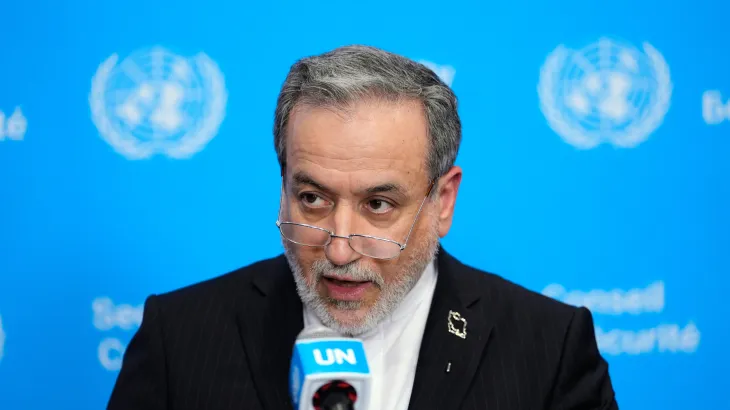
Foreign Minister Abbas Araghchi laid out a seven-day plan during the UN General Assembly. If the conditions were met, the strait would open within a week and talks would begin on a broader nuclear deal.
The conditions, which reportedly mirror a memorandum of understanding from June:

- Lift the US naval blockade.
- Waive sanctions on Iranian oil.
- Cease all Middle East hostilities, including in Lebanon.
- Release frozen Iranian assets.
What Trump said
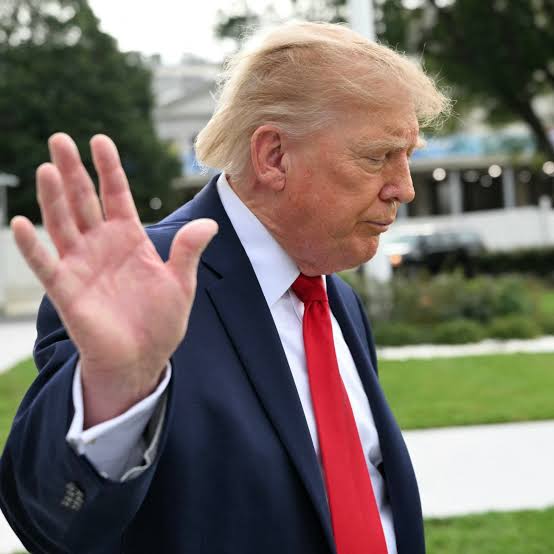
He rejected it Saturday, speaking to reporters as he left the White House.
I’m rejecting their deal. That deal would not be acceptable.
President Donald Trump, September 26
He also made a claim about the waterway itself.
We have total control of the Hormuz Strait.
President Donald Trump
As of Sunday morning Iran says it is standing by its conditions, with Araghchi saying Tehran is waiting on communication from mediators.
The inspectors offer
One piece of this got less attention than it deserves.
In a Friday interview with CBS News, Iranian President Masoud Pezeshkian was asked directly whether Iran would allow UN nuclear inspectors into the country as part of a ceasefire deal. He said that is absolutely correct, twice.
Inspector access has been the central demand of Western policy toward Iran’s nuclear program for two decades. An offer to restore it is not nothing, whatever else is attached to it.
Why Hormuz reaches your wallet
The Strait of Hormuz is a chokepoint between Iran and Oman roughly 21 miles wide at its narrowest. Somewhere around a fifth of the world’s oil passes through it.
Per the Energy Information Administration, as of the week of September 21:
- On-highway diesel: $6.529 a gallon, a record, up $2.78 in a year.
- Regular gasoline: $4.478.
Diesel was $3.76 when the war began in late February. It moves freight, so it lands in the price of groceries and everything else on a shelf. It is the number Marjorie Taylor Greene has been filming at gas pumps, and part of why household budgets are stretched.
If you are traveling
The State Department has a worldwide caution out and specific guidance for the region.
- Iran: Level 4, Do Not Travel. The department says US citizens in Iran should leave now.
- Americans in the Middle East: exercise heightened vigilance, and expect possible flight cancellations and airspace closures.
- Americans elsewhere: seriously reconsider travel to or through the region.
The department has said the conflict has the potential to escalate rapidly, and Houthi forces have struck targets in Saudi Arabia including civilian airports.
The BeezLoop Take
Take the rejection at face value first. Iran asked for the blockade lifted, oil sanctions waived, hostilities ended across the region and frozen assets returned, and offered a week to reopen the strait plus the start of talks. That is a large ask presented as a schedule, and a president who accepted it without extracting more would be negotiating badly.
But total control of the Hormuz Strait is a claim that does not survive the price of diesel. If the United States controlled that waterway, the fuel that moves American freight would not be at an all-time high seven months in, and the administration would not be fielding a proposal about reopening something it says is already under its control. Either the strait is functioning or it is not, and $6.53 answers that.
The inspector offer is the part that deserves scrutiny rather than a shrug. Pezeshkian said on American television that Iran would let UN inspectors back in as part of a ceasefire. That is the thing three administrations of both parties said they wanted. It may be insincere, it may be unverifiable, and it is still the first time in this war anyone has put it on the table publicly. Rejecting the package without addressing that specific piece leaves an obvious question unanswered.
The timing is what makes us uneasy. Trump told the UN four days ago that he expects a deal right after the November 3 midterms. Now a concrete proposal has arrived before the election and been turned down. We said at the time that a deal scheduled around an election is a deal whose timing was set by something other than Iran, and this sequence does not make that reading less plausible. If terms exist that are acceptable in November, Americans are paying for the wait at the pump.
None of which means Iran is the reasonable party. This is a government that closed a waterway the world economy runs through in order to create leverage, and it is now trying to sell the reopening of it as a concession. That is extortion with a timetable. Both things can be true: the offer is coercive, and rejecting it without a counterproposal leaves the coercion in place.
The question
If the US has total control of the strait, why is diesel at a record? And when a president says a deal is coming after the election, what exactly changes on November 4 that is not available today?
More: the Senate voted 49-50 against forcing an end to the war, and Trump’s UN speech threatening to annihilate Iran.
Sources: CBS News live updates · CNBC on the travel warning · State Department worldwide caution · EIA Gasoline and Diesel Fuel Update