

Key Points
- The NTSB recovered the cockpit voice recorder from the Nov. 1 Learjet 60 crash near Greenacres, Florida.
- All nine people aboard the Bahamas-bound aircraft were killed.
- Investigators are evaluating the recorder at a laboratory in Washington, D.C.
- The agency has not said whether the recorder was functioning or whether its data can be recovered.
- Investigators are examining why the plane appeared to avoid one storm cell before heading toward a smaller, fast-developing storm.
- The NTSB says a full investigation can take more than a year; the recorder is one piece of evidence, not a finding about the cause.
What did investigators recover?
The National Transportation Safety Board has recovered the cockpit voice recorder from the Learjet 60 that crashed near Greenacres, Florida, on Nov. 1, killing all nine people aboard.
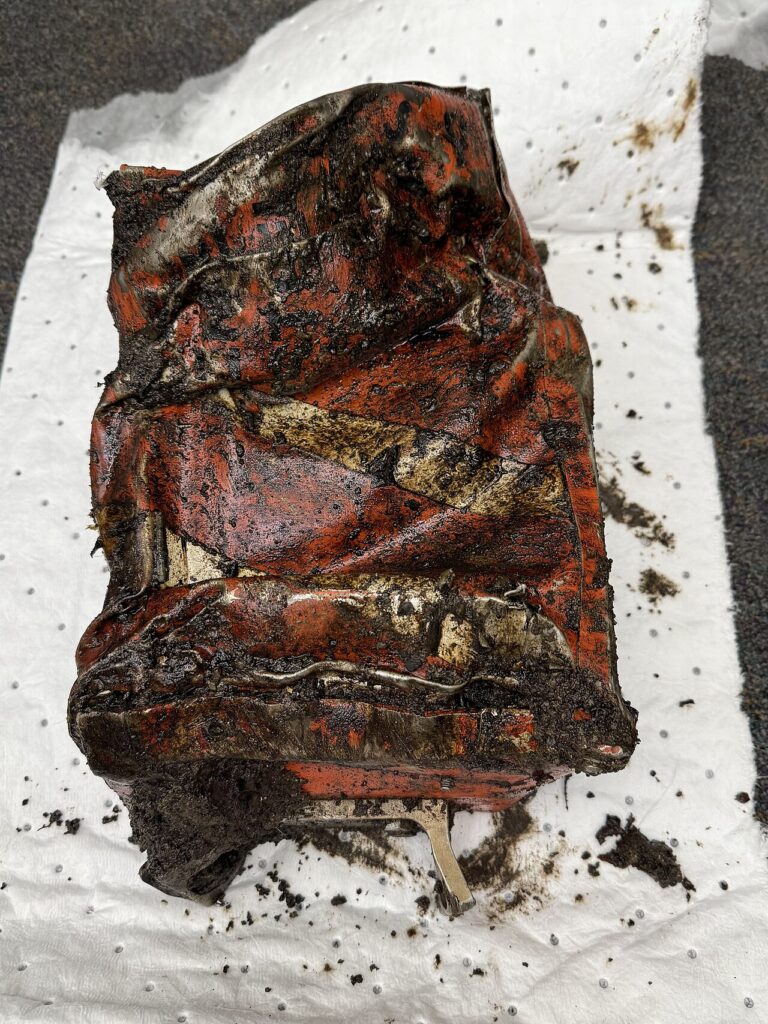
A cockpit voice recorder recovered after a different Learjet crash. The device recovered in Florida is being evaluated separately. Photo: NTSB, public domain, via Wikimedia Commons.
The device was found at the impact site and is being evaluated at the NTSB’s Vehicle Recorders Laboratory in Washington. Investigators have not said whether the recorder was working or whether its data survived the crash. Until the laboratory finishes its evaluation, the recovery is a lead in the investigation, not an answer about why the plane went down.

The aircraft was headed from Austin, Texas, to the Bahamas. It crashed amid severe weather after the crew reported turbulence and ice. The cockpit recording could help investigators understand what the pilots said and what they were responding to as conditions changed. It could also add context to air traffic control recordings and other evidence already gathered at the scene.
NTSB Newsroom on X
What might the recording tell investigators?
Investigators are looking at the aircraft’s apparent path around a large storm cell and toward a smaller storm that developed quickly. The NTSB has also said pieces of the elevator, part of the tail that controls the aircraft’s pitch, were found more than a mile from the main impact crater. That indicates the aircraft began breaking apart before impact, but it does not by itself explain why.
If the voice recorder is functional and its data can be recovered, it could help establish the crew’s observations, decisions and communications. It will not necessarily answer every question. The NTSB will also examine maintenance records, interview people connected to the operation and review information from air traffic control and the scene.
An aviation safety expert told the Associated Press that the recorder appeared to be in decent condition in photos released by the agency. But appearance is not a technical test. In another recent crash, a recorder recovered by investigators was later found likely to have been out of operation for years. The NTSB has not said whether that is a concern in this case.
How long will the investigation take?
The agency generally takes 12 to 18 months to complete a crash investigation, and complex cases can take longer. A preliminary report may arrive much sooner, but it is not the same as the final report, which determines the probable cause after investigators assess the full record.
For families and the South Florida community, the recovery is an important development because it could preserve evidence from the final minutes of the flight. The next milestone is whether the laboratory can retrieve usable data. Until then, the responsible account is narrow: the recorder has been found, and the cause of the crash remains under investigation.
BeezLoop has also covered other Florida aviation investigations, including a fatal small-plane crash near Tampa and a cargo-plane crash at Miami International Airport.
The BeezLoop Take
Finding the recorder gives investigators another chance to understand what happened, but it does not justify guessing about the cause. The NTSB has not confirmed that the device worked, and weather, aircraft condition and the crew’s decisions all remain part of a longer investigation.
The open question: will the recorder provide new information that changes what investigators understand about the aircraft’s final minutes, or will the answer depend on the other evidence gathered around the crash?
Sources: NTSB investigation page; Associated Press, recorder recovery; Associated Press, initial crash report