

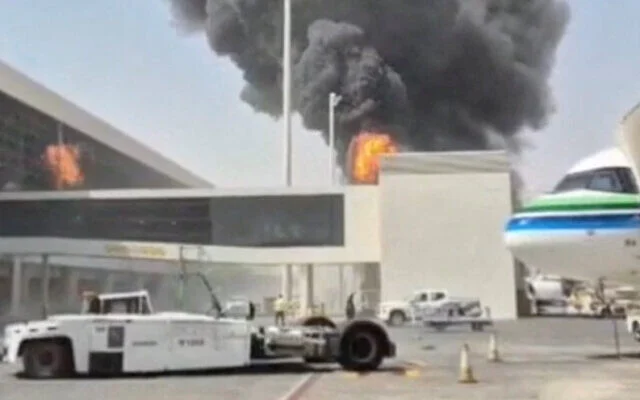
A missile attack on Riyadh’s main airport Saturday killed 12 people, including an American, and injured more than 300, Saudi aviation authorities said. It’s the deadliest attack on any Gulf Arab country since the Iran war began, the AP reported.
President Trump said he’s now weighing whether the U.S. should join Saudi strikes against Yemen’s Iran-backed Houthi rebels. “We may. We’re going to look at it,” he said. “We move very quickly.”
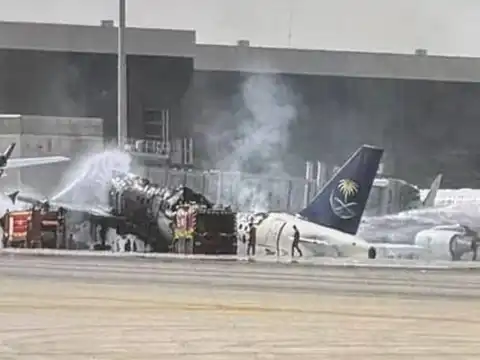
What happened at the Riyadh airport?
A missile struck the complex housing Terminals 3 and 4, which handle domestic flights at King Khalid International Airport, a regional official said. Saudi civil aviation authorities said the dead included four Saudis, two Bangladeshis, a U.S. citizen, a Palestinian, an Egyptian, a Jordanian, a Syrian and a Sudanese. Some of the injured are in critical condition. The statement didn’t say who was responsible.

The airport shut down, entrances were blocked and flights were diverted. The U.S., Britain, Germany, Australia and Canada told their citizens to stay away, NPR reported.
Who is attacking Saudi airports?
It’s the latest in a week of strikes on Saudi airports, bases and oil sites since a Saudi-led coalition launched a major offensive against the Houthis in Yemen. The Houthis claimed earlier attacks on the same airport that killed three Saudis, including a pilot, CNN reported, and said they also targeted Najran airport and a Saudi air base with cruise and ballistic missiles. Attacks Tuesday and Wednesday on the Riyadh and Abha airports killed three and wounded 36.
The fighting in Yemen has become a new front in the wider war that began when the U.S. and Israel struck Iran in February. The Houthis’ gains along the Red Sea coast give them a better view of a shipping lane that’s become a key alternative to the Strait of Hormuz, which Iran has largely closed.
Will the U.S. get involved?
Trump said he “just found out about the recent attack” and would decide quickly. The Saudis are expected to push Washington harder for military help. The attacks have rattled oil markets, though Saudi Arabia’s energy ministry was still promoting an international energy conference set to open in Riyadh on Sunday.
If you have travel booked through Riyadh, check with your airline and the State Department’s travel advisories before you go.
The BeezLoop Take
An American is among the dead, and the president’s first answer was that he’d “look at it.” That’s a dangerous way to back into another war. The U.S. is already eight months into a fight with Iran that most Americans say hasn’t been worth it, and joining Saudi Arabia’s war in Yemen would widen it again.
Deliberately firing missiles at a civilian airport packed with travelers is a war crime, and whoever launched this one deserves the blame. But any decision to send U.S. forces into Yemen belongs to Congress, not to a quick call after a news alert. Americans deserve a debate about what we’d be fighting for, how long it would last and how it ends.
The open question: will Congress get a vote before U.S. forces join another front?
Also on BeezLoop: Trump struck a diesel deal with Putin as the Iran war keeps fuel prices high, and Iran offered to reopen Hormuz and Trump said no.
Sources: Associated Press via NBC News · Associated Press via NPR · CNN · CNBC · Al Jazeera English (video)