

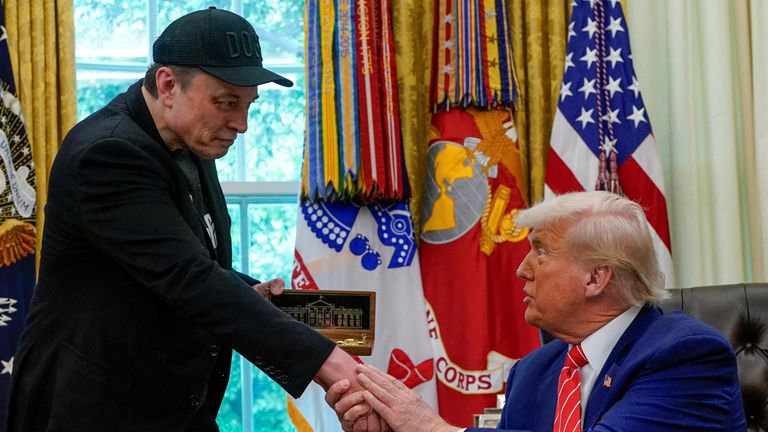
The Justice Department has asked a court in Luxembourg to let it join Elon Musk’s fight against a €120 million European fine. The US government is not filing a brief as a friend of the court. It is trying to become a participant in a private company’s appeal.

What the fine was for
On December 5, 2025, the European Commission found X Internet, X Holdings and Musk personally liable for violations of the Digital Services Act. The €120 million penalty was imposed jointly and severally, and it breaks down:
- €45 million for deceptive blue checkmark verification practices.
- €40 million for denying independent researchers access to platform data.
- €35 million for failing to comply with advertising repository requirements.
Worth noting what is not on that list. None of the three counts is about a post being left up or taken down. They are about disclosure: whether a checkmark means what users think it means, whether outside researchers can audit the platform, and whether the ad archive works.

The US argument
The DOJ filed Thursday. Its position is jurisdictional.
The European Commission inappropriately attempted to expand its regulatory authority to reach American companies not present or operating within its jurisdiction.
Assistant Attorney General Brett Shumate
The administration and much of the US tech industry describe the DSA as a censorship instrument. The EU rejects that characterization.
Why the jurisdiction claim is contested
X does not have to be headquartered in Europe for Europe to regulate it. The DSA applies to platforms that offer services to EU users, which X does, and which is how essentially all consumer protection law works everywhere.
The United States applies the same principle in reverse constantly. American sanctions, securities law and anti-corruption statutes reach foreign companies with no US offices whenever they touch US markets or customers.
That does not make the DOJ argument frivolous. Where exactly the line sits is a genuine legal question. But the principle that a country can regulate a service sold to its own residents is not an invention of Brussels.
The BeezLoop Take
There is a legitimate version of this. Governments do lobby for their companies abroad, the US has always done it, and a European regime that fell disproportionately on American firms while sparing European ones would be a real trade grievance worth fighting. If that is the case, the administration should make it.
That is not quite what is happening here. The Justice Department is seeking to intervene as a party in one specific company’s appeal, on behalf of one specific billionaire who was found personally liable. Trade disputes get handled through trade channels, through the WTO, through negotiation between governments. Putting federal lawyers into the case file of a single businessman’s penalty appeal is a different thing, and it would look different to everyone if the businessman were a critic of the administration.
The censorship framing does not survive contact with the actual fine. The three counts are a misleading verification badge, blocking researchers from data, and a broken ad archive. Reasonable people can argue the penalty was too large or the rules too burdensome. Nobody can read that list and honestly call it suppression of speech, and the officials calling it that are counting on no one reading it.
The researcher access count is the one worth defending on the merits, and we would defend it. Independent researchers being able to audit a major platform is how the public learns anything true about what these systems do. We have written about a platform accused of burying posts where nobody outside the company can check. The answer to that problem is exactly the access X was fined for refusing. Fighting that requirement is fighting the only tool that resolves these arguments.
And the precedent cuts against American interests in the long run. If the position is that a government cannot enforce its consumer rules against a foreign company serving its citizens, the United States loses far more than it gains. That principle is what lets American regulators reach foreign banks, foreign polluters and foreign fraudsters. Winning this argument in Luxembourg would be worth a great deal to Elon Musk and very little to anyone else.
The question
Should the Justice Department be a party in a private company’s fine appeal? And if a penalty for a misleading verification badge is censorship, what word is left for actual censorship?
Related: the AI companies writing their own safety rules, and the stalled fight over who regulates tech in the US.
Sources: Gulf News · Hoodline · Axios on the original fine