
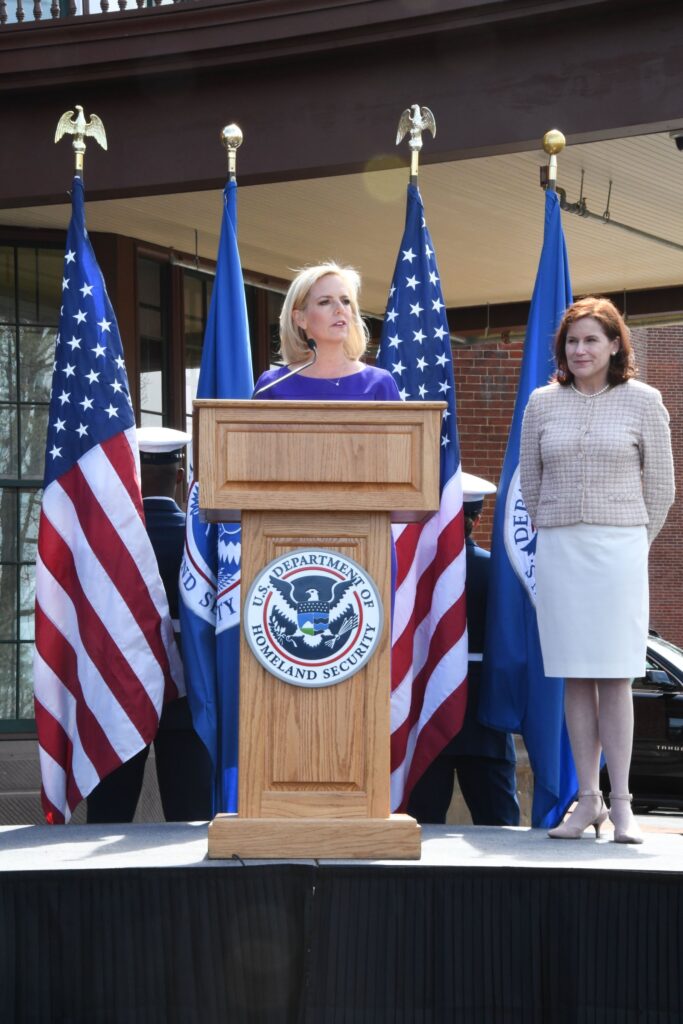
The Trump administration wants colleges to pay $70,000 for every international student who works in the U.S. after graduating. The Department of Homeland Security proposed the fee Wednesday for the Optional Practical Training program, known as OPT, which lets foreign students take jobs in their field for a year or more after school.
It’s not a payment to students. It’s a cost the government would charge schools, and critics say it would effectively end the program for most students. The public has 60 days to comment before DHS can finalize it.
What is OPT, and how would the $70,000 fee work?
Under OPT, students on F-1 visas can work in jobs related to their major. Most get one year after graduation. Students in science, technology, engineering and math can get two more years.

The proposal, according to the AP, would make schools pay:
- $70,000 for each student’s first OPT application.
- $30,000 for each renewal, like the two-year STEM extension.
DHS called OPT a “pipeline for cheap foreign labor” and said the fee would “combat fraud and abuse, strengthen the integrity of the immigration system, and protect U.S. workers.”
Who would this affect?
- International students, especially in STEM, who often use OPT as the bridge to an H-1B work visa.
- Colleges, which rely on international tuition and would face a fee most can’t pay for every student. New international enrollment has already fallen 17%, Fortune reports.
- Employers, particularly tech and health companies that hire foreign graduates for hard-to-fill technical jobs.
- U.S. workers, whom the administration says would face less competition for entry-level jobs.
The fee follows a $100,000 charge on H-1B visas that a court struck down, and a rule limiting student visas to four years, which a federal court blocked in September. The administration is now trying another route to raise the H-1B fee.
What are critics saying?
Driving away the talents, perspectives, and aspirations of international students will only hurt American innovation, economic growth, workforce development, and global leadership.
Fanta Aw, CEO of NAFSA: Association of International Educators
Doug Rand, a former senior USCIS adviser under President Biden, predicted the fee would be struck down in court, like the H-1B fee. Higher education and business groups are expected to sue if DHS finalizes it.
The BeezLoop Take
There’s a fair debate to have about OPT. Some employers do use it to hire foreign graduates who are cheaper partly because of a payroll tax exemption, and protecting entry-level jobs for American graduates is a legitimate goal.
But a $70,000 fee isn’t a reform. It’s a ban with a price tag. Almost no school can pay that for every graduate, so the practical effect is ending the program while skipping the vote in Congress it would take to do that openly. And it lands on the international students the U.S. spent years recruiting, many of whom go on to start companies and hire Americans.
If the goal is protecting U.S. workers, Congress could tighten the rules: close the tax break, require market wages and police fraud. The open question is why the administration keeps choosing fees that courts keep striking down instead.
Also on BeezLoop: Europeans overstay U.S. visas by the tens of thousands, but almost none get deported.
Related: Cuban Miami helped elect Trump; now Cubans are being deported in record numbers.
Sources: Fortune / AP · STAT · Newsweek · U.S. News / Reuters · USCIS: Optional Practical Training