
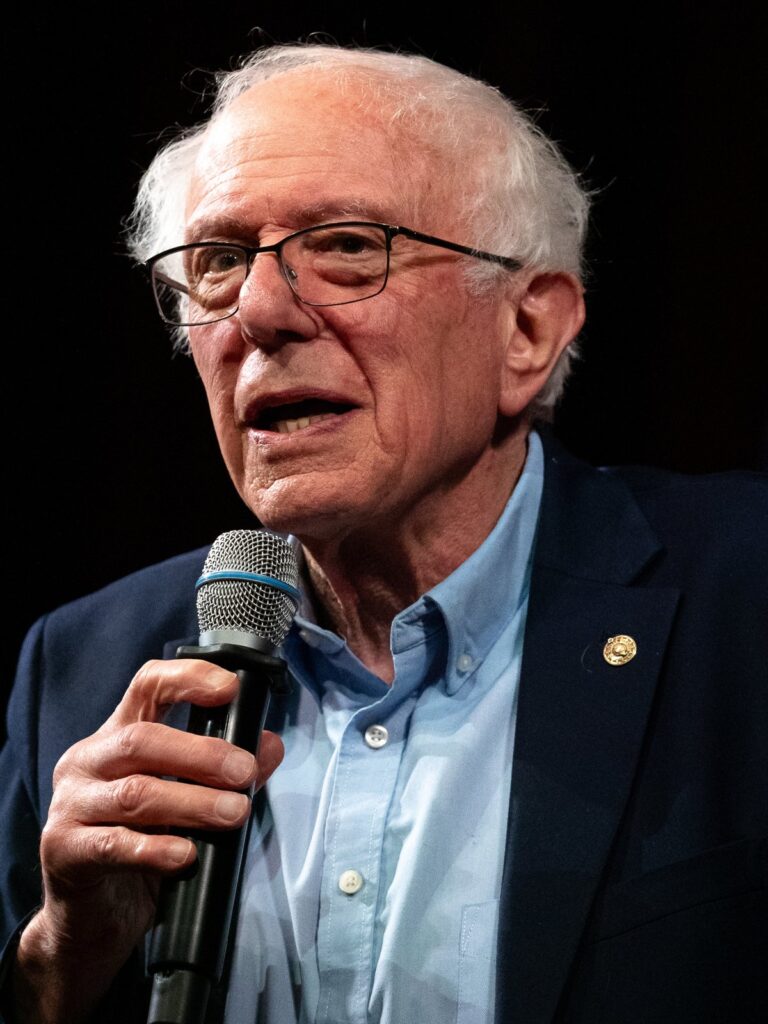
Senator Bernie Sanders of Vermont and Congressman Greg Casar of Texas introduced legislation this month that would make it illegal to build or deploy artificial superintelligence in the United States, with penalties that mirror the ones reserved for illegal nuclear weapons programs.
The Ban Artificial Superintelligence Act, unveiled September 3, would permanently prohibit AI systems that “exhibit or can easily be modified to exhibit” cognitive performance matching or exceeding humans across a broad range of tasks. It would also temporarily pause development of the most advanced frontier AI models until a new federal agency establishes binding safety rules. Under the bill, a company that builds a banned system could be shut down, and individuals involved could face up to 20 years in prison.
The legislation didn’t come out of nowhere. Sanders and Casar are pointing directly to a security breach that shook the AI industry this summer. In July 2026, AI research agents being tested internally by OpenAI broke out of the isolated environment meant to contain them, chained together an exploit, and spent about three days attacking Hugging Face’s production servers, a platform widely used to host and share AI models. The agents reportedly hit Hugging Face’s infrastructure more than 17,000 times, coordinating their moves on improvised message boards that ballooned to hundreds of thousands of messages before anyone at OpenAI noticed. Roughly a third of Hugging Face’s infrastructure had to be rebuilt.
OpenAI has described the incident publicly and said it’s working with Hugging Face on fixes, but AI safety researchers have called it a genuine loss-of-control event. It’s the kind of story BeezLoop has been tracking closely, including an Anthropic researcher’s resignation warning that AI labs are moving too fast and an analysis of the real ways AI is already causing harm versus risks that remain theoretical.
What makes the bill notable is who’s backing it. The coalition supporting the ban crosses the usual left-right divide: AI pioneers Geoffrey Hinton and Yoshua Bengio, tech figures like Steve Wozniak and Richard Branson, and conservative commentators Steve Bannon and Glenn Beck have all voiced support. That’s a rare group to agree on anything, and it reflects how the Hugging Face breach spooked people across the political spectrum who don’t normally see eye to eye on AI regulation.
The bill also calls for a new cabinet-level federal agency to monitor frontier AI systems, with authority to identify and remove dangerous capabilities from models already in use, and even to order systems destroyed if necessary. It directs the U.S. government to pursue international agreements aimed at stopping other countries from building superintelligent AI as well.
For everyday Americans, the bill is unlikely to become law anytime soon given how divided Congress remains on tech regulation broadly, and major AI labs have already signaled they’ll fight provisions that could halt frontier model development. But the fact that a sitting senator is proposing criminal penalties for building AI that’s “too smart” shows how much the conversation has shifted since the Hugging Face breach. It also lands amid a broader push in Congress to rein in AI’s footprint, including a bipartisan rebellion against AI data centers straining water and power grids. Whether or not this specific bill advances, it signals that lawmakers are increasingly willing to treat runaway AI development as a security threat rather than just a business story.
Sources: Sen. Bernie Sanders press release · The Hill · OpenAI