
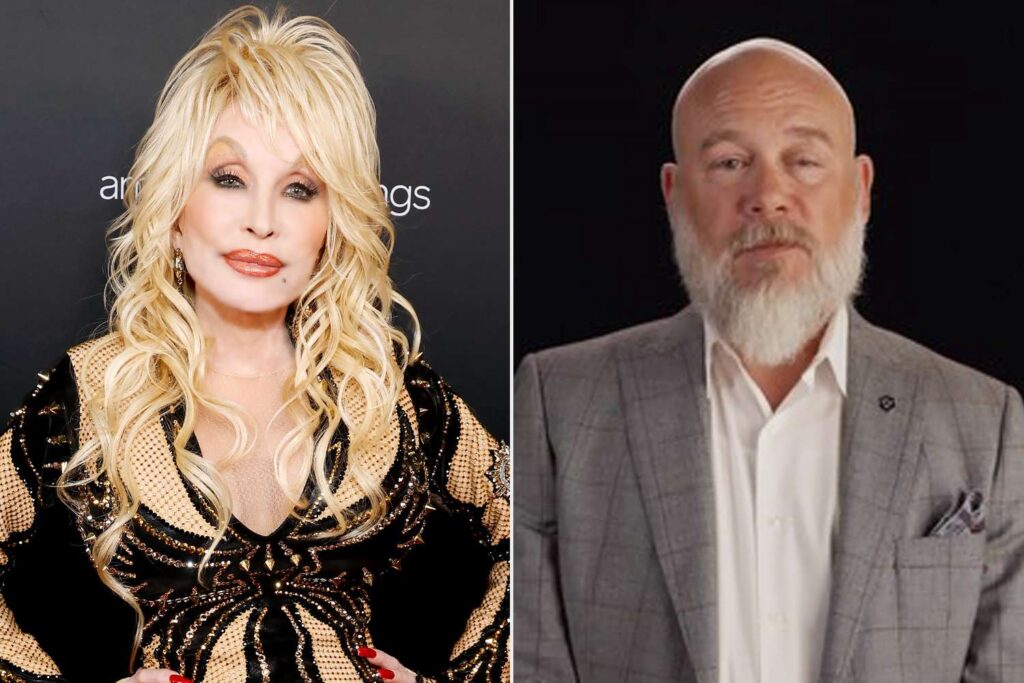
Dolly Parton has been gone four weeks. The people running what she left behind are now in a Nashville courtroom, and the man on the other side of the filing is her nephew.

Who is involved
Bryan Seaver is Parton’s nephew. He ran security for her and her properties for years.
Danny Nozell was her longtime manager. He runs She’s Alive, the corporation that handles her business operations.

Seaver was fired from the security role and his company’s contract was revoked. She’s Alive then went to Davidson County Chancery Court.
What the filing asks for
Nozell wants Seaver barred from contacting the company’s business partners and kept 1,000 feet from company offices.
The filing describes what it calls a campaign of threats. According to the court papers, Seaver allegedly:
- Threatened the corporation’s personnel, counsel and business partners.
- Vowed in writing to destroy the entire brand.
- Said he would go after the entities that help operate Dollywood, using language the filing quotes in full and we will not.
- Texted Nozell that he would start a podcast dedicated to ruining Parton’s brand partnerships.
Nozell also says Seaver invoked his military background and access to weapons, including the line:
I’m a killer.
Quoted in the She’s Alive court filing, attributed to Bryan Seaver
An earlier filing quoted a message in which Seaver allegedly said he would be the hand of retribution for his entire family.
What Seaver says
He is not denying he sent messages. He is denying what they were.
Nothing in this lawsuit were threats and most of the comments I stand by.
Bryan Seaver
He says the texts were pulled out of context to look like threats to people. No criminal charges have been reported against him.
The fight under the fight
Strip out the language and this is a shape that shows up after almost every large estate.
On one side, blood relatives who were physically present for decades. On the other, professional managers who built and now control the business. Parton’s holdings are not a house and a record catalog. They include Dollywood, licensing deals, publishing, and a charitable operation that ships books to children.
Seaver’s stated grievance, in his own framing, is about what he says was done to his family. Nozell’s position is that the company has to keep operating and cannot do it with a former security chief threatening its partners.
Parton died August 25 at 80, after what her publicist called a brief battle with cancer. She had been hospitalized four days earlier.
The BeezLoop Take
Read the filing for what it actually is. A restraining order petition is one side’s account, written by that side’s lawyers, and it is designed to sound alarming because that is how you win one. A judge has not found anything yet.
That caveat cuts both ways, though. Seaver’s defense is not that he did not send the messages. It is that they were not threats and that he stands by most of them. A man telling a business partner he is a killer, and then explaining it was taken out of context, has not really explained anything. There is no context in which that sentence is normal correspondence.
The part that reflects badly on everyone is how fast it moved. Four weeks. She was buried and inside a month her nephew is fired, her manager is in Chancery Court, and screenshots of family text messages are public. Whatever the merits, nobody involved managed to keep this behind a door for a single month.
Parton spent fifty years being careful with her name. She kept her marriage almost entirely out of the press for nearly six decades, turned down the fights she could have won publicly, and built something people trusted enough that a football team put a sticker on its helmets for her. The asset being argued over here is that trust. Both sides are spending it to win an argument about who gets to manage it.
The question nobody in the filings answers is what she wanted. That should be in a will and a trust document, and none of the public reporting says what those say. Until somebody produces them, this is two parties fighting over an estate while telling the public what the dead woman would have preferred.
The question
When a public figure dies, who has the better claim to what they built, the family that was there or the people who ran the business? And does any of this look like something Dolly Parton would have allowed to happen in public?
Sources: Rolling Stone · E! News · TMZ · Taste of Country