
A federal judge has stopped President Trump’s 250-foot arch, at least for now. Late Thursday, U.S. District Judge Tanya Chutkan barred the government from starting any “construction-related activity” for 14 days, within about an hour of a federal planning panel approving the project, CBS News reported. She found the people suing are likely to show the government skipped the legal steps required before building it.
The White House says it’ll win. “We are confident we will be fully vindicated as this litigation proceeds and look forward to seeing the completion of this magnificent Arch, a tribute to 250 years of American greatness,” spokesman Davis Ingle said.

What is Trump’s arch, and where would it go?
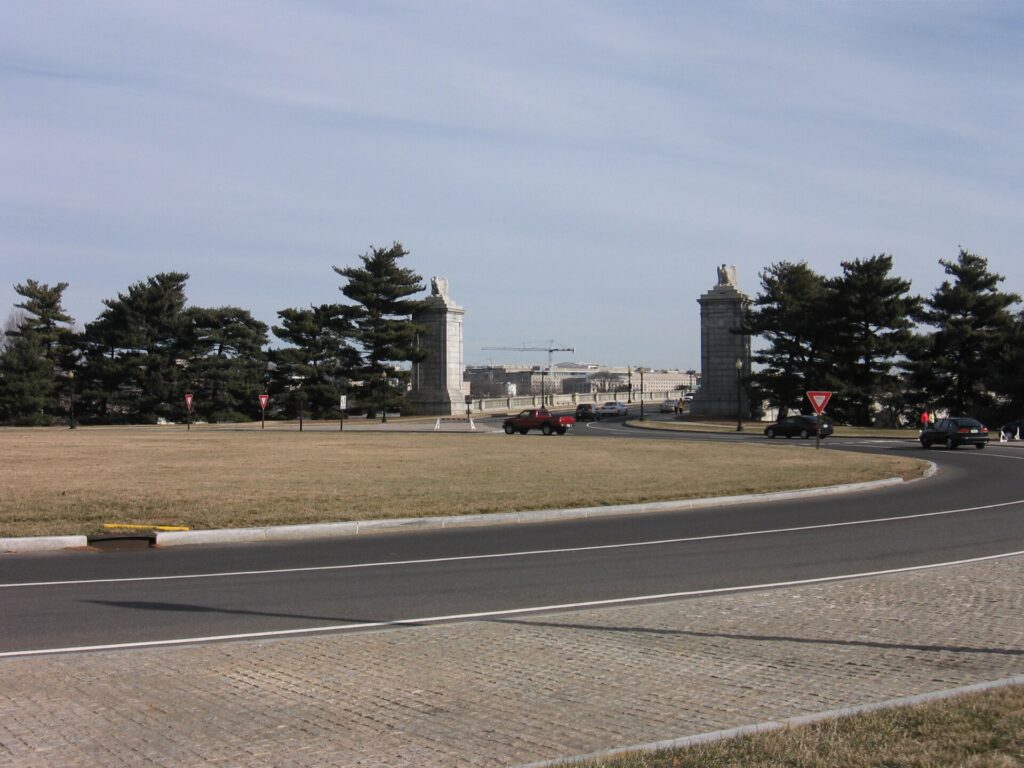
It’s a triumphal arch for the country’s 250th anniversary. The arch itself would be 166 feet tall, topped by a gold winged figure and two gold eagles for a total of 250 feet. It would sit in the middle of Memorial Circle, across the Potomac from the Lincoln Memorial and at the gates of Arlington National Cemetery, with an observation deck on top. Nobody has said what it costs or who pays. Asked who the arch was for, Trump said “Me,” CNN reported.

The National Capital Planning Commission, which CBS described as stacked with Trump allies, approved it 8-4 around 10:30 p.m. Thursday after nearly nine hours of public testimony. More than 1,300 public comments came in, mostly against. The National Park Service found it would have “adverse” effects on as many as 42 historic sites.
Who sued to stop the arch, and why?
Two groups. Vietnam War veterans, led by Michael Lemmon, say Congress never authorized the monument, as the Commemorative Works Act requires, and that it would spoil the views of the Lincoln Memorial and Arlington House. “We have witnessed the deliberate exclusion of Congress, a repeated bending of the rules and ignoring of professional evaluations,” Lemmon told the commission. Virginia and Washington, D.C., sued separately, warning the project would “snarl traffic between the jurisdictions” and get in the way of emergency services. Chutkan pointed to those “tangible economic harms” in letting the states sue.

The Justice Department called the challenges “breathless” and pointed to the Supreme Court’s ruling on Trump’s White House ballroom, which found those challengers likely couldn’t sue. The ballroom has its own controversy: a leaked list showed who paid for it.
What happens next with the arch?
The order runs 14 days, to about Nov. 19, while the case moves forward. The administration wanted to break ground right away, with two 10-hour shifts a day, and finish before Trump leaves office. It’s racing a calendar too: a Democratic Congress takes over in January, and Democrats now control both chambers. The same day, Trump signed a proclamation making the Oval Office and Cabinet Room a national monument so future presidents can’t tear them out.
The BeezLoop Take
A 250-foot gold-topped arch at the entrance to Arlington National Cemetery is a big thing to build without Congress voting on it. The law exists so one person can’t reshape the capital’s most sacred ground by himself, and the judge is right to make the government show it followed the rules.
If this monument is really for the country, it can survive a debate in Congress and a review that takes more than a day. Rushing it before January suggests the administration knows it wouldn’t.
The open question: will the administration go to Congress for approval, or try to outrun the courts before January?
Sources: CBS News · CNN via WRTV · CourtListener docket, Lemmon v. Trump · ABC News (video)