

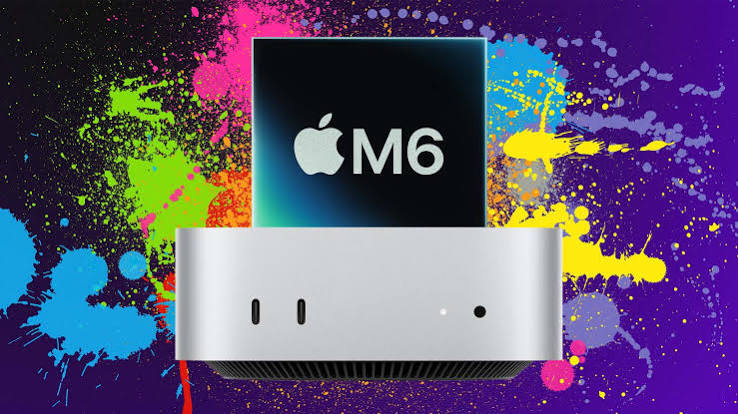
Apple announced a refreshed Mac mini this week, offering a choice between an all-new M6 chip or the M5 Pro chip released earlier this year. The M6 is Apple’s first 2-nanometer processor, built with a 12-core CPU and 12-core GPU, up from 10 cores each in the M5, and features the first dual Neural Engine setup Apple has shipped, with two 16-core engines instead of one.
Apple says the M6 Mac mini delivers up to 4x faster AI performance, 2x faster storage and graphics, and 40% faster CPU performance compared to the outgoing model. The refreshed lineup also adds Wi-Fi 7 and Bluetooth 6 support, up from Wi-Fi 6E and Bluetooth 5.3. Pricing for the M6 configuration starts at $899, with all new models going on sale September 22.
Why the Dual Neural Engine Matters
A dedicated Neural Engine is the chip component that handles on-device AI tasks like image processing, voice recognition, and increasingly, running local AI models directly on the machine rather than sending data to the cloud. Doubling that capacity signals Apple is building the Mac mini specifically around growing on-device AI workloads, a shift that’s shown up across Apple’s entire chip roadmap this year rather than being unique to this one product.
Who This Update Is Really For
The jump to a 2-nanometer process and the AI-focused Neural Engine upgrade are aimed less at everyday productivity use, which the outgoing M4 Mac mini already handled comfortably, and more at developers and power users running local AI models or heavier creative workloads. Buyers who don’t touch AI tools or intensive graphics work are less likely to notice the difference day to day compared to the previous generation.
Related from BeezLoop: The iPhone Duo Costs $1,999. If You're Left-Handed, You Can't Move the Buttons, Apple Unveils iPhone Duo Foldable and A20 Pro Chip at 'Surprise and Shine' Event and Intel Stock Climbs Further on Foundry Revival and Chip Demand, Still Below Its June Record.