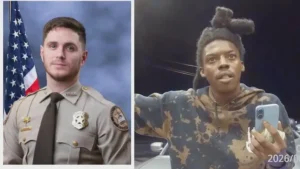


Joachim Lanham was 24, from Norway, and on day 22 of rollerblading from New York City to Los Angeles. An SUV hit him on a road outside Salina, Kansas. Whoever was driving kept going, and he was left in a ditch.
What happened
It was September 5, around 2:25 in the afternoon. An off-duty first responder spotted a body in a roadside ditch and called it in.
Lanham was taken to Salina Regional Health Center, then moved to the ICU at Wesley Medical Center in Wichita. He spent six days in a medically induced coma.

He died on September 11. His family said his heart could not keep fighting.
The driver
An 82-year-old woman came forward.
She told investigators she thought she hit something, turned around to go back and look, and did not see anything.
The Saline County attorney is reviewing the evidence and has not decided whether to file charges. That decision is still open as of this week.
What the sheriff said
The Saline County sheriff put the problem in about as plain a sentence as it can be put.
People just don’t slow down.
Saline County Sheriff
Rural two-lane roads in Kansas carry fast traffic, narrow or nonexistent shoulders, and almost nobody on foot. A person moving at walking-to-jogging speed on skates is not something drivers out there are scanning for.
The trip
He called himself a transcontinental inline skater. New York to Los Angeles, on wheels, alone.
Twenty-two days in, he had crossed most of the eastern half of the country. Kansas is roughly the middle.
The BeezLoop Take
The hardest fact here is the ditch. Not the collision. A driver who genuinely does not see a person at highway speed is a tragedy and it happens. But he was found by a stranger who happened to be driving past, not by the person who hit him, and by then time had already passed. Six days in a coma is a window in which minutes at the roadside may have mattered.
The woman’s account, taken at face value, is not absurd. An 82-year-old feels an impact, turns around, drives back, sees nothing in a ditch at the edge of her headlights or the shoulder of a fast road, and continues. That is a believable sequence. It is also a description of someone deciding on her own that nothing had happened, instead of calling 911 and letting a deputy make that call. Those are not the same act.
Whether that becomes a charge is up to a county attorney, and there is no obviously right answer. A prosecution will not return anything to his family, and an 82-year-old is not a public danger the way a fleeing drunk driver is. But leaving-the-scene laws exist precisely because the person who caused the harm is the worst possible judge of whether harm occurred.
The sheriff’s line is the part with the widest reach. People just do not slow down. Everyone reading this knows that is true, because everyone reading this has done it. The stretch of road where Joachim Lanham was hit is the same kind of road most Americans drive every day without thinking about it, and the difference between an ordinary trip and this one is usually nothing more than what happened to be in the lane.
The question
If you feel an impact, turn around, and see nothing, is that the end of your obligation or the start of it? And should a county charge an 82-year-old who came forward on her own?
Related: a truck struck pedestrians in Fort Collins, killing one and injuring five, and the wider picture on American road deaths.
Sources: KWCH · WOWT · WHAS11 · Action News 5