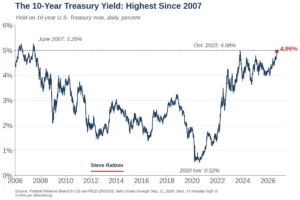


The 30-year Treasury bond hit 5.323% this week, a 19-year high, and the 10-year climbed above 4.7%, brushing the highest level of Trump’s second term. Those numbers matter well beyond bond traders: the 10-year yield is the benchmark that fixed mortgage rates track, and the average 30-year mortgage has already followed it up to 6.75%.
The Treasury Department’s response, announced this week, was to more than double the size of its bond buyback operations for longer-dated debt, from a maximum of $2 billion per operation to at least $4 billion, covering the 10-to-20-year and 20-to-30-year ranges, starting September 9 and running through November 4. Markets reacted immediately: the 10-year yield dropped six basis points to 4.65% and the 30-year dropped nine basis points to 5.2% right after the announcement.
What a Bond Buyback Actually Does
Treasury Secretary Scott Bessent has been explicit that this isn’t quantitative easing, and the distinction is worth understanding rather than glossing over. The Treasury isn’t printing new money or expanding the Fed’s balance sheet here. It’s using existing government funds to buy back its own older, longer-dated bonds, which reduces the supply of those bonds sitting in the market. When a market has fewer of something to sell into, sellers generally get better prices, meaning yields (which move opposite to bond prices) tend to fall. It’s a targeted liquidity tool aimed at one part of the yield curve, not a broad monetary policy shift.

The underlying reason yields have been climbing in the first place traces back to energy prices and the war in Iran. Since that conflict began, rising oil prices have pushed investors to bet on inflation staying elevated for longer, and longer-dated bonds are the ones most sensitive to long-run inflation expectations. The buyback treats a symptom of that pressure, not the source of it.
The Skepticism Worth Taking Seriously
Economist Mohamed El-Erian’s read on this is worth sitting with: the move could help bring mortgage rates down in the short term, but it “risks collateral damage and unintended consequences.” A buyback that works by making Treasury a bigger, more aggressive buyer of its own long-term debt is, at some level, an admission that the market’s natural pricing of that debt has become a problem the government needs to actively manage rather than let play out. That’s not necessarily alarming on its own, governments manage debt markets constantly, but it’s a different thing than the story being sold, that this is simply good news for anyone about to lock in a mortgage rate.
For anyone actually shopping for a home loan right now, the practical read is this: a modest near-term dip in rates is plausible and already showing up in the data, but the structural pressure pushing yields up (energy prices and inflation expectations tied to an ongoing war) hasn’t gone anywhere. A short-term rate dip from a liquidity tool is not the same thing as rates coming down because the underlying pressure eased.
What do you think? Does a move like this actually help ordinary borrowers, or is it mostly a market-stabilization tool being framed as consumer relief? Let us know your thoughts in the comments on BeezLoop.com!
Related from BeezLoop: Lennar Cut Its Housing Target Twice This Year, The Fed Raised Rates and The Fed's September 16 Rate Decision Is a Coin Flip: Here's What a Hike Would Cost You.