
The Timing Question is a BeezLoop opinion series. We line up documented facts, lay out the theory they point to, and tell you what would prove it wrong. Facts are linked. The theory is ours.
Everybody knows the old Washington trick: drop the bad news when nobody’s watching. Thanksgiving week is the ultimate Friday afternoon. So we went through what the federal government filed between Friday, Nov. 20, and Thanksgiving to see whether that theory holds up.
Here’s what we found. The big stuff wasn’t hidden. The smaller stuff came with deadlines that run straight through your holidays. That may be the real trick.

Were the big Thanksgiving week announcements hidden?
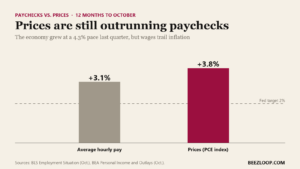
No, and we want to be fair about it. The GDP report showing 4.3% growth came out Wednesday at 8:30 a.m. on a date the Bureau of Economic Analysis had announced weeks earlier. The White House didn’t pick it. And the trade office’s proposed tariffs on 14 economies, from China and the European Union to Japan and India, went out on a weekday morning and got wide coverage. We wrote about both the tariffs and the GDP numbers today.
But look at the calendar on the tariffs. Written comments and requests to testify are due Jan. 5, 2027, with hearings starting Jan. 25. That’s about six weeks to respond, and Thanksgiving, Christmas and New Year’s all fall inside it. If you run a small business that imports parts from Vietnam or Taiwan, your window to push back just got eaten by the holidays.

What else did the government file during Thanksgiving week?
- A two-year delay on automatic emergency braking. NHTSA filed a proposal Wednesday morning to push the deadline for automatic emergency braking on new cars from Sept. 1, 2029, to Sept. 1, 2031. It publishes in the Federal Register on Friday, the day after Thanksgiving. When the agency adopted the rule in 2024, it estimated the technology would save 362 lives a year.
- An order on Congress. President Trump signed Executive Order 14439 on Friday, Nov. 20. It says all federal contractors must “immediately” notify the White House and agencies of “any pending or future congressional request,” and it threatens contract termination or debarment for those who don’t comply, per the Federal Register. Law firms have noted it lands weeks before new congressional majorities get subpoena power.
- Two 14-day comment windows. The Forest Service reopened comments on a mining rule and USDA reopened comments on a rule about foreign ownership of farmland. Both publish Friday. Both close Dec. 11.
- A new sugar tariff. The trade office also proposed swapping its 25% tariff on Brazilian sugar for a per-kilogram charge and adding a 10% tariff on finished aircraft from Brazil. Comments open Friday, and requests to testify are due Dec. 7.
Do governments really time bad news for holidays?
Less than you’d think. Law professors Jacob Gersen and Anne Joseph O’Connell studied 25 years of federal rulemaking and called the conventional wisdom “wrong, or at least significantly incomplete.” Their data “evidence little timing manipulation,” they wrote, though important rules were slightly more likely to come out on Fridays or weekends.
Their bigger point fits this week. Timing doesn’t really hide a decision. It raises the cost of watching and responding. A rule that publishes on Black Friday, with comments due before Christmas, isn’t secret. It’s just harder for regular people, small businesses and local groups to answer before the window closes. Big companies with lawyers on retainer don’t have that problem.
What would prove this theory wrong?
If these comment windows are routine, agencies should be able to show it. A 14-day reopening is short, but it’s legal. If the Forest Service and USDA ran similar windows outside the holidays, the timing is a coincidence. And if NHTSA or the trade office extends deadlines when people ask, that’d be a good sign. Both are worth watching.
The BeezLoop Take
We don’t buy the cartoon version of the Thanksgiving news dump, and the evidence doesn’t either. The GDP report was scheduled, and the tariffs made the front pages. But a government that wants public input doesn’t set its deadlines for the weeks when the public is cooking, traveling and buying presents. The braking delay alone deserves a real debate, since it’s about whether two more years of new cars get sold without a safety feature the government said would save hundreds of lives a year. That debate shouldn’t depend on who has a lawyer working Christmas week.
If a federal agency truly wants to hear from ordinary people, why would it ever set a 14-day comment window over Thanksgiving?