

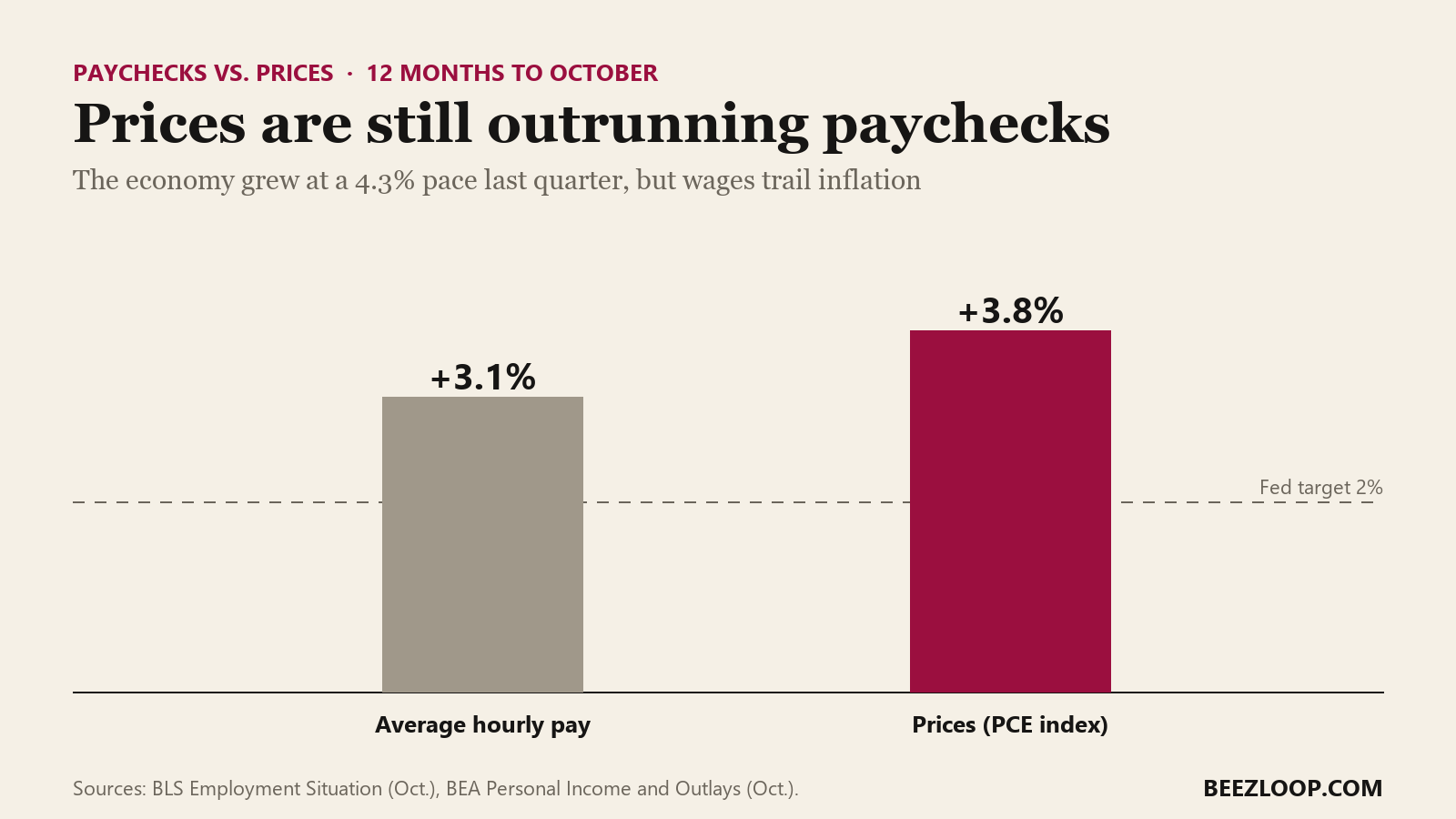
The U.S. economy grew at a 4.3% annual rate from July through September, the Bureau of Economic Analysis said Wednesday, revised up from 3.4%. That’s a strong number by any standard. On the same morning, the same agency reported that prices were up 3.8% over the past year. Average hourly pay is up 3.1%, per the Labor Department. If the economy feels worse than the headlines say, that gap is why.
This is opinion, built on the government’s own numbers.
What’s driving the economy’s 4.3% growth?
Business investment, consumer spending and government spending. The upgrade from the first estimate came mostly from investment in what BEA calls intellectual property products, led by software. In plain terms, companies are pouring money into tech. Corporate profits rose another $206 billion in the quarter.

Those gains are real, but they don’t land evenly. A company spending billions on software and servers shows up in GDP right away. It shows up in your paycheck later, if at all.
Why does the economy feel bad if GDP is growing?
- Pay is losing to prices. Hourly pay rose 3.1% in the year through October, while prices rose 3.8%. The Labor Department says real average hourly earnings were flat from September to October.
- People are spending more for the same stuff. Spending rose 0.3% in dollars in October, but once you take out inflation, it was flat, per BEA.
- Jobs are OK, not great. Unemployment is 4.1%, and employers added 165,000 jobs in October.
- People notice. The University of Michigan’s consumer sentiment index finished November at 51.5, up from 48.0 in October, which is still gloomy by historical standards.
There’s one bright spot. October’s income jump meant take-home pay after inflation rose 0.5% that month, and households saved a bit more. We broke that down in our October inflation report. One good month doesn’t make up for a year of prices running ahead of pay, though, and tariffs proposed this week could add to prices next year.
The BeezLoop Take
Politicians in both parties will spend the holiday quoting the number that helps them. The White House gets 4.3% growth. Democrats get 3.8% inflation. Both are true. What matters to a family is whether a paycheck buys more than it did last year, and right now it doesn’t. An economy can grow fast and still leave most people treading water, and until wages beat prices for a sustained stretch, telling people the economy is great will keep sounding like it’s about someone else.
If the AI investment boom keeps driving growth, when does it start showing up in regular workers’ paychecks instead of just corporate profits?