
The Timing Question is a BeezLoop opinion series. We line up documented facts, lay out the theory they point to, and tell you what would prove it wrong. Facts are linked. The theory is ours.
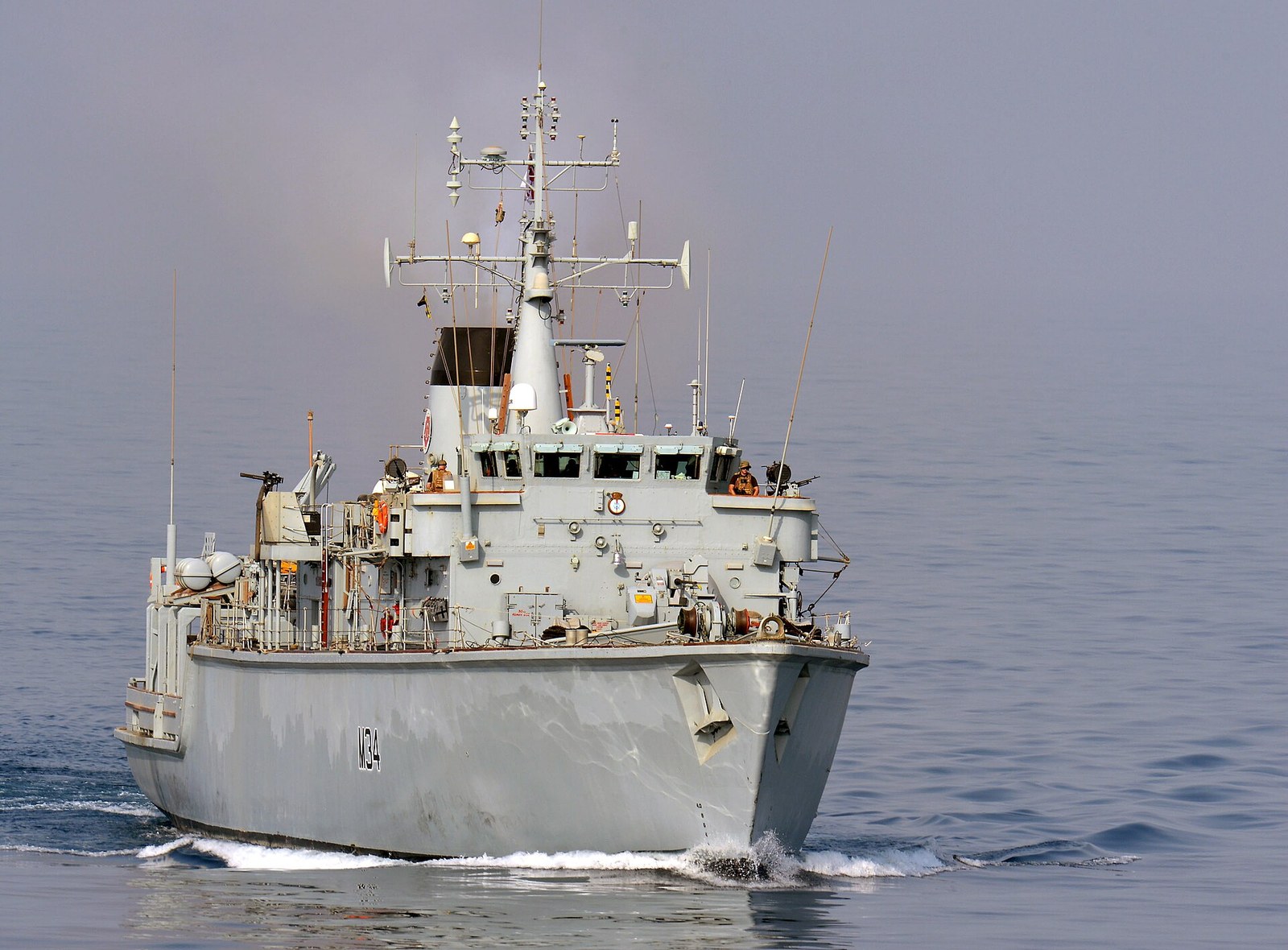
Iran’s Revolutionary Guard says more than 30 ships have run into sea mines in the Strait of Hormuz since the start of November. Not one of those strikes has been independently verified, The National reported. So here’s our theory: the mines that matter most may be the ones nobody can find. A minefield doesn’t have to exist to work. It just has to be believed.
That’s not just us. “It’s possible to make an effective minefield with zero mines, if someone can make a credible claim that they have mined specific waters,” RAND mine warfare expert Scott Savitz told The National.

What has Iran claimed about mines in the Strait of Hormuz?
Almost daily announcements since mid-October, per The National. On Thursday, Iranian state media said two more tankers that crossed “without Tehran’s permission” were hit by sea mines north of Khasab, Oman, ABC News reported. Iran usually doesn’t name the ships or describe the damage.
Notice the pattern. Nearly every claimed mine strike hits a ship on an “unauthorized” route or one that didn’t get Iran’s permission. Iran runs its own permit system for the strait, and its army chief, Maj. Gen. Amir Hatami, said this week that until Iran’s “seven conditions” are met, the strait “must be closed further day by day,” Euronews reported.
This isn’t peacetime, and we don’t want to overstate it. The U.S. and Israel have been at war with Iran since February, ships really have been attacked, and Britain’s maritime agency has confirmed tankers hit by projectiles near Khasab this month. The question is only about the mines.

What does the U.S. military say about the mines?
That the main lanes are clear. “All internationally recognized primary transit routes through the Strait of Hormuz have been cleared of sea mines,” U.S. Central Command said Oct. 28, adding that “thousands of commercial vessels have safely used the transit lanes and continue today,” Gulf News reported. Iran’s answer, via IRGC spokesman Hossein Mohebi: “Prove the claim that the Strait of Hormuz has been cleared of mines with independent evidence, not a statement,” per CNBC.
The shipping industry leans toward the U.S. version. “We cannot identify, apart from one instance of one ship hitting a floating object which caused damage at the waterline, any mines posing risks to any ship at the moment,” Phil Belcher of the tanker owners’ group Intertanko told The National. A U.S.-overseen shipping center logged 114 escorted passages from Nov. 19 to 21 and called the mine claims unconfirmed, Euronews reported.
Who actually benefits from the mine claims?
- Iran, most of all. Every claim makes the U.S.-escorted lane look riskier and Iran’s permit route look safer, without Iran having to lay a mine or prove anything.
- Not oil traders, mostly. Brent crude was close to $105 in October and settled around $95 on Wednesday, even as the claims multiplied. When prices bounced Wednesday, one analyst credited a Houthi attack claim on a Saudi refinery: “The Houthi statement triggered Wednesday’s price rally,” PVM’s Tamas Varga told CNBC.
- Not tanker owners, lately. Supertanker rates from the Gulf of Oman to China fell more than 60% from their October record by mid-November, Hydrocarbon Processing reported.
- Not you at the pump, this month. The national average is $3.56 a gallon, down from $4.29 a month ago, per AAA. It’s still about 51 cents more than last year.
We covered why gas keeps falling this morning. The short version is a global oil glut, and the market has mostly stopped flinching at each new mine claim.
What would prove this theory wrong?
Pictures, names and hulls. If a ship Iran says hit a mine turns up in port with mine damage, verified by insurers or an independent inspector, the claims stop being theater. It would also cut the other way if Central Command’s “cleared” statement turned out to be wrong. Some experts aren’t taking either side on faith. “If those reports were true, we would have independent verification quite quickly,” Emma Salisbury of the Foreign Policy Research Institute told The National.
The BeezLoop Take
Iran’s mine claims look less like a military report and more like a toll booth sign. They point ships toward Iran’s permission system and away from the U.S. escort, and they cost Iran nothing to make. That doesn’t mean the danger is fake. Ships really are being hit by drones and projectiles, and seafarers have died. But markets, shipowners and drivers have started treating the mine claims as noise, and we think that’s the right call until someone shows a damaged hull.
If a claimed minefield can steer shipping without a single confirmed mine, how does the U.S. answer a threat it can’t disprove?