

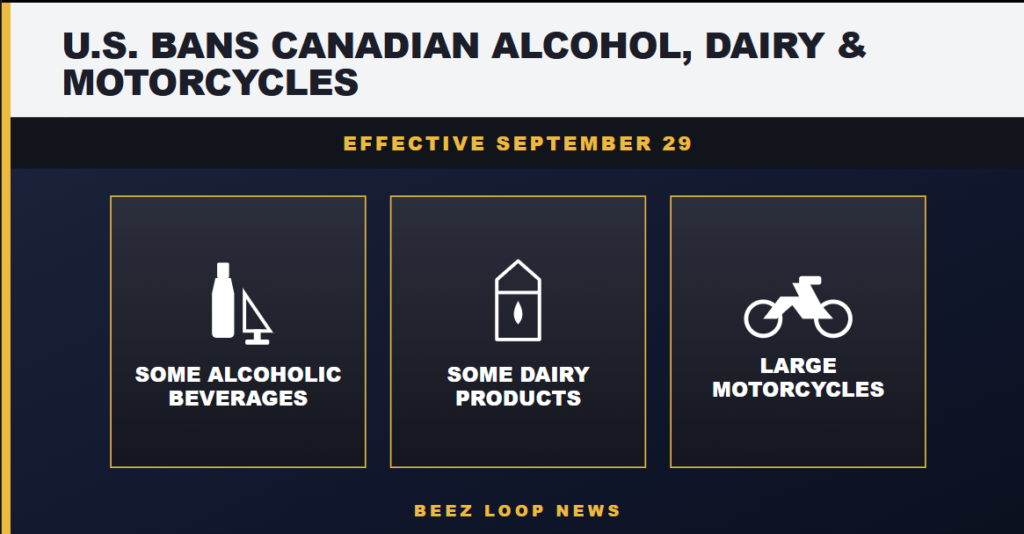
The United States will ban imports of most Canadian alcoholic drinks, several dairy products, and large motorcycles starting September 29, after Canada’s retaliatory tariffs on roughly C$27.6 billion (about US$19.9 billion) of American goods took effect this week. President Trump signed the orders citing Canadian “discrimination” against U.S. dairy, vehicles, and alcoholic beverages, escalating a trade fight that has been building since Canada’s counter-tariffs on U.S. steel, aluminum, and autos.
The bans specifically cover most alcoholic beverages in containers under four liters, nonalcoholic beer, whey protein concentrates, molasses, certain dairy-related products, and motorcycles with engines larger than 800 cubic centimeters. The administration also added mattresses and motorboats to the list of Canadian goods facing a 50% tariff. Here’s who actually feels this, and who doesn’t.
Does this mean Crown Royal disappears from shelves?
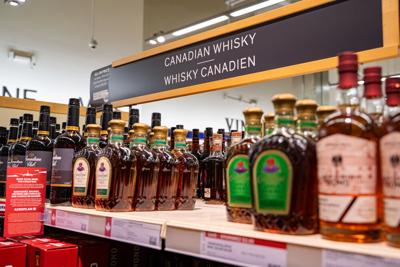
No, and the reason is a quirk of where it’s bottled. Crown Royal is still distilled in Manitoba, but the brand moved its bottling operations to Alabama years ago, so its finished product isn’t technically an import from Canada in the way the ban is written. Smaller Canadian whisky brands, and any that bottle at home, don’t have that workaround. Canadian Club and other brands that bottle in Canada face the real hit, meaning the shelf impact will look uneven — some familiar Canadian names vanish from liquor stores while others, purely by supply-chain accident, keep selling.

Who actually pays for this?
U.S. liquor retailers and distributors carrying the affected brands have three weeks to sell through existing inventory or find replacement products, a scramble that falls hardest on smaller shops without the buying power to quickly renegotiate supplier contracts. Canadian dairy and alcohol producers lose direct access to their largest export market for the affected categories, on top of already absorbing Canada’s own counter-tariffs on the way in. Motorcycle buyers looking at larger-displacement Canadian-made bikes, including some Can-Am models, will need to look at U.S. or other-country alternatives. American dairy farmers, by contrast, are among the few groups who could see a modest benefit, facing less competition from Canadian dairy-adjacent imports in a market where domestic milk prices already run below what it costs many small producers to operate.
What happens next
Canadian Prime Minister Mark Carney has framed the exchange in blunt terms: “We were attacked. You’re at war when you get attacked. We got attacked.” Neither government has signaled an offramp before the September 29 deadline, and the same week brought Canada’s own tariffs into effect on more than 700 U.S. products, meaning both sets of measures will be live simultaneously by early October. For related coverage, see BeezLoop’s earlier pieces on Canada’s new tariffs on 700 US goods and Canada’s C$27.6 billion retaliatory tariffs.
Sources: The Washington Post · CNBC · CBS News · The Hill