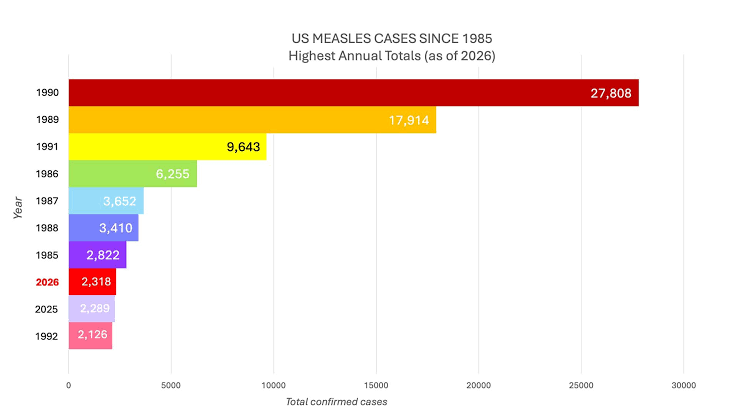
The United States has recorded more than 3,290 measles cases in 2026, the highest annual total in more than three decades, according to the latest CDC figures. The count puts the country’s measles elimination status, held since 2000, at risk ahead of a review expected later this year.
The CDC has logged 38 new outbreaks in 2026, and roughly 95 percent of this year’s confirmed cases are tied to those outbreaks rather than isolated infections. Federal health officials have identified declining childhood vaccination rates as the primary driver, with MMR vaccination coverage among U.S. kindergartners falling from 95.2 percent in the 2019-2020 school year to 92.4 percent in 2025-2026.
Elimination status requires that a country show no continuous domestic transmission of measles for 12 consecutive months. The Pan American Health Organization is expected to review the United States’ status later this year, with genetic sequencing of the virus strain that has circulated since early 2025 playing a central role in that determination. Public health researchers say the sequencing data is consistent with ongoing domestic spread rather than a series of unrelated imported cases.

The vast majority of this year’s cases have occurred in people who were not vaccinated against measles, mumps and rubella. Health officials continue to recommend the standard two-dose MMR vaccine series for children, which has historically provided close to full protection against the disease when both doses are administered on schedule.
Losing elimination status would not change current U.S. vaccine recommendations, but public health experts say it would mark a symbolic setback after 26 years in which the country had kept the virus from establishing sustained transmission. Several of the largest outbreaks this year have been concentrated in communities with below-average vaccination coverage, a pattern consistent with prior years’ smaller outbreaks.
Related from BeezLoop: The CDC Says One Person Died of Measles This Year, Pennsylvania Reports First Measles Deaths in 35 Years and Pennsylvania's Measles Outbreak Hits 693 Cases as CDC Disputes Death Toll.