

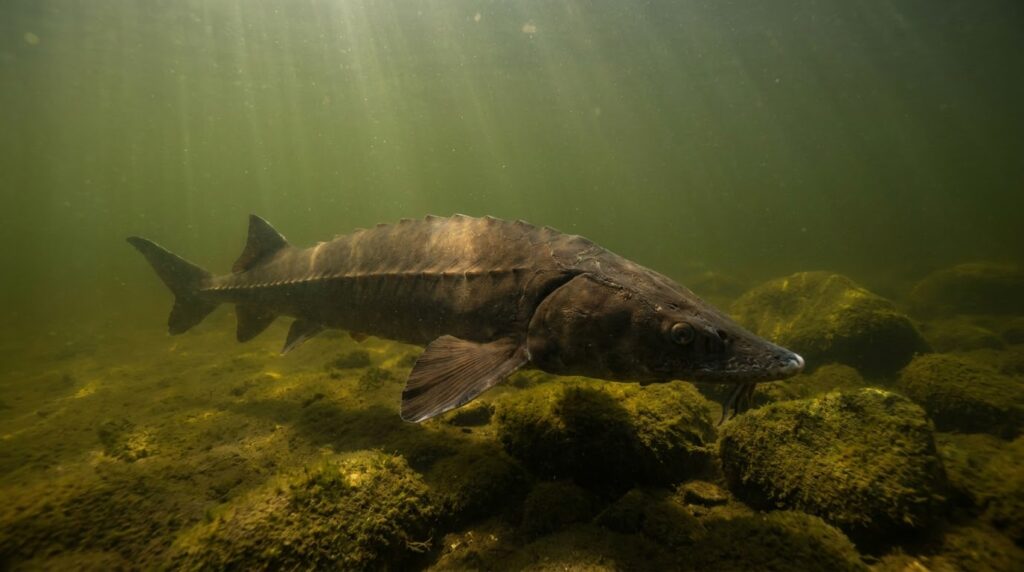
In an era dominated by rapid-fire news cycles, 15-second TikTok trends, and constant digital panic, a fascinating new scientific study has quietly slipped out of Michigan State University. Researchers studying the lake sturgeon, one of North America’s oldest freshwater fish, discovered that these creatures routinely live well beyond 200 years, with several specimens approaching 300 years of age.
Think about the sheer, unyielding scale of that timeline. A sturgeon calmly swimming at the bottom of Lake Michigan today, a fish potentially older than the United States itself, was alive when George Washington was a teenager. It swam through the American Revolution, the Civil War, the rise of the automobile, the birth of the internet, and the entire history of the modern world, all without changing its daily routine.
Now, let’s contrast the patient, majestic lifespan of this 300-year-old fish against the frenetic, exhausting reality of modern human existence.
We are a species that has built an entire society around immediate, algorithmic gratification and manufactured emergency. We spend our precious, fleeting lifespans scurrying on a corporate hamster wheel, stressing over emails, checking our stock portfolios, and panic-sharing AI-generated social media hoaxes claiming the Earth’s gravity is going to turn off for seven seconds during a solar eclipse. We have traded our peace of mind and our connection to the physical world for a constant, high-speed digital dopamine drip that keeps us perpetually anxious and exhausted.
The sturgeon doesn’t worry about the stock market, the latest political polling, or whether its brand-new smartphone is getting a $100 price hike. It simply exists, adapting to its environment, pacing itself, and surviving. Perhaps the ultimate lesson of the 300-year-old sturgeon is a gentle, common-sense reminder of our own insignificance. We are so busy rushing toward the next digital milestone that we are forgetting how to actually live. Maybe it’s time we log off our devices, step away from the feed, and learn how to swim a little slower.