

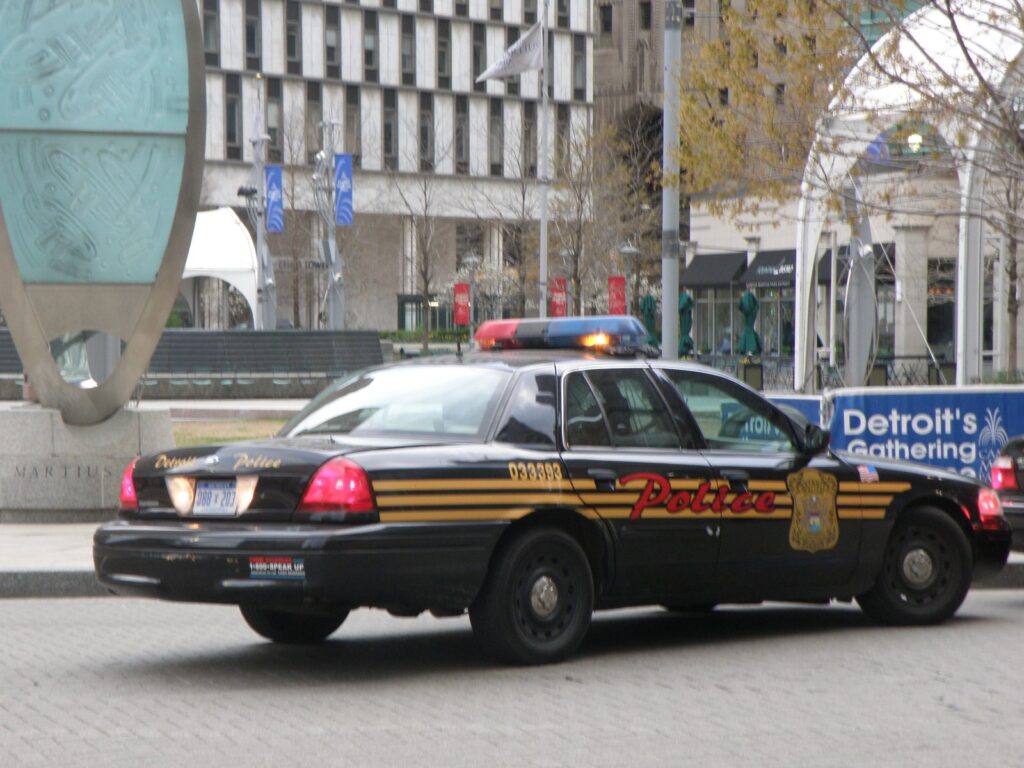
Three men were killed and four other people were wounded at an after-hours strip club operating out of a house on a Detroit residential street Sunday morning. Police had been called to that address seven times already this year.

What happened
Officers responded at 7:21 a.m. Sunday, in daylight, to a largely residential street. They found three men shot dead.
- Three men killed.
- Four wounded, two men and two women, none with life-threatening injuries.
- The wounded were driven to hospitals in private cars, not ambulances.
- All seven are believed to be in their 20s and 30s.
Detroit Police Chief Todd Bettison described the venue as an after-hours location. Other outlets reported it as a home hosting what were described as dancing-type activities. It was not a licensed nightclub.

A fight occurred, an altercation occurred, and as a result individuals decided to settle it with gun violence.
Detroit Police Chief Todd Bettison
No arrests have been announced. Bettison said investigators have leads and that there is no ongoing danger to the public. He declined to say more.
Seven calls to the same address
This is the part that should not get lost in the casualty count.
This address is not new to the Detroit Police Department.
Chief Todd Bettison
Police had been called to that house seven times in 2026 before Sunday. An unlicensed after-hours club was running in a residential neighborhood, the department knew about it, and it was still running at 7:21 on a Sunday morning when three men were shot to death inside it.
Mayor Mary Sheffield asked residents to come forward, saying the city needs more people to speak up to bring justice.
What an after-hours club is
Worth explaining, because it is the structural part.
After-hours venues operate past the legal cutoff for alcohol sales, which in Michigan is 2 a.m. They fill up as licensed bars empty out, they sit outside the inspection, security and capacity rules that apply to real clubs, and when one is running inside a private house there is no licensing authority with obvious jurisdiction over it at all.
That is why 7:21 a.m. is not a strange time for this. The night had never ended.
The BeezLoop Take
Seven prior police calls is not a detail. It is the story.
A licensed nightclub with seven police responses in nine months would be facing a liquor board. This place had no license to pull, which is precisely why it kept operating. The enforcement tools the city actually has, revoking a permit, closing a venue, fining an owner, all assume the business asked permission first. An after-hours club in a house asked nobody, so the city was left with the one tool that does not require permission: sending officers, over and over, to an address everyone recognized.
We would resist making this a story about Detroit specifically, and we would resist the opposite reflex too. This is the third time in a month we have written some version of this paragraph. Twelve teenagers were shot at a Macon park on Sunday at a birthday party that had been relocated there after an Airbnb owner saw guns. Eight people were shot at a Florida memorial gathering held for a teenager who had been killed. The venues differ. The constant is a gathering happening in a space that nobody is responsible for, and a disagreement that ends in gunfire because the guns are already in the room.
The honest limit on all of this is that nobody has said who fired, or why, or whether anyone involved was legally barred from having a gun. Those answers determine which policy argument this case belongs to. Anyone already certain what it proves is telling you about themselves rather than about Detroit.
What can be said now is narrower and still damning. A house on a residential street was known to police as a problem address, and the mechanism that exists to do something about a problem address does not work when the business is not a business on paper. Three men are dead in a building the city had already visited seven times.
The question
If police had been to that address seven times this year, what was supposed to happen on the eighth? And who has the authority to shut down a nightclub that is legally just somebody’s house?
Elsewhere: a Memphis woman was given 30 years for killing a co-worker over a drive-thru order, and a seven-month-old was shot asleep in his mother’s bed in Spartanburg.
Sources: ABC News / AP · Al Jazeera · The Washington Times · Detroit Police Department



[…] memorial for a teenager who had been killed. Seven hours after the shooting in Macon, it was three men killed at an after-hours club running inside a Detroit house. What these share is not a city. It is the same twenty seconds happening in different places: an […]