

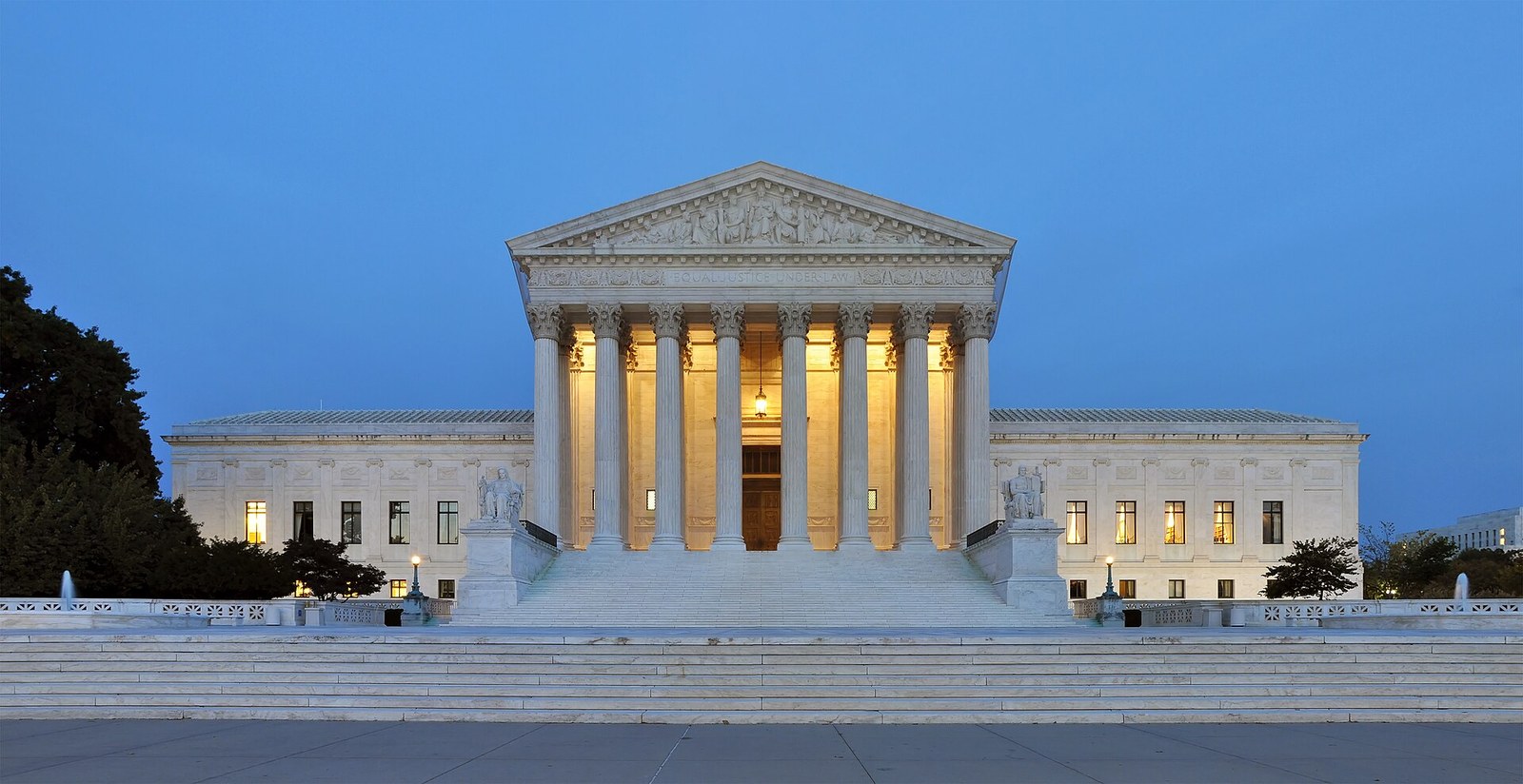
On Wednesday, Dec. 2, the Supreme Court will hear arguments on whether states and cities can ban AR-15-style rifles. It’s one of the biggest gun cases since the court expanded the right to carry in 2022, and the answer could decide whether New York’s decades-old assault weapons ban survives.
The court will hear one hour of argument starting at 10 a.m., per its docket. A decision is expected by the end of the term next summer.
What is the Supreme Court AR-15 case about?
It’s two cases joined together. One challenges Cook County, Illinois’ ban on assault weapons, and the other challenges Connecticut’s. Both lists of banned guns include the AR-15. Lower courts upheld both laws. The federal appeals court in New York said Connecticut’s ban imposes “targeted restrictions on unusually dangerous weapons while preserving numerous legal alternatives for self-defense,” SCOTUSblog reported.

The question for the justices is whether the Second Amendment protects the right to own AR-15s and similar semiautomatic rifles. Under the court’s 2022 Bruen decision, a gun law stands only if the government can show it fits the nation’s “historical tradition of firearm regulation.” The fight is over whether a rifle owned by millions of people can be banned at all.

Where does the Trump administration stand on AR-15 bans?
Against them. The Justice Department filed a brief on the challengers’ side and will argue in person. “Connecticut’s and Cook County’s categorical bans on AR-15 rifles violate the Second Amendment,” Solicitor General D. John Sauer wrote. The brief says the AR-15 is among the most commonly owned rifles in the country, and the court’s history-based test rules out banning weapons “in common use” by law-abiding people.
The court has been signaling this was coming. Earlier this month it left Maryland’s ban on guns in bars, parks and stadiums in place, but the AR-15 question is different. When it turned down a Maryland case last year, Justice Brett Kavanaugh wrote that the court “should and presumably will address the AR-15 issue soon, in the next Term or two,” per SCOTUSblog. Gun safety groups argue these laws save lives. Everytown Law’s Janet Carter called them “critical public safety measures” that are “consistent with the Second Amendment,” NBC News reported.
What does this mean for New York and Florida?
For New York, a lot. State law bans semiautomatic rifles with certain military-style features, per the state, a ban the 2013 SAFE Act broadened after the Sandy Hook shooting. If the justices say AR-15s can’t be banned, New York’s law would almost certainly face a quick challenge. The ruling lands as NYC shootings hit record lows this year. Eleven states and D.C. ban AR-15s and similar rifles, NBC News reported.
Florida doesn’t ban AR-15s, so a ruling for the challengers wouldn’t change the law there. A ruling for Cook County and Connecticut would leave each state to decide for itself. There’s one wrinkle: the lead challenger in the Illinois case dropped out in October, and the court said it will decide whether that case is moot after hearing arguments, SCOTUSblog reported. The Connecticut case doesn’t have that problem.
The BeezLoop Take
This case will settle something the court has dodged for years. A broad ruling against the bans would mean a state can’t decide that a particular kind of rifle, the one used in many of the country’s deadliest mass shootings, is too dangerous to sell. The court can respect the right to self-defense in the home, which Heller protects, without stripping states of the power to draw lines. The question is whether it will.
Should a rifle’s popularity decide whether a state can ban it, or should states be allowed to weigh the danger it poses?