

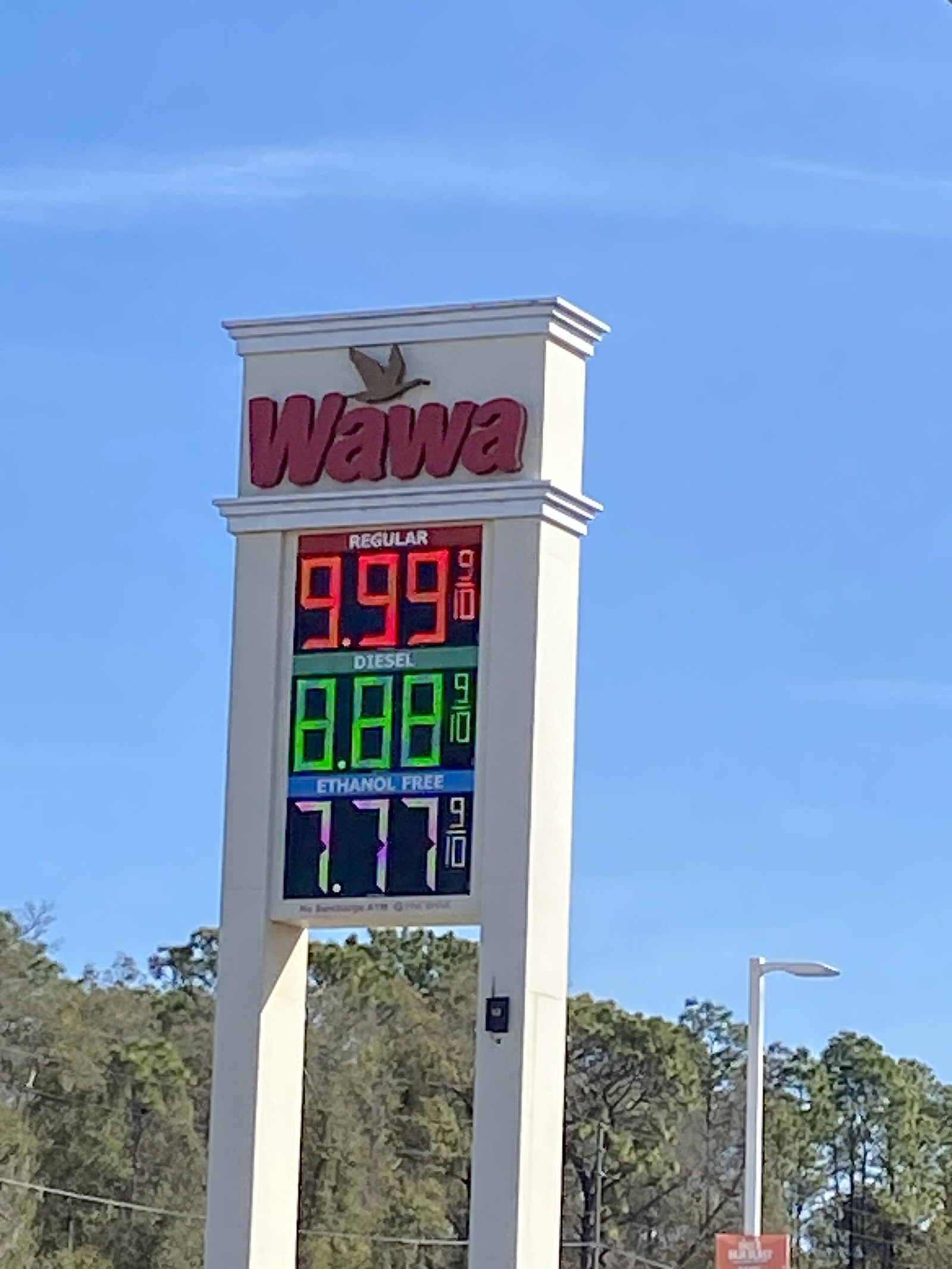
Gas just had one of its best months in years. A strike on a Saudi refinery on Thanksgiving could make December harder. A “hostile aerial projectile” hit Saudi Aramco’s Jazan refinery on Thursday, killing a Nepali worker, wounding several others and temporarily halting some operations, Saudi Arabia’s Energy Ministry said, the Jerusalem Post reported. Oil rose, and the big producers meet Sunday.
What happened at the Jazan refinery?
The projectile started a fire that was brought under control, the ministry said. Jazan, on the Red Sea near Yemen, can process about 400,000 barrels of oil a day. The ministry didn’t name an attacker, but the Saudi-led coalition in Yemen blamed the Houthis, the Iran-backed rebels, and said it destroyed a missile launcher in Hodeidah. Coalition spokesman Turki al-Maliki said that “targeting civilians and civilian infrastructure would be met with a firm military response,” Al Jazeera reported.
It’s part of the wider war with Iran that began in February. The same day, Iran claimed two more tankers hit mines in the Strait of Hormuz, a claim nobody has confirmed. We looked at who benefits from those mine claims yesterday.

How much have oil prices gone up?
Brent crude, the global benchmark, was at $96.60 a barrel early Friday and U.S. crude was at $85.14, up $1.46 from Wednesday, Reuters reported. Both are on track to snap a three-week losing streak. Some analysts think it goes higher. “We think Brent can still push above US$100 a barrel,” ANZ analysts wrote. “So long as a conclusion to the conflict remains elusive, crude oil should maintain a risk premium in pricing,” TD Securities’ Ryan McKay said, per Bloomberg.

Will gas prices go up again?
Not overnight. The national average for regular was $3.55 on Friday, down from $4.27 a month ago, according to AAA. That’s still about 52 cents more than a year ago. Pump prices usually trail crude by a week or two, and nobody can promise where they go next. What we can say is that the long slide that took gas from about $4.29 to the mid-$3.50s, which we covered on Thanksgiving morning, now has a headwind.
What is OPEC+ expected to do on Sunday?
Probably nothing dramatic. The group set its next meeting for Nov. 29, OPEC said. Reuters reported that members have an agreement in principle to keep output targets unchanged for at least the first three months of 2027. Holding steady means OPEC isn’t adding barrels to cool prices, even with the market jumpy.
- If you’re driving a lot this weekend: today’s prices are still near the lowest in months, so there’s no reason to panic-buy.
- If you heat with oil: heating oil follows diesel, which is still about $5.70 a gallon nationally, so lock in a price if your dealer offers one.
- Watch Sunday and Monday: the OPEC+ decision and any new attacks will move crude first, and the pump later.
The BeezLoop Take
Drivers finally got some relief in November, and it came from a global oil glut, not from anyone ending the war. That’s the problem. As long as refineries and tankers in the Gulf keep getting hit, every gallon you buy carries a war premium that can come back any day. The cheapest gas policy available is still a way to end this fight, and nobody in Washington has shown one yet.
How long can gas keep falling if attacks on Gulf oil sites keep coming every week?