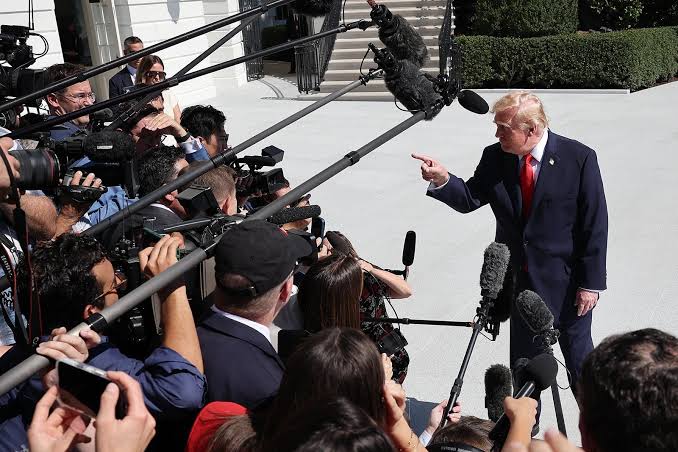
A federal judge ruled late Tuesday that President Trump can’t keep reporters from CNN, MS NOW and Politico out of the White House while their lawsuit plays out. U.S. District Judge Timothy Kelly, whom Trump appointed, found that the ban likely violates the First Amendment and due process, and that Trump’s own words showed he was punishing coverage he didn’t like.
The order covers 78 reporters at the three outlets, the AP reported. It replaces a temporary order from Sept. 24 and keeps their press passes active indefinitely, until the case is decided. The White House and Justice Department didn’t immediately comment.

Why did the judge block Trump’s press ban?
Kelly pointed to Trump himself. “President Trump’s own comments suggest that he intended the revocation of Plaintiffs’ hard passes to alter their reporting on him,” he wrote, NPR reported. He rejected the administration’s national security argument, finding it came after the fact. And he noted the outlets got no warning before Trump announced the ban in a Sept. 18 social media post calling their reporting “fake news.”

He also explained why it matters beyond three newsrooms: “The ban threatens to cut off all Plaintiffs’ access to the White House press area, a space open to many of their competitors, thereby restricting their ability to observe happenings there firsthand, immediately report on those activities, and try to engage with government officials.”
Does the ruling give reporters full access?
No. The order restores the “hard passes” that let regular White House reporters onto the grounds without asking permission each day. It doesn’t require the White House to let them into the Oval Office or onto Air Force One, and the White House has kept CNN and Politico reporters out of the press pool on the plane. Kelly also added a caveat: “no one should interpret the Court’s decision to suggest that President Trump’s concerns about accuracy and fairness in the media’s reporting are unfounded.” The government had asked him to pause his ruling for an appeal. He refused.
“When the President issued his ‘ban on the free press,’ he blatantly and explicitly violated due process and the First Amendment,” said Theodore Boutrous, the outlets’ lawyer.
The BeezLoop Take
The ruling is narrow and it should be. A president is allowed to hate his coverage, complain about it and refuse interviews. What he can’t do is decide which newsrooms get to stand in the room based on whether they cover him the way he wants. A Trump-appointed judge saw that plainly, mostly by reading Trump’s own posts.
If you don’t watch CNN or read Politico, this still affects you. The next president, from either party, gets the same power this one claims. A White House that can pick its press corps can shape what everyone learns about it.
The open question: will the administration appeal, and will it keep the reporters off Air Force One and out of the Oval Office anyway?
Also on BeezLoop: what happened when the White House first said it was banning three newsrooms.
Sources: Associated Press via WJHG · NPR · CNBC · WCPO (video)