

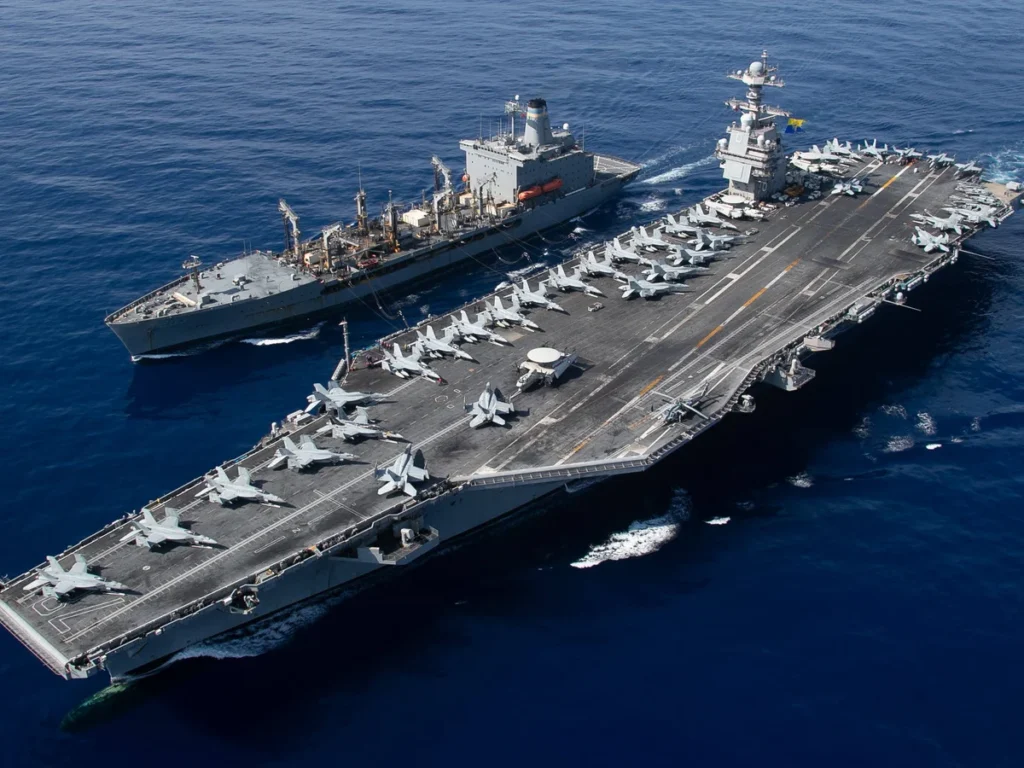
For nearly a decade, the Navy and its shipbuilders have pushed the Ford-class carrier program toward more digitized, automated systems. On August 13, 2026, President Trump moved decisively in the opposite direction.
Trump signed a National Security Presidential Memorandum ordering the Navy to strip the Advanced Electromagnetic Aircraft Launch System, known as EMALS, from future Ford-class carriers and replace it with the traditional steam-powered catapults the fleet relied on for over half a century before Ford’s introduction. The memo gives the Pentagon 60 days to deliver a plan for removing EMALS and the electromagnetic weapons elevators from the still-under-construction USS Doris Miller, replacing them with steam and hydraulic systems instead.
The order revives a long-running argument. EMALS was designed to launch aircraft more smoothly than steam, require a smaller crew, and take up less space belowdecks. In practice, the system has had a rocky development history: the lead ship, USS Gerald R. Ford, suffered a series of software and reliability problems with both EMALS and its electromagnetic weapons elevators during its early years in service, delaying its combat readiness well behind schedule, though the Navy has said reliability has improved significantly since then.
“It’s very complicated,” Trump told reporters, describing his conversations with Navy engineers about the system. “They want to buy digital… You’re going to steam. The digital costs hundreds of millions more.”
Navy officials and shipbuilders have warned that reversing course now, on a ship already years behind schedule and over budget, could add further delay and cost rather than save it. Supporters of the switch counter that steam systems are mechanically simpler to repair at sea, without a software layer that can fail all at once. Both sides agree on one thing: the Doris Miller’s timeline, already the subject of years of scrutiny, is about to get more complicated.