

In the modern military-industrial complex, there is a familiar pattern: a working mechanical system gets replaced with a more complex, software-dependent alternative, promising efficiency gains that don’t always show up on schedule.
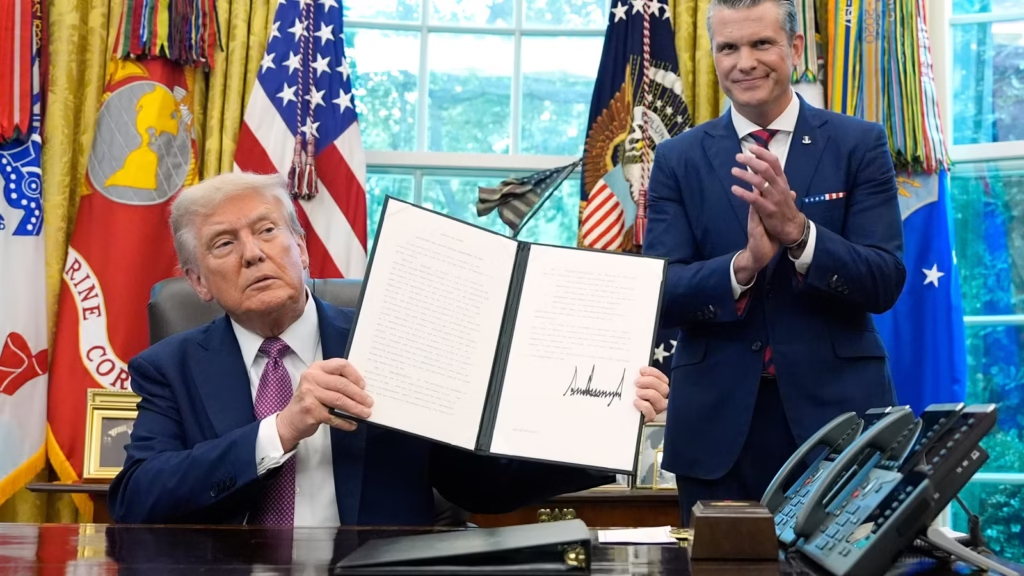
On August 13, 2026, President Trump signed a National Security Presidential Memorandum ordering the U.S. Navy to remove the Advanced Electromagnetic Aircraft Launch System (EMALS) from the upcoming USS Doris Miller carrier and return to traditional steam catapults and hydraulics.
The memorandum gives Defense Secretary Pete Hegseth and acting Navy leadership 60 days to deliver a redesign plan.

To understand why this is causing real friction with military contractors like General Atomics, it helps to look at the history of the Ford-class supercarriers.
For nearly a decade, Trump has complained about the electromagnetic launch systems, retelling a story about a conversation with a Navy officer who described the system as “digital” and overly complicated.
The Navy’s officers and corporate spokespeople have pushed back. They argue that EMALS takes up less space, requires fewer sailors, and can launch a wider variety of aircraft.
But there’s a real case on the other side too. The first-in-class USS Gerald R. Ford was delayed for years in part because the electromagnetic catapults repeatedly ran into reliability issues during testing. When a digital system has problems at sea, the fix usually isn’t as simple as it would be with a mechanical one.
Steam catapults, while heavier and more maintenance-intensive, run on well-understood, decades-proven mechanics. They are reliable and predictable, and that track record is exactly what Trump is citing here.
This is a genuine disagreement between “high-tech military modernization” and a preference for battle-tested reliability. The defense industry has spent years selling a digital future for carrier operations, while critics argue that when lives are on the line, proven mechanical systems still have a place.