

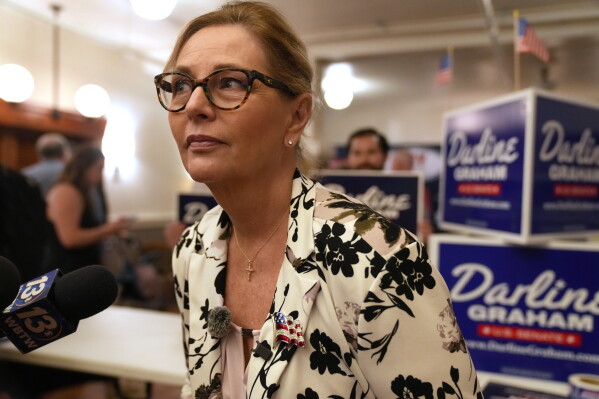
On August 11, 2026, voters in South Carolina cast their ballots in a crowded, 10-way Republican primary election to fill the U.S. Senate seat left vacant by the sudden passing of Senator Lindsey Graham. When the dust settled, newly appointed Senator Darline Graham, Lindsey’s 62-year-old sister, emerged as the top vote-getter, officially advancing to a high-stakes August 25 runoff against Congressman Ralph Norman.
The mainstream media is already framing this as a touching, heartwarming tribute. They highlight how Darline was raised by her older brother after the tragic deaths of their parents, and how her victory is a preservation of the “Graham legacy.”
But if we look at this through a non-partisan, logical lens, the heartwarming narrative completely evaporates. What we are actually witnessing is the blatant, unchecked feudalization of the American political system.

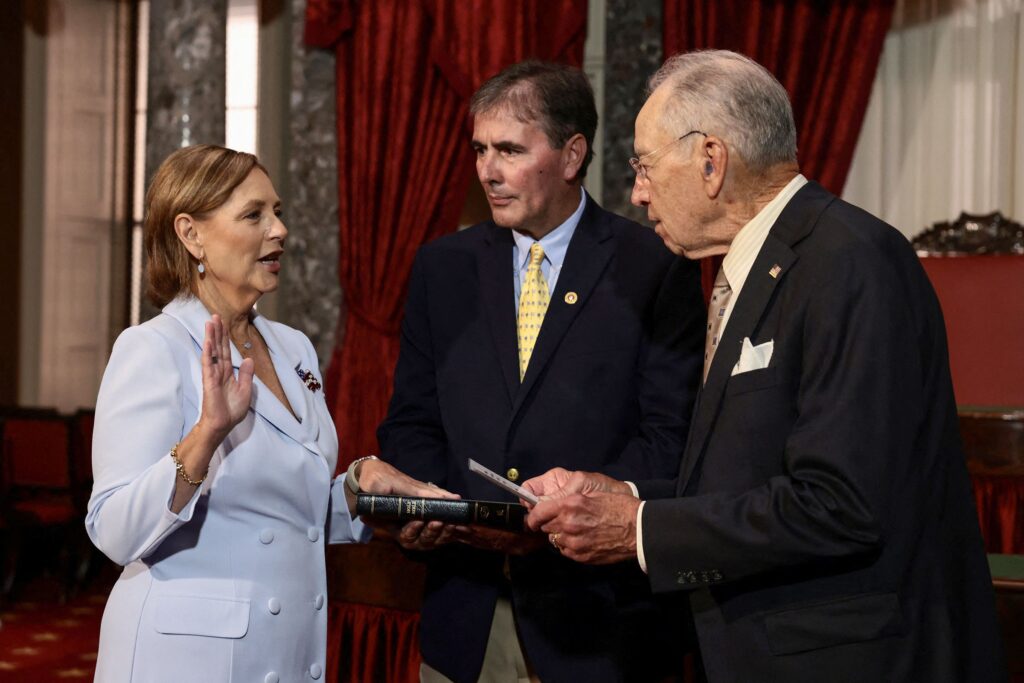
Darline Graham has spent nearly thirty years as a dedicated public administrator, most recently serving as the Commissioner of the South Carolina Commission for the Blind. She has never held a single day of elected public office. Yet, when Lindsey Graham died of an aortic dissection on July 11, Republican Governor Henry McMaster didn’t look for a seasoned lawmaker, a local mayor, or a grassroots community leader to fill the seat. He immediately appointed Lindsey’s sister. Within hours, President Donald Trump hand-delivered his endorsement, and Senate Majority Leader John Thune fell right in line.
The justification for this dynastic appointment is that Darline was “close to her brother’s political orbit.” In three short weeks in Washington, she cast the deciding vote to confirm Trump’s handpicked Attorney General, Todd Blanche, and introduced a Russia sanctions bill named for her late brother. Armed with these “achievements” and a massive statewide branding machine, she successfully cruised past seasoned, long-term representatives in the primary.
This is not representative democracy; it is hereditary politics. We are behaving like medieval peasants, treating a public Senate seat as if it were a family heirloom to be passed down through bloodlines. The seat that Darline Graham now occupies was held for 23 years by her brother, and for 46 years before that by Strom Thurmond. For nearly seven decades, one of South Carolina’s most powerful federal offices has been controlled by essentially two families.
The political class has realized that building a campaign around policy, records, and debates is far too risky and expensive. It is much easier to run a brand-name legacy, capitalize on grief, and use top-down executive endorsements to bully the base into compliance.
When the political establishment treats a U.S. Senate seat like a country-club inheritance, they are telling the American people that our votes are merely a rubber stamp for their dynastic successions. If we want a government that actually represents working-class families, we must stop voting for family crests and start demanding actual democratic competition.