
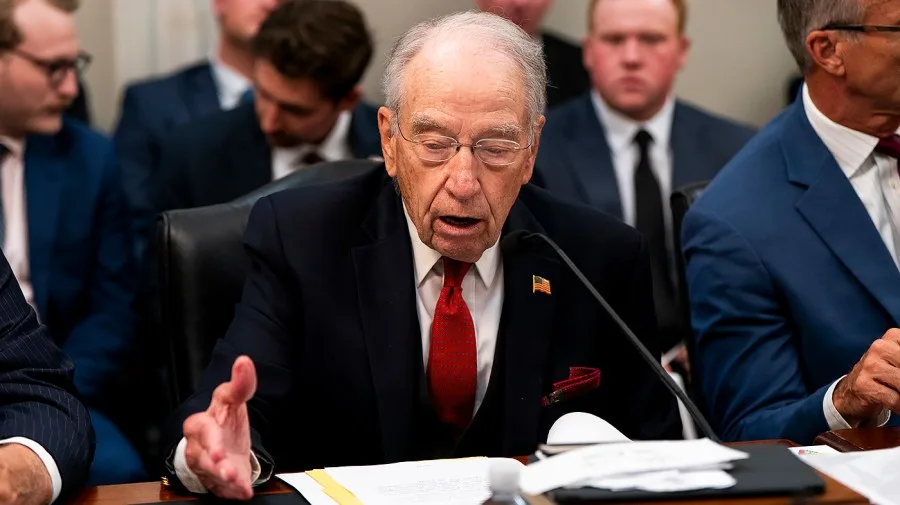
Chuck Grassley is publicly asking Donald Trump to do something about diesel prices. He is 92, he has been in the Senate since 1981, and he is posting in all caps about farmers going under. The president already told everyone what his plan is, and it is to wait until after the election.
What Grassley is asking for
An embargo on diesel exports. His argument is that presidents in the 1970s restricted agricultural exports when food prices spiked, so the same tool should apply now.
W diesel $6.57 in Iowa why doesn’t Pres Trump put an embargo on diesel exports like presidents in the 70s put embargoes on ag products bc food prices were inflated. High diesel prices ARE KILLING FARMERS INCOME #cornwatch #soybeanwatch
— Chuck Grassley (@ChuckGrassley) September 2026
He has also said struggling farmers are “losing our profit margin and going out of business.”
The numbers behind it
National diesel hit an all-time high of $6.51 a gallon on Sunday. A year ago it was about $3.70. That is not a drift, that is a 76% increase.
Iowa is worse. Grassley put his state at $6.57.
The export figure is the part that gives his argument teeth. The US shipped out nearly 400 million barrels of diesel last year, and roughly 50 million barrels in May alone, the highest monthly total in records going back to 2009. American refiners are selling abroad while American farmers pay record prices at home. That is a real policy question, not a talking point.
We covered diesel crossing $6 and oil hitting $100 a barrel earlier this month. The Iran war, now in its seventh month, and disruption around the Strait of Hormuz are the drivers.
The president’s own timeline
On September 9, at Joint Base Andrews, the president said this out loud.
Right after the election, oil prices are going to be tumbling downward.
President Donald Trump, September 9
He said the same about the war itself, that it would end “immediately after the election.”
So the answer to Grassley’s question about why there is no embargo has already been given, in public, by the person he is asking. The timeline is the midterms.
Collins and the fundraising email
Susan Collins has not issued a September statement attacking the administration over gas prices, and we are not going to pretend she has. What she did do, in August, was send a campaign email asking supporters to chip in for gas money for a statewide tour of Maine, in the middle of a fuel price spike driven by a war she supported.
Marjorie Taylor Greene has been more direct, publicly blaming Trump for high gas prices during the Iran war.
The BeezLoop Take
Grassley is not wrong on the merits and we would not dismiss him because of his party. Record diesel exports during a domestic price spike is a genuine contradiction, farmers really are eating it, and a senator pressing a president of his own party in public is worth more than the hundred who say nothing. The 1970s precedent he is citing is real.
Our position: the problem is that he is asking a question the president answered twelve days ago. Trump said prices come down after the election. He said the war ends after the election. That is either a prediction about markets he does not control, or an admission that timing is a choice being made. Neither reading is good, and Republicans pressing for relief are pressing against their own president’s stated schedule, not against inaction.
The Collins detail is small but it says something. A sitting senator asking donors for fuel money during a price crisis she voted to help create is the whole dynamic in one email: the cost is real, it is being felt, and the people who supported the policy that drove it are looking for someone else to absorb it.
What to watch
Whether the administration responds to the embargo idea at all, and whether any other farm-state Republicans sign onto it. An export restriction would be a significant intervention in a market this White House has preferred to leave alone, and doing it before November would contradict what the president already said is going to happen.
Sources: Newsweek · The Hill · CNBC · The Hill on Greene