

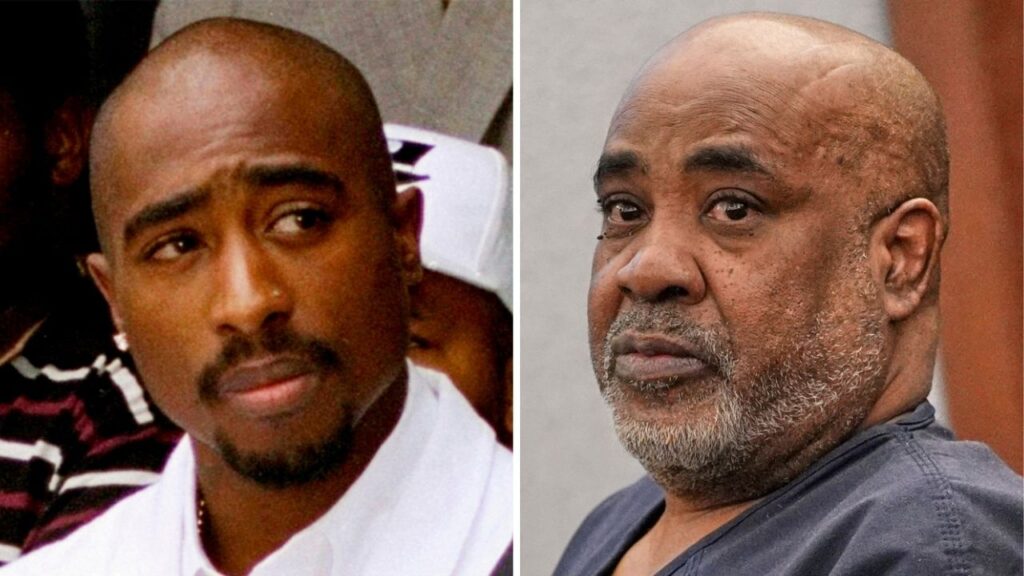
A Las Vegas jury found Duane “Keffe D” Davis guilty of first-degree murder in the 1996 killing of Tupac Shakur, closing a case that stayed open for nearly 30 years. The conviction didn’t come from new forensic evidence or a surprise witness. It came, more than anything, from a book Davis wrote about it himself.
The Verdict
Jurors deliberated for about three hours after a roughly two-week trial before returning a unanimous guilty verdict. Davis, 63, is the only person ever criminally charged in Shakur’s killing. Shakur’s sister, Sekyiwa “Set” Shakur, cried and hugged prosecutors as the verdict was read. The judge ordered Davis held until sentencing on October 13, where he faces up to life in prison.
Why did this take almost 30 years?
Not for lack of a theory about who did it. Investigators had believed for decades that the shots came from a white Cadillac that pulled alongside Shakur’s BMW near the Las Vegas Strip on September 7, 1996, following a casino lobby fight involving Davis’s nephew, Orlando “Baby Lane” Anderson, earlier that night. What Las Vegas detectives never had was anyone willing to say so under oath. The investigation stalled for years on unreliable informants and a culture of silence around the shooting. Anderson, long suspected of being the triggerman, was himself killed in an unrelated shooting in 1998, removing the most obvious defendant before charges were ever filed.

The memoir that reopened the case
In 2019, Davis published a tell-all memoir, Compton Street Legend, in which he placed himself inside the Cadillac and identified Anderson as the shooter. He repeated versions of the account publicly, including in an appearance on BET’s Death Row Chronicles. Prosecutors built their case largely on those statements, and on the simple fact that Davis had repeatedly put himself in the car the shots were fired from.
At trial, Davis’s defense was that he had made it up, telling the jury the memoir account was essentially fiction sold for money and credibility. The jury didn’t buy it. The outcome follows a recognized pattern of defendants convicted substantially on confessions they published themselves, where the later claim that the story was invented tends to land poorly against a detailed, first-person account the defendant profited from.
Didn’t he have an immunity deal?
This was the most legally interesting question in the case. In 2008 and 2009, Davis gave confidential proffer statements to LAPD investigators working a task force on the killing, and he has said he understood those sessions to be protected: “I sang because they promised I would not be prosecuted,” he said. Prosecutors argued that whatever protection attached to those closed-door sessions did not extend to Davis voluntarily telling the same story to a publisher and a television audience a decade later. The court allowed the case to proceed on the public statements, and that distinction, between what he told investigators privately and what he chose to publish, is a likely centerpiece of the appeal he says he intends to file.
He wasn’t accused of firing the gun. Why first-degree murder?
Prosecutors never claimed Davis pulled the trigger. They portrayed him as the shot-caller who organized and directed the shooting as retaliation for the earlier attack on his nephew. Under Nevada’s accomplice liability law, that is enough: a person who aids, encourages, or orchestrates a murder can be convicted of it as though they committed it themselves. This is why the identity of the actual gunman, dead since 1998, was never something prosecutors needed to prove to secure a first-degree conviction.
What’s still unresolved
A conviction is not the same as a full accounting. The man prosecutors say fired the shots was never charged and cannot be. No one else involved in the Cadillac that night has faced charges. And the killing of Christopher “Biggie” Wallace six months later, long speculated to be connected, remains unsolved with no charges filed. For the Shakur family, the October 13 sentencing is the first time in three decades that anyone will be held legally accountable for his death, but the case that closed this week answers only part of what happened.
Related from BeezLoop: The Tell-All Trap: Why "Keffe D" Is on Trial for the Tupac Shakur Murder Nearly 30 Years Later, Philadelphia's 'Chucky Mask' Suspect Fled Cross-Country to Las Vegas Before U.S. Marshals… and Las Vegas Man Confesses to Fatally Shooting Girlfriend and Her Two Children, Police Say.


[…] on BeezLoop: how the jury convicted Davis in August, and the tell-all memoir that put Keffe D on […]