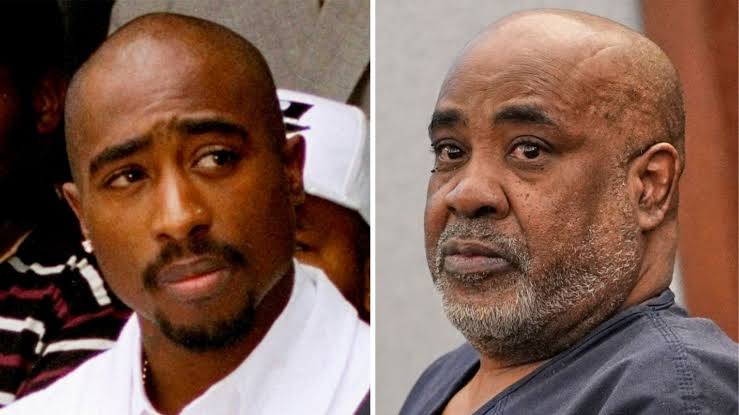
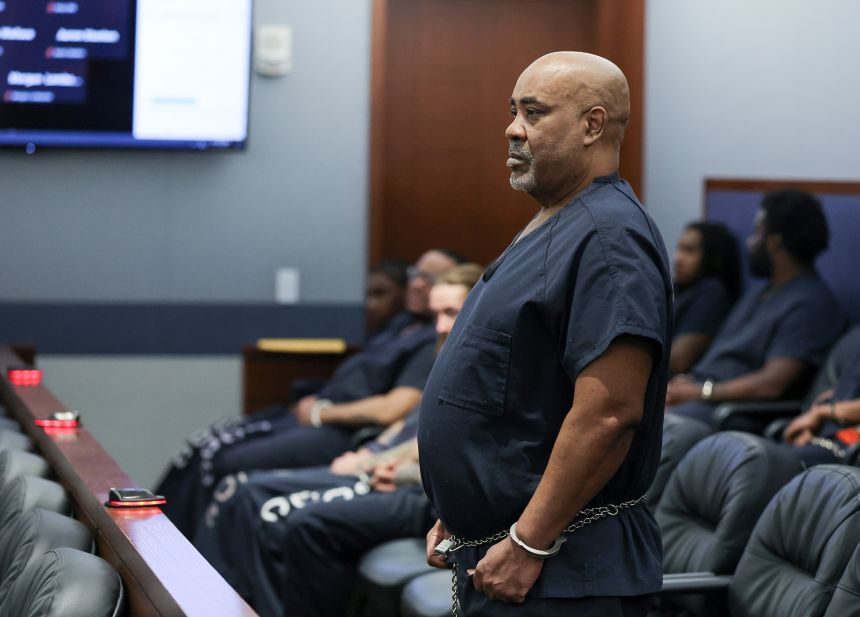
Duane “Keffe D” Davis was sentenced Tuesday to 40 years to life in prison for the 1996 murder of Tupac Shakur, the only person ever charged in one of the most famous killings in American music. Davis, 63, will have to serve at least 40 years before he can be considered for parole, which at his age likely means he’ll die in prison.
Clark County District Judge Carli Kierny gave him 20 years to life for first-degree murder and another 20 years to life for using a deadly weapon, Variety reported. Prosecutors had asked for the maximum, life without parole. Davis gets credit for 731 days already served, and he and his lawyer said they’ll appeal.
What did Tupac’s family say at the sentencing?
His sister, Sekyiwa “Set” Shakur, fought back tears as she talked about living with trauma since his death. “I spent 30 years without my protection,” she said. “I believe that if any life mattered, if all life matters, for sure this man’s life mattered.” His brother Maurice “Mopreme” Shakur asked for the longest sentence possible. “Pac didn’t get a chance to have any kids, Pac didn’t see his nieces and nephews grow up and Pac didn’t have a trial,” he said. “All Pac got was a death sentence.”

The prosecutor called Davis “an eight-time felon” who had “earned” the maximum. When Davis spoke, he told the judge mainly that he wanted his belongings back that police took from his home.
How did prosecutors convict Keffe D?
Mostly with his own words. For years, Davis talked about the killing in police interviews, documentaries, podcasts and his 2019 memoir, “Compton Street Legend.” He described sitting in the front seat of a white Cadillac and passing a .40-caliber Glock to the back seat, where, he said, his nephew Orlando “Baby Lane” Anderson fired into the BMW carrying Shakur and Death Row Records boss Marion “Suge” Knight, Courthouse News reported. Prosecutors never claimed Davis pulled the trigger. Under Nevada law, helping commit a murder is enough.
The motive, prosecutors said, was revenge. Hours earlier, after the Mike Tyson fight at the MGM Grand on Sept. 7, 1996, Shakur and his entourage beat up Anderson inside the MGM Grand. Shakur was shot four times and died six days later, at 25. Writing the book also cost Davis the deal he’d made with police in 2008, when he talked in exchange for a shot at a lighter sentence on drug charges, CNN reported. A jury convicted him on Aug. 31 after less than three hours of deliberation. Anderson and the other two men in the Cadillac are dead.

Is the Tupac case over?
Not quite. Davis’ lawyer, Michael Sanft, argued at trial that the only real evidence was Davis’ own boasting from a man trying to make money off a story, and that will likely be the heart of the appeal. And the killing of Christopher Wallace, the Notorious B.I.G., six months after Tupac’s, remains officially unsolved, even though his name came up again and again in the Las Vegas courtroom.
The BeezLoop Take
Thirty years is too long, and the family’s words in court were the reminder that this was never just a pop culture mystery. A 25-year-old man was killed at a red light, and almost everyone who knew who did it stayed quiet or bragged about it for decades.
Davis was convicted by his own mouth. That’s legitimate, and the jury agreed fast. But it also means the case rests on a man who has told this story for money, and an appeals court will look hard at that. A sentence that avoids the maximum may help it hold up.
The open question: with Davis in prison, will anyone ever be charged for Biggie Smalls’ murder?
Also on BeezLoop: how the jury convicted Davis in August, and the tell-all memoir that put Keffe D on trial.
Sources: CNN · Variety · Courthouse News Service · KTNV Las Vegas · Associated Press (video)