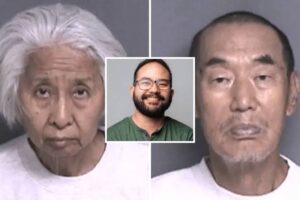

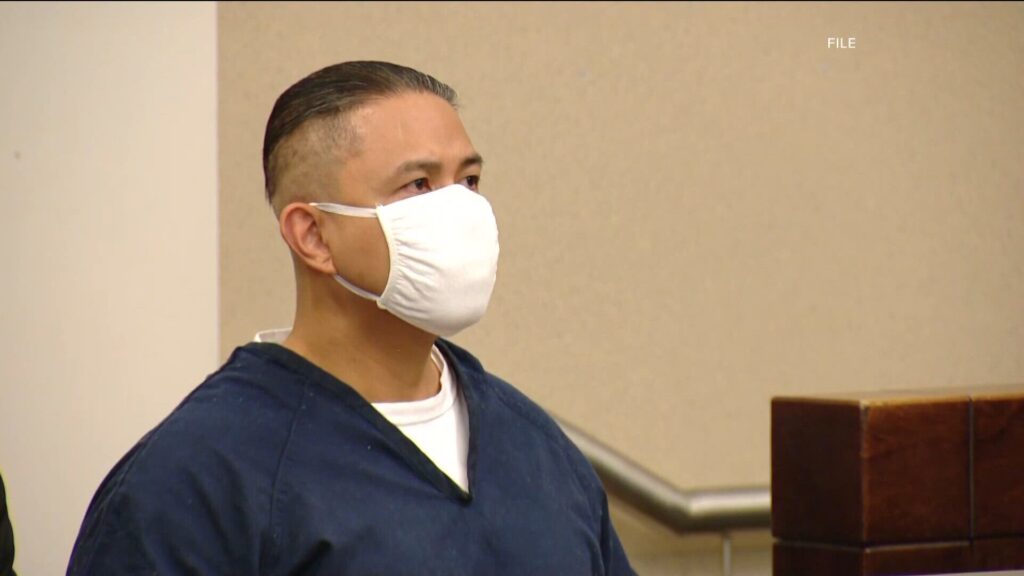
Larry Millete is due in a San Diego courtroom today to be sentenced for murdering his wife. A jury convicted him in July. Maya Millete has been missing since January 2021 and her body has never been found.
The case
May “Maya” Millete was 39, a Navy contract specialist, born in the Philippines and raised in Hawaii from age 13. She and Larry met in high school. They had three children and lived in the San Miguel Ranch neighborhood of Chula Vista.
She was last seen around 5 p.m. on January 7, 2021. Earlier that day she had called a divorce attorney. Her sister reported her missing on January 9.

Investigators served 67 search warrants and conducted 87 interviews before arresting Larry Millete on October 19, 2021.
- Audio captured eight loud bangs near the home around 8:30 p.m. the night she disappeared.
- Surveillance footage showed Larry positioning the family Lexus with its rear out of camera view on January 8.
- A search of the house turned up a vial containing a chemical found in hemlock.
Prosecutors argued the point that ended up defining the case: Maya wanted to leave her marriage, not her life.
Where it stands today
A jury convicted Millete of first-degree murder on July 9, 2026, after roughly five hours of deliberation across two days. On July 20 he pleaded guilty to a separate felony count of possessing an assault weapon.
Judge Enrique Camarena set sentencing for today.
- First-degree murder carries 25 years to life.
- The assault weapon count carries up to three years, with no agreement on the term.
His defense has filed for a continuance, saying it needs more time. Reporting ahead of the hearing suggested the judge may simply set a new date rather than impose a sentence. As of this writing the hearing has not happened, and we will update when it does.
Maya’s three children were placed with her sister, Maricris Drouaillet, in August 2024. Maya remains classified as missing.
The BeezLoop Take
The thing that makes this case matter beyond San Diego is that a jury convicted a man of first-degree murder without a body, without a cause of death and without a crime scene. That used to be close to impossible, and juries were told for a century that it should be.
It is the right outcome and it should still make people slightly uneasy, and holding both of those at once is the honest position. The evidence here was circumstantial but it was dense: the divorce call hours before she vanished, the car repositioned out of camera view the next day, the hemlock compound, the eight bangs, and a pattern of controlling behavior that prosecutors built across months. That is not a hunch. But a conviction assembled entirely from inference is a conviction with no single fact that can later be shown to be wrong, which also means there is no single fact that can later exonerate anybody. Five hours of deliberation on a case that took 67 warrants to build is fast.
The delay is the part we would not be cynical about, though it will read badly to people who have waited five years. A defense asking for more time before a 25-to-life sentencing is doing its job, and a judge granting it is protecting the conviction from being unwound on appeal. Rushing a sentencing to satisfy public impatience is how you end up doing this again in 2031.
What is genuinely unresolved is Maya. A sentence closes a criminal case and does nothing else. Three children lost their mother and will grow up with a father in prison for killing her, and still nobody has told them where she is. Millete is the only person who can answer that, and after today he has less reason to than he has ever had. That is the flaw in every no-body prosecution, and there is no fix for it: the sentence removes the last thing you had to trade.
The question
If a first-degree murder conviction can be built entirely from circumstance, what is the standard for the next case that has less? And once a sentence is imposed, what incentive remains for anyone to say where Maya Millete is?
Related: the Caleb Flynn murder trial, where the evidence-tampering count is the case, and the Lindsay Clancy mistrial after a jury deadlocked for seven days.
Sources: KPBS on the verdict · Times of San Diego · CBS 8 on the continuance request · FOX 5 San Diego