

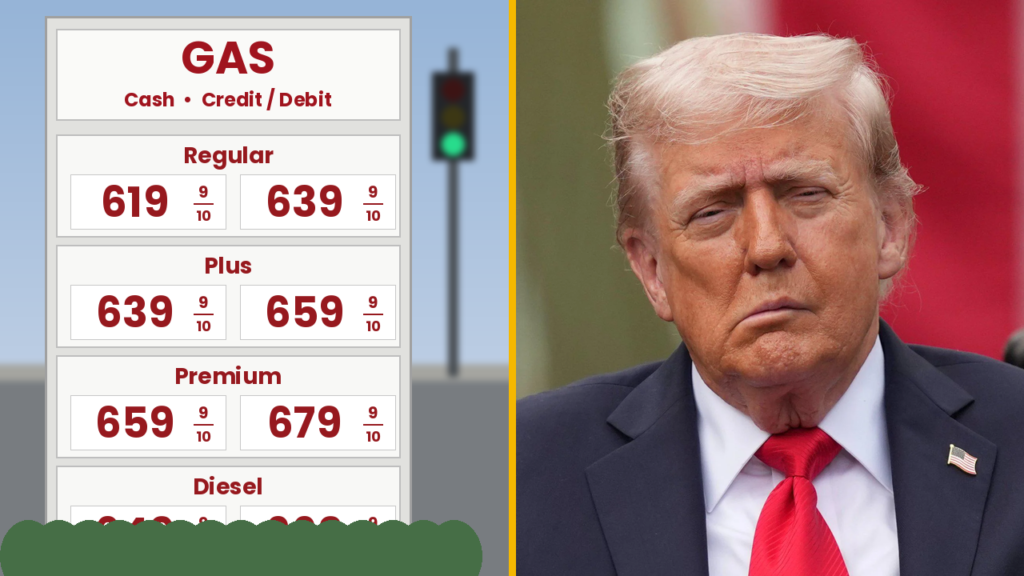
Trump’s approval is somewhere between 29 and 37 percent depending on the poll. The number that should worry his party more is this one: the share of self-identified MAGA Republicans who support him has dropped nine points since spring.
The numbers
Give the range rather than the worst one, because picking the lowest poll is how people mislead with accurate figures.
- Strength In Numbers / Verasight, September 23: 33% approve, 63% disapprove. His worst since May 2025.
- Polling averages around the same period: roughly 37% approve, 60% disapprove.
- American Research Group: 29%.
- Republicans who strongly approve: down from 52% in the spring to 41%.
- Self-identified MAGA Republicans who support him: down from 71% to 62%.
On the economy specifically: 63% of Americans say the economy is bad, and 57% of voters say they are financially worse off.

Even the Iran confrontation has eroded. Republicans strongly approving of his handling of it fell 18 points to 30%, and among MAGA Republicans it fell 21 points to 43%.
Why is the economy doing this?
The mechanism is not mysterious and we have been covering the pieces of it.
The Federal Reserve raised rates on September 16 for the first time in three years, to 3.75-4.00%, because inflation is above target and oil is expensive. Oil is expensive because of the standoff with Iran. The 10-year Treasury is at 5.24%, which is what mortgages and car loans track. Diesel is $6.53.
None of that shows up in an index. All of it shows up in a monthly payment.
The BeezLoop Take
The erosion is real, it is concentrated in the economy, and it is happening inside his own coalition rather than at the edges. That last part is what makes it different from ordinary midterm drift.
What the numbers actually describe is a coalition built on a specific promise. The 2024 argument was not primarily about ideology; it was that groceries and gas cost too much and the other party did not care. Voters who bought that argument now report being financially worse off, and they are not measuring against an abstraction. They are measuring against the promise. A base that came for prices leaves over prices.
The Iran number is the one that should alarm the White House most, and almost nobody is reading it that way. A 21-point drop among MAGA Republicans on a foreign confrontation is not war-weariness in the abstract. It is the part of the coalition that was explicitly promised no new wars, watching an oil-driven standoff raise the price of their own commute. Those are the same voters and it is the same complaint.
The honest caveat is that approval polls in September of a midterm year are not destiny, and 29% from a single pollster is not a finding. Presidents recover. Oil prices fall. If the Iran talks produce something, crude comes down, the Fed skips the second hike and a lot of this reverses by January. That is a real possibility and anyone treating these numbers as a sealed outcome is doing the same thing the other side did in 2024.
But the structural problem does not have a communications fix, and the administration keeps reaching for one. You cannot advertise your way out of a gas price. Nearly a million dollars of public money bought NFL airtime for a message about communism while 57% of voters said they were worse off. The people who needed persuading were watching the same game and paying $6.53 for diesel to get there.
If a coalition assembled on the cost of living is coming apart over the cost of living, what is the argument that holds it together?
If a coalition assembled on the cost of living is coming apart over the cost of living, what is the argument that holds it together? And does anyone in this White House believe the problem is fixable with messaging?
Sources: Strength In Numbers / Verasight · Forbes · NBC News · The Hill