
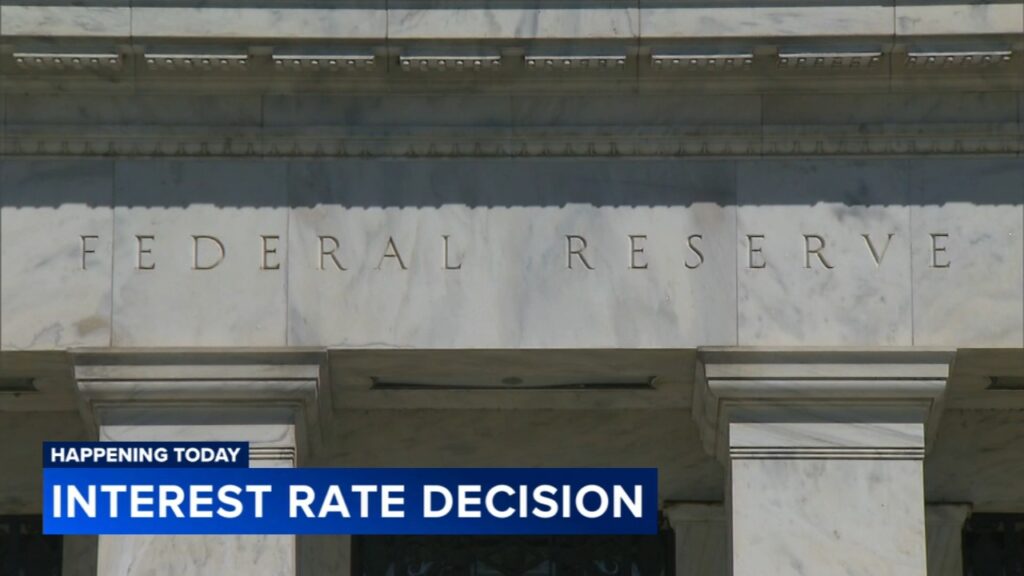
The Federal Reserve is set to announce its latest interest rate decision Wednesday at 2 p.m. Eastern, with markets pricing in roughly 90% odds of a quarter-point rate hike, moving the target range from 3.5%-3.75% up to 3.75%-4%. Fed Chair Kevin Warsh will hold a press conference afterward alongside the release of the Fed’s updated economic projections.
Why would the Fed raise rates instead of cutting them?
Inflation pressure has been building from multiple directions at once. The 10-year Treasury yield has climbed to around 5%, its highest level in nearly two decades, and Brent crude has been trading near $109 a barrel following recent Middle East supply disruptions, both of which tend to push consumer prices higher. Fed officials have also flagged that tariff costs are still working their way through the economy, with businesses continuing to pass those costs on to consumers rather than absorbing them. A rate hike is the Fed’s standard tool for cooling that kind of inflation pressure, even though raising rates during a period of economic uncertainty carries its own risk of slowing growth further.
What would this actually mean for regular people?
A quarter-point hike would be the first rate increase since July 2023, reversing a stretch of rate cuts and pauses that borrowers had gotten used to. Anyone carrying a credit card balance, a variable-rate loan, or shopping for a new mortgage would likely see borrowing costs tick up in the following weeks. On the flip side, savers with high-yield savings accounts or CDs would generally see slightly better returns, since banks tend to raise deposit rates alongside their lending rates. The size of the move matters too: a quarter point is a relatively modest increase, and the Fed’s updated projections and Warsh’s press conference comments will likely matter more for markets than the rate change itself, since they’ll signal whether more hikes are expected before year’s end.
How confident is the market that this is actually happening?
Very. The CME FedWatch tool has been showing roughly 86-90% odds of a quarter-point hike since the August inflation report came out on September 11, which is about as close to a market consensus as these decisions get. That doesn’t guarantee the outcome, since the Fed’s own internal debate could still shift at the last minute, but it does mean the real news value this afternoon is more likely to come from what Warsh says about the path forward than from the rate decision itself.
Sources: FedRateCalc · CNBC · TIOmarkets · Charles Schwab