
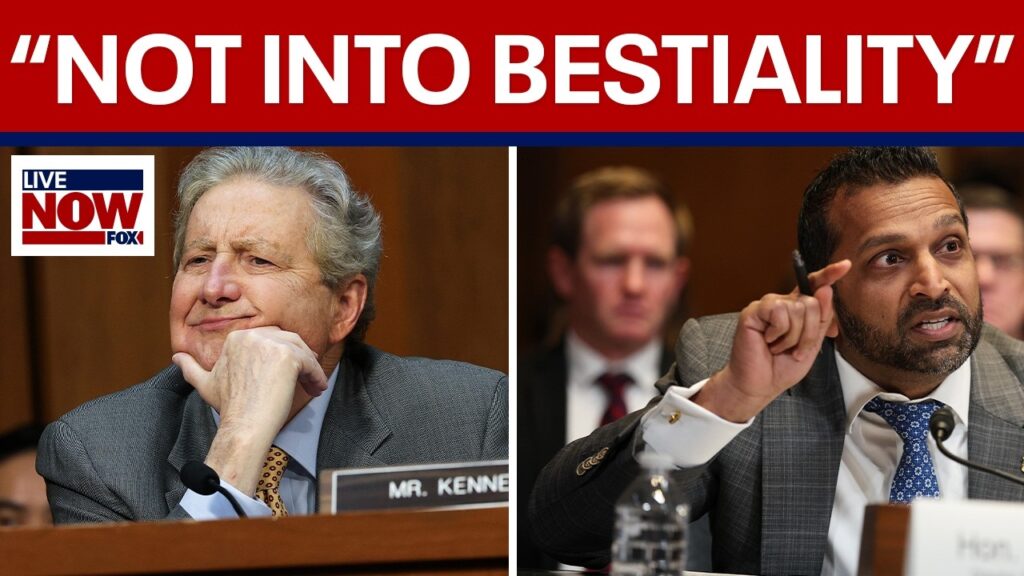
FBI Director Kash Patel spent part of a Senate Judiciary Committee hearing Tuesday defending why the bureau’s updated hiring guidelines no longer automatically disqualify job applicants over past acts of bestiality, in one of the more surreal exchanges of oversight testimony in recent memory. The policy traces back to a June internal memo that loosened several long-standing automatic disqualifiers for FBI hires.
What did the June memo actually change?
The memo, first reported by CBS News, softened automatic disqualifiers in three areas. Applicants who paid for sex are no longer automatically barred if it happened more than a decade ago, occurred fewer than three times, and they’re not applying for a position requiring an especially high level of public trust. Theft is forgiven if three or more years have passed since the offense. And bestiality or animal cruelty is no longer an automatic disqualifier if the applicant was a minor at the time it happened. The FBI has characterized the changes as giving hiring managers “flexibility” rather than lowering standards, saying in a statement that the bureau “would never” disqualify people for “criminal sexual acts” outright and that context matters — including whether someone was themselves a victim.
What exactly did Patel say at the hearing?
Sen. John Kennedy pressed Patel directly on the bestiality provision during Tuesday’s Senate Judiciary Committee hearing. When Kennedy asked, half-mockingly, “So you disqualified the animal?”, Patel responded, “Well, I don’t think… We have great canines, but we’re not going to—” before Kennedy cut to the real question: “Why would you even get into bestiality?” Patel’s actual defense was about trafficking: he argued that victims who were forced into bestiality by traffickers shouldn’t be automatically barred from an FBI career over something done to them, not by them. Kennedy pushed back with a hypothetical: “If Joe participated in bestiality, not as the animal, but as the human, don’t you think he ought to be disqualified?” Patel drew a distinction: “If he voluntarily did it? Sure. But if he was trafficked into it.” When Kennedy asked, “How do you involuntarily do it?”, Patel explained that traffickers can force victims into degrading acts as part of exploitation, and that some of those victims later go on to qualify for law enforcement careers. Sen. Dick Durbin, the committee’s ranking Democrat, told Patel he’d “turned it upside down” in how he was framing the policy.

Why is Patel defending this so specifically instead of just changing the policy back?
Patel has tied the broader hiring shake-up to a real staffing crisis: the FBI lost 1,139 special agents in 2025, dropping the bureau to roughly 13,700 agents, and Patel has publicly blamed hiring rules he considers overly restrictive for making it harder to rebuild those ranks. That’s the practical motivation behind loosening the theft and prostitution disqualifiers too — treating old, minor, and resolved offenses as less relevant than they used to be under the assumption that categorically banning anyone who ever crossed those lines is shrinking an already-thin applicant pool. The bestiality provision specifically is where Patel is leaning hardest on the trafficking-victim rationale, arguing it would be perverse to treat someone who was coerced as if they’d committed the underlying act themselves. Critics, including Durbin, argue the policy as written doesn’t actually limit itself cleanly to trafficking victims and instead just removes an automatic disqualifier altogether, leaving the judgment call to individual hiring managers.
Is there actually a coherent policy here, or is this being handled ad hoc?
That’s the core of the criticism. The memo doesn’t distinguish between someone who was trafficked and someone who wasn’t — it simply removes bestiality as an automatic bar for applicants who were minors at the time, full stop, with no requirement to prove coercion. Patel’s Senate testimony defended the change using a trafficking-victim justification that isn’t actually written into the policy’s plain text, which is what let Kennedy back him into circular answers about who “voluntarily” does something versus who’s “trafficked into it.” Whether the FBI tightens the language to explicitly require evidence of coercion, or leaves it as broad hiring-manager discretion, remains an open question after Tuesday’s hearing.
Sources: Mediaite · The New Republic · Rolling Stone · Crooks and Liars · Fox10