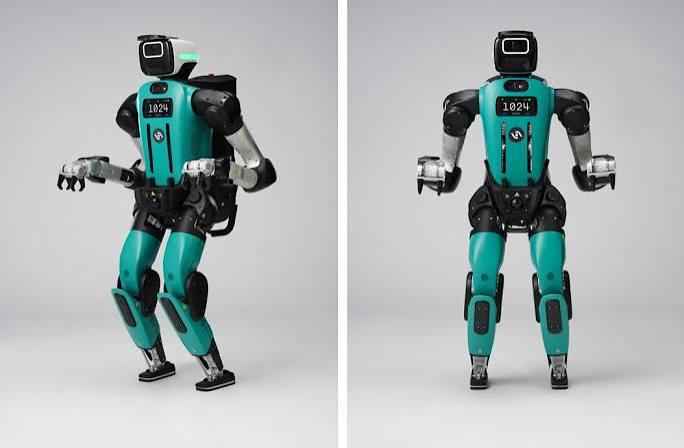
Agility Robotics unveiled Digit 5 on Tuesday, a humanoid robot the Oregon-based company says is its first built to work safely in close proximity to people without the cages, fences, or other physical barriers that industrial robots typically require. The company is marketing it as the first “cooperatively safe” humanoid at commercial scale, with early access planned for the first half of 2027.
What makes this robot “cooperatively safe”?
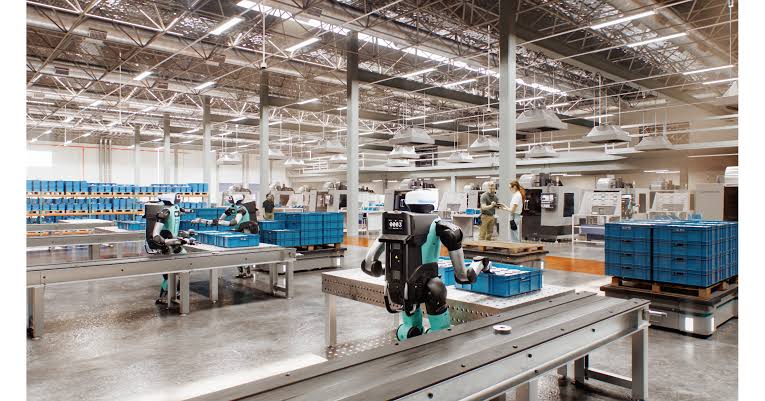
Digit 5 uses AI-driven collision-avoidance software paired with new sensors to detect people nearby and adjust its behavior in real time — steering around a person, stopping in place, or sitting down, depending on the situation. That’s the core pitch: most industrial robots today need physical barriers to keep workers safe, which limits where and how they can be deployed on a factory or warehouse floor. A robot that can safely share open space with human coworkers can, in theory, slot into existing workflows without a facility redesign.
What can it actually do, and how does it compare to earlier versions?
Digit 5 can repeatedly lift up to 50 pounds, recharge in about nine minutes, and is built for tasks like loading materials onto equipment, sorting parts, sequencing items, and inspecting products, according to Agility. The company says it comes with new legs, batteries, and safety architecture compared to prior Digit generations, and is designed to operate more than 20 hours a day across shifts with minimal downtime for charging.

Is anyone actually buying this, or is it still a prototype?
Agility says it already has more than $300 million in multi-year customer orders as of earlier this year, suggesting real commercial interest rather than a pure concept demo. The company’s timeline has early-access customers getting Digit 5 starting in the first half of 2027, with general availability for manufacturing, warehouse, and distribution operators by the end of that year — meaning this is a product roadmap, not something showing up on warehouse floors this year. Agility has also been pursuing a SPAC listing valued around $2.5 billion, tying the Digit 5 launch to the company’s broader push to prove humanoid robots can be a real commercial category, not just a research showcase.
Why does the safety angle matter for the broader humanoid robot race?
Every major humanoid robot maker — Tesla with Optimus, Figure, Boston Dynamics, and others — is racing to prove their machines can work in real commercial settings, not just controlled demos. The physical safety problem has been one of the quieter but more important obstacles: a robot that’s capable but still needs a robot-only zone is a much smaller addressable market than one cleared to work directly alongside a human employee. If Agility’s safety approach holds up in real deployments, it’s the kind of unglamorous engineering work that could matter more to actual adoption timelines than flashier robot demos that go viral online.
Sources: Bloomberg · GeekWire · The Robot Report · Unite.AI