
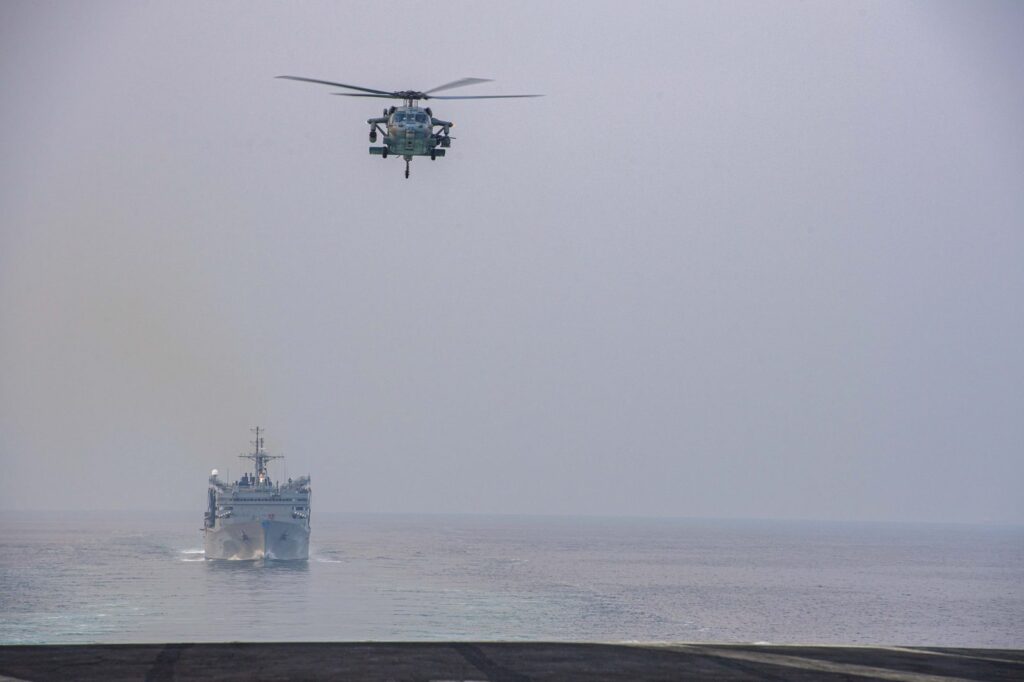
US forces struck two Iranian rocket launchers on Larak Island in the Strait of Hormuz on Sunday after observing preparations to fire sea mines into the waterway, US Central Command said. Iran’s Islamic Revolutionary Guard Corps retaliated Monday with ballistic missile strikes on US military positions in Jordan and fired on American vessels in the strait, marking the first publicly confirmed exchange of strikes in roughly a month.
What Happened
CENTCOM said the Larak Island strike targeted launchers that had been positioned to deploy sea mines, a tactic Iran has used before to threaten shipping through Hormuz. It was the first US strike on Iran since a wave of attacks on July 29 that hit dozens of IRGC targets, including command centers and missile and drone facilities.
Iran’s Response
The IRGC said its retaliatory strikes “destroyed the technical and repair infrastructure, as well as the enemy fighter deployment sites” at the Jordan bases identified as the origin of the Larak Island strike, according to Iranian state media. Iran also fired on US vessels transiting the strait.

Six Months In
Iranian President Masoud Pezeshkian said Monday that Iran is “not looking for war” but would “never sit still in the face of any aggression,” while Deputy Foreign Minister Kazem Gharibabadi said the US “needs to learn a serious lesson” over the Larak Island strike. Shipping traffic through the Strait of Hormuz has fallen roughly 95% since the war began, from more than 100 vessels a day before February to about five a day now.
The exchange comes roughly six months after the US and Israel first struck Iran on February 28, and the toll on the domestic economy has been steep in the meantime. The Strategic Petroleum Reserve has fallen to about 289.7 million barrels, its lowest level since 1983, down from roughly 415 million barrels before the February strikes, after President Trump authorized a 172-million-barrel release in March following Iran’s moves to restrict Hormuz shipping. The national average price of gasoline has stayed above $4 a gallon every day this month, standing at $4.09 as of late August, on pace to be the most expensive August at the pump on record.
The Defense Industry Angle
The prolonged conflict has also fueled a boom in military contractors. Hypersonic missile startup Castelion raised $1 billion in a Series C funding round this month, reaching a $13 billion valuation, to expand production of its Blackbeard missile under a Pentagon framework agreement that could be worth more than $500 million over two years.
Related from BeezLoop: Trump Won't Say If US Struck Iranian Ship, Floats Keeping Iran's Oil Like Venezuela, US Strike Hits Iranian Wedding, Killing Several People Amid Escalating Conflict and Iran Accuses US of Manipulating Energy Markets Over Hormuz Claims.