
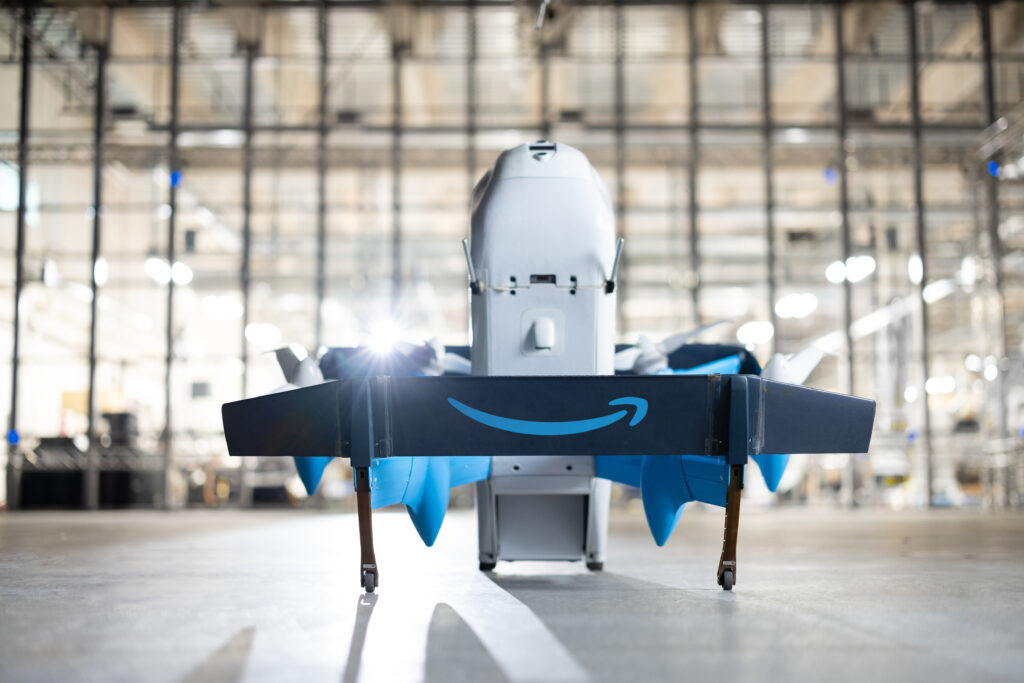
Amazon announced Thursday that its Prime Air drone delivery service will expand to nearly 500 US cities and towns by the end of 2026, a sixfold jump from its current footprint of 11 metro areas across seven states. The company says orders under 5 pounds, which it estimates covers more than 60 percent of its most commonly purchased items, can arrive in as fast as 30 minutes. Amazon Prime members get free drone delivery on orders of $50 or more, with a $2.99 fee below that threshold. Prime Air’s leadership has said the company is targeting 1 million drone deliveries this year.
What’s Actually Driving This
Amazon frames the expansion as a convenience upgrade, and for a narrow slice of orders, cosmetics, over-the-counter medication, small household items, it genuinely is one. But a sixfold jump in a single year isn’t a company cautiously testing a new service; it’s a company that has decided the regulatory and safety questions are settled enough to scale fast. Amazon’s drones operate under an FAA waiver that allows flight beyond the operator’s direct line of sight, using an automated detect-and-avoid system rather than a human pilot watching the airspace in real time. That’s a meaningfully different safety model than a delivery truck driven by a person who can see and react to what’s directly in front of them, and it’s being deployed across residential neighborhoods at a scale that hasn’t really been tested before.
The Trade-Off That’s Easy to Miss
The more interesting question isn’t whether drone delivery works, early data suggests it does, it’s what residents in these 500 towns are actually consenting to by living in a drone corridor. Low-altitude commercial drone traffic over private property raises real questions about noise, sightlines, and the optical sensors these drones need to navigate safely, sensors that are, functionally, cameras pointed at whatever is below them during flight. None of that makes the technology illegitimate. It does mean the decision to bring hundreds of daily drone flights into a neighborhood’s airspace is being made almost entirely by Amazon and the FAA, with very little direct input from the people who’ll be living underneath the flight paths.
Convenience at this speed is real. So is the fact that nobody in these 500 towns got a vote on whether they wanted it.
What do you think? Is 30-minute drone delivery worth the tradeoff in neighborhood airspace and privacy, or should residents get more say before a city gets added to Amazon’s drone map? Let us know your thoughts in the comments on BeezLoop.com!
Related from BeezLoop: Qualcomm and Amazon Announce Multi-Year Deal to Build Custom AI Data Center Chips, Shares…, Amazon Shutting Down Mechanical Turk After 21 Years and The Bipartisan Rebellion Against Big Tech's Water-Gulping, Power-Grid-Squeezing AI Factories.