
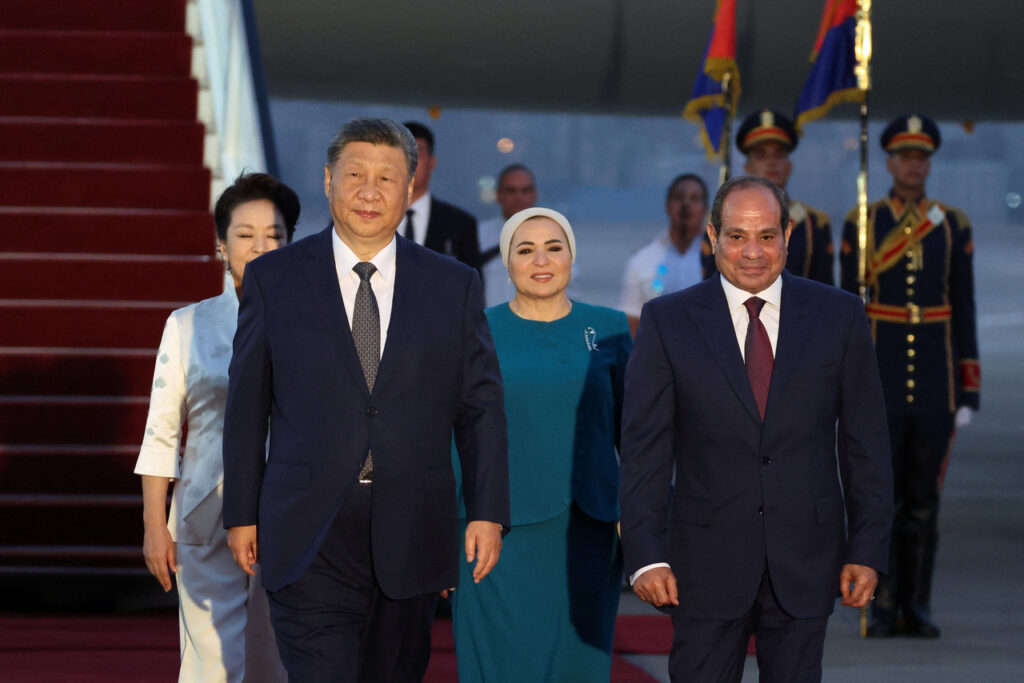
Chinese President Xi Jinping landed in Cairo this week for his first visit to Egypt in ten years, met by President Abdel Fattah el-Sisi at the airport on September 1. The two countries marked 70 years of diplomatic ties with matching opinion pieces published in Egypt’s state-run press, and Xi and his wife toured the Grand Egyptian Museum in Giza. Al Jazeera and reporting from the same outlet both cover the visit in detail.
Timing Isn’t an Accident
Xi is showing up in the Middle East less than a year into a war between the U.S., Israel, and Iran that has already spiked oil prices and rattled governments across the region. Egypt has stayed largely on the sidelines of that conflict while absorbing its economic fallout, from shipping disruptions to energy costs. China picking this exact window to send its president is a straightforward bet: when a region’s traditional security guarantor is consumed by a shooting war, there’s an opening for whoever shows up with checkbooks and infrastructure deals instead of airstrikes.
What China Actually Wants
Egypt controls the Suez Canal, sits at the center of Chinese trade routes to Europe and Africa, and has been a Belt and Road partner for over a decade. A decade without a Xi visit doesn’t mean China wasn’t paying attention. It means Beijing was building the relationship through trade and investment rather than head-of-state photo ops, and only bothered with the photo op once there was a moment worth capitalizing on.

The U.S. Should Notice, Not Panic
Every time a rival power shows up somewhere the U.S. has taken for granted, the instinct in Washington is to treat it as an emergency. It isn’t one yet. Egypt still depends heavily on U.S. and Gulf-state support, and one state visit doesn’t rewrite that. But it’s a reminder that alliances built on decades-old assumptions don’t hold themselves together automatically, especially while American attention and resources are tied up in a war on the other side of the same region.
The Bigger Picture
Xi’s trip is a three-day visit, not a treaty. What it signals matters more than what it changes overnight: while the U.S. is consumed with Iran, China is quietly courting the countries caught in the blast radius. That’s worth tracking regardless of how the current war ends.
Related from BeezLoop: A B-2 Bomber Overhead, Eight Tech CEOs at the Table: Trump Pulls Out All the Stops for Xi…, The US and China Just Moved Their Tariff Deadline Two Months and Trump Blamed China for the Fentanyl Crisis.