

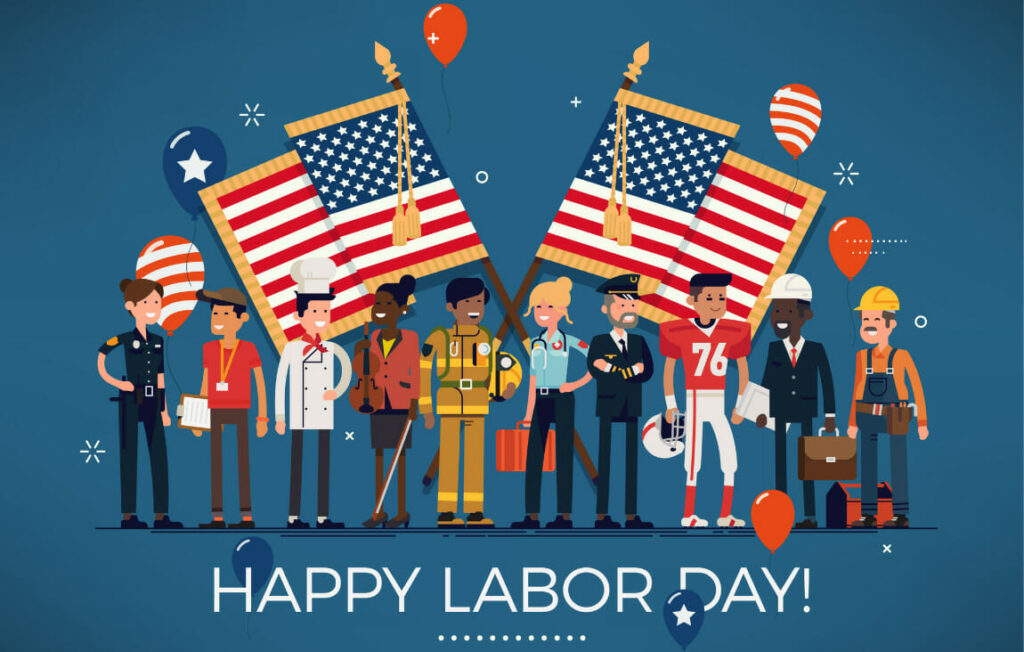
Labor Day did not start as an excuse for a mattress sale or a last cookout before school starts. It started because American workers were striking, sometimes dying, to get a five-day workweek and something close to a living wage, and the federal government needed a way to defuse that anger without admitting the anger was justified.
A holiday born out of a strike the government crushed
The direct line to the federal holiday runs through the Pullman Strike of 1894. George Pullman, who built luxury railcars and housed his workers in a company town outside Chicago, cut wages after an economic downturn but refused to lower the rent he charged those same workers in Pullman-owned housing. Employees walked out in May 1894, and Eugene Debs’s American Railway Union turned it into a national boycott of any train pulling a Pullman car, paralyzing rail traffic across much of the country.
President Grover Cleveland sent federal troops to break the strike over the objection of Illinois Governor John Altgeld, and by the time it ended in July, roughly thirty people were dead. Congress had actually passed a bill establishing Labor Day as a federal holiday weeks earlier, and Cleveland signed it into law on June 28, 1894, days before the strike’s violent climax. Historians have long read the timing as a conciliatory gesture: a largely symbolic concession to the labor movement offered in the same breath as the government was sending in troops against it.

Nobody agrees on who actually invented it
The founding story is murkier than the plaque-and-parade version suggests. Credit is usually split between two men with nearly identical names: Peter J. McGuire, a New York carpenter and co-founder of the American Federation of Labor, and Matthew Maguire, a machinist and secretary of the Central Labor Union in New Jersey. McGuire claimed the idea in an 1897 article and had the backing of AFL leader Samuel Gompers, and his gravestone in Pennsauken, New Jersey still reads “Father of Labor Day.” But the grand marshal of New York’s original 1882 labor parade said at the time that it was Maguire who proposed it. Maguire was also a more openly socialist figure than McGuire, which historians have suggested is part of why his claim got buried for decades. The dispute has never been fully settled, which is a fittingly messy origin for a holiday built on labor’s internal disagreements.
From general strike energy to grill smoke
The first Labor Day parade, in New York City on September 5, 1882, was organized labor showing its numbers in the street: unpaid workers marched past police skepticism to demand recognition. Within twelve years it was a federal holiday, and within a few decades after that it had drifted into something closer to a seasonal marker than a political statement. Retailers turned it into an end-of-summer sale weekend. Suburban calendars turned it into the last barbecue before school starts. The version most Americans experience now has almost nothing to do with the eight-hour-day organizing that produced it, and that drift is not an accident so much as the predictable fate of a protest holiday that got adopted by the institutions it was protesting.
Where American labor actually stands in 2026
The union membership rate held at 10.0 percent in 2025, according to the Bureau of Labor Statistics, essentially unchanged from the year before and a fraction of the 20 percent-plus rates common in the early 1980s. Public-sector workers unionize at more than five times the rate of private-sector ones, 32.9 percent versus 5.9 percent, which tells you plainly where the last strongholds are. Younger workers, ages 16 to 24, have the lowest membership rate of any age group at 4.7 percent, even though polling has repeatedly shown younger workers expressing more favorable views of unions than older generations do. The interest is there in a way the membership numbers do not yet reflect.
The paycheck math is not encouraging either. Real, inflation-adjusted average hourly earnings grew by roughly a tenth of a percent over the twelve months ending mid-2026, according to BLS data, meaning most of the raise workers see on paper gets eaten by the cost of living before it reaches anything they can save. Beezloop’s own coverage of the August jobs report found the same pattern: payroll growth beating forecasts while workers ask whether the numbers are actually landing in their pockets.
Layer the gig economy on top of that and the picture gets more precarious rather than less. Millions of workers now do jobs that come with no union to join even in principle, classified as independent contractors with no employer-sponsored benefits, no guaranteed hours, and no legal path to collective bargaining under current federal law. That fight over classification, not the picnic, is the closest thing the labor movement has to its own Pullman moment right now: a structural argument over who counts as a worker with rights at all.
What’s left of the original holiday
None of that is an argument that the barbecues and mattress sales are some kind of betrayal. Holidays drift; that is what holidays do. But it is worth noticing, once a year, that the day off exists because people organized, struck, and in some cases died to get a shorter workweek and some leverage against employers who held all the cards. Whether that leverage is coming back depends less on nostalgia for 1894 than on whether today’s workers, gig and otherwise, decide the fight is worth having again.
Sources: Wikipedia, “Pullman Strike” · History.com, “The Controversy Over Who Founded Labor Day” · U.S. Bureau of Labor Statistics, “Union membership rate 10.0 percent in 2025” · U.S. Bureau of Labor Statistics, “Real average hourly earnings increased 0.1 percent” · Beezloop News, “US Adds 162,000 Jobs in August”