
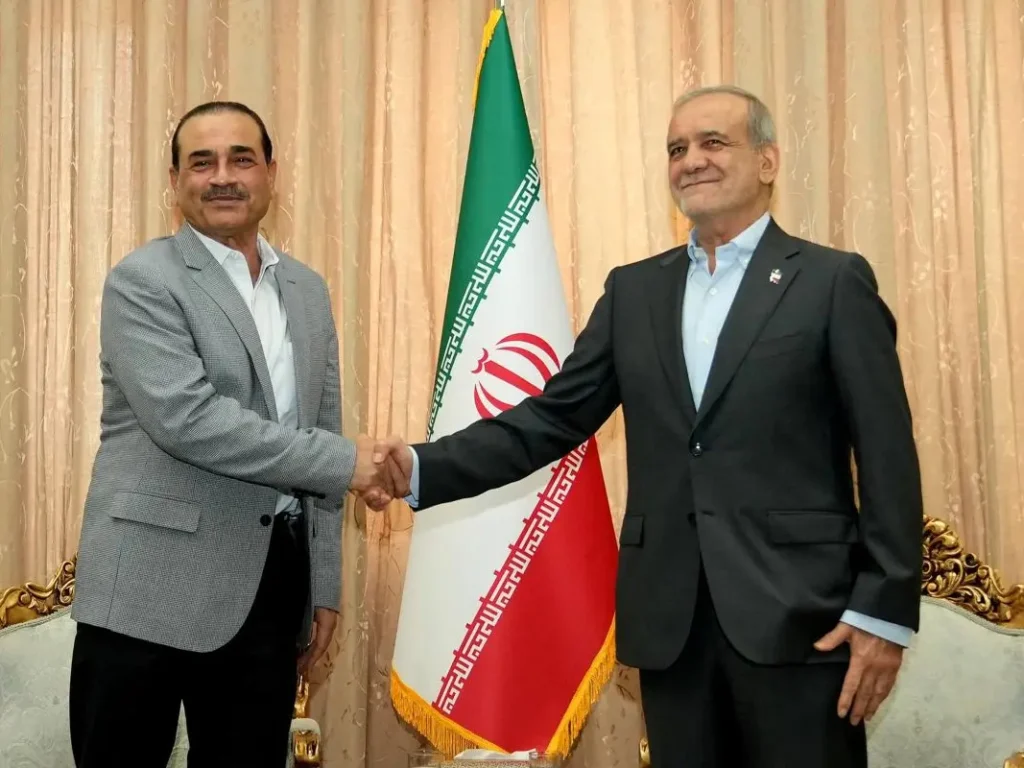
Iran says it could reopen the Strait of Hormuz within a week if the U.S. takes its deal. Foreign Minister Abbas Araghchi said Sunday that Tehran’s seven-day proposal is “still on the table”: the strait would reopen on the sixth day and talks with Washington would start on the seventh, Reuters reported. The catch is Iran’s conditions, which the U.S. hasn’t accepted.
The same day, the State Department told Americans in the Middle East to “exercise heightened vigilance due to the complex security environment,” warning that Iran or its proxies could target Americans and that fighting “has the potential to escalate rapidly,” ABC News reported.
What is Iran’s seven-day Hormuz proposal?
Iran first floated it in September, after a short-lived ceasefire fell apart. In exchange for reopening the strait, Iran wants the U.S. to:

- End its naval blockade of Iranian ports.
- Lift sanctions on Iran’s oil exports.
- Agree to a ceasefire on all fronts in the region, including Lebanon.
Araghchi said the U.S. sent back comments that Iran is still reviewing. But Iran’s security chief said last week that talks have stalled because Washington didn’t address all seven of Iran’s conditions. The core fight is over order: the U.S. wants Iran’s nuclear program dealt with first, and Vice President JD Vance has said Iran must make a “meaningful” cut to its uranium enrichment. Iran wants to start with the strait. The U.S., for its part, says the strait is already open and under its control.
Why does the Strait of Hormuz matter for gas prices?
Before the war, about a fifth of the world’s oil and liquefied natural gas passed through it. It’s running at roughly two-thirds of normal now, and ship attacks this month are the highest since the war began in February. U.S. oil topped $100 a barrel Friday. Gas is still drifting down, at about $4.30 a gallon nationally, per AAA, but a real reopening is the single biggest thing that could bring it back toward $3, where it was a year ago.
The BeezLoop Take
Iran’s offer isn’t generous. It asks the U.S. to drop its main leverage, the blockade and oil sanctions, in exchange for reopening a waterway Iran shouldn’t be blocking in the first place. And Washington is right that a deal that ignores the nuclear program would just set up the next war.
But eight months in, with oil over $100 and Americans being told to watch their backs across the region, the administration owes the public more than “we’re not going to rush.” If there’s a counteroffer, voters paying $4.30 a gallon should hear what it is.
The open question: will the U.S. and Iran agree on what gets negotiated first, the strait or the nuclear program, before Election Day?
Also on BeezLoop: oil topped $100 again as ships were hit in Hormuz, and Trump ruled out a nuclear strike on Iran.
Sources: Reuters, via The Spokesman-Review · ABC News · AAA · Mint (video)