
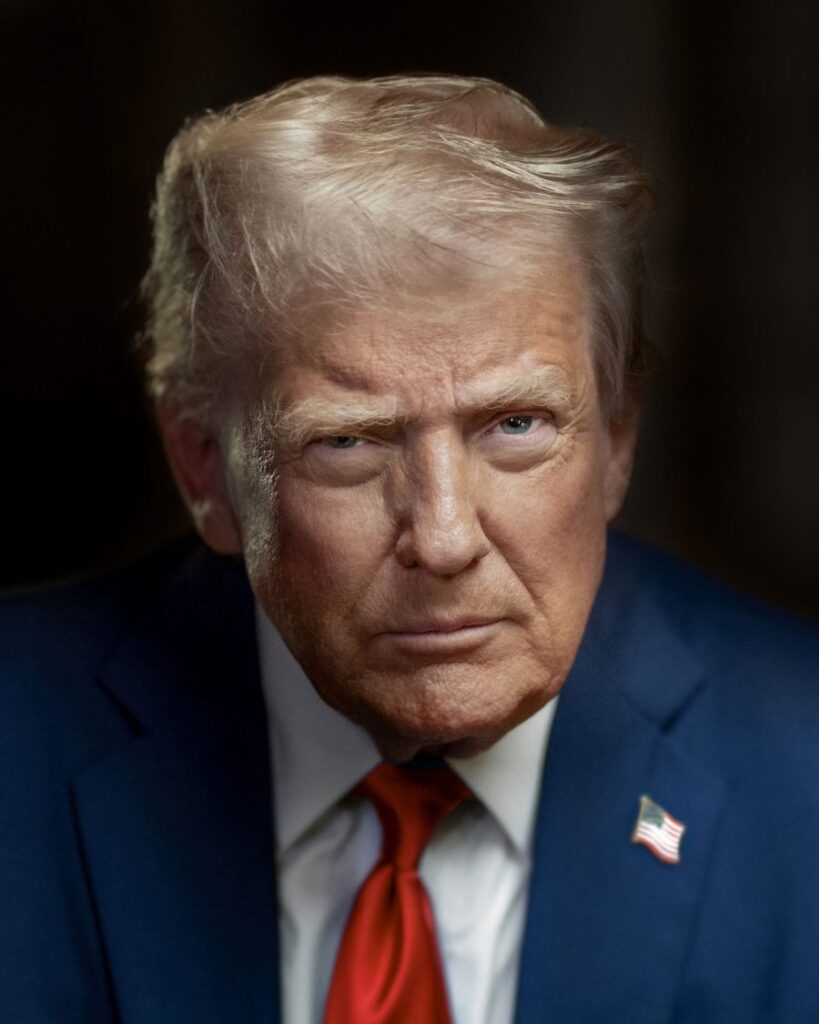
Since returning to office in January, President Trump has posted dozens of AI-generated images and videos to Truth Social, and roughly half of them landed in just the last two months. The pace has become the story as much as any single post: a sitting president using synthetic media as a regular communications tool, not a one-off gag.
The catalog by now is long. On August 1, Trump posted a flood of AI images recasting himself as Elvis Presley in a white jumpsuit, as a Revolutionary War general, as a younger version of himself, and as a giant figure looming over Greenland captioned “Hello Greenland.” NBC News and TIME have both tracked the broader pattern, and outlets including AOL have chronicled individual posts as they landed.
What has he actually posted?
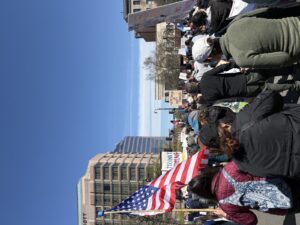
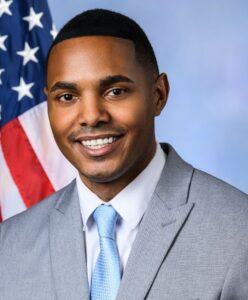
Beyond the vanity images, several posts crossed into pointed attacks or shock value. Trump shared an altered video mocking Democratic leaders Hakeem Jeffries and Chuck Schumer with fake audio, showing Jeffries in a cartoon sombrero. After nearly seven million people turned out for “No Kings” protests in October, his account posted an AI video of himself as a crowned king in a fighter jet, dumping sludge on the crowds below, a clip Variety traced back to a meme account before Trump’s reshare pushed it to a far larger audience. Another video imagined a future “Trump Gaza,” complete with belly dancers, a golden Trump statue, cash raining from the sky, Elon Musk eating pita bread, and a resort branded with his name.

In February, the account posted a video depicting Barack and Michelle Obama with their heads placed on ape bodies, dancing in a jungle scene alongside other Democratic figures rendered as animals. The White House initially defended the post, then backed away from it and blamed a staffer. A Variety post reporting on the video is embedded below.
The religious imagery drew its own backlash. In April, Trump posted an AI image of himself in flowing robes healing a sick man, surrounded by an American flag, eagles, and the Statue of Liberty, an image widely described as casting him in a Christlike pose. It came days after he’d criticized Pope Leo XIV, and after conservative commentators called the image blasphemous, Trump took it down and told reporters he’d only meant to depict himself “as a doctor.” It followed an earlier AI image that dressed him as the pope.
What are the newest examples?
Two posts from the final days of August pushed the pattern somewhere it hadn’t gone before: military disinformation during an active conflict. On August 30, as the US resumed strikes on Iran, Trump posted an AI-generated video captioned “Kharg Island being blown to smithereens!!!” showing an aerial view of explosions tearing through Iran’s main oil export terminal, which handles roughly 90% of the country’s crude exports. No such attack happened. A US official told Reuters the overnight strikes had hit only two missile launchers on Larak Island, and Iran’s state oil company called the claim “laughable,” saying operations at Kharg were continuing normally. A fact-check ran the footage through Hive Moderation, ZeroGPT, and FauxLens, and all three flagged it as AI-generated, pointing to the mismatch between the video’s dramatic explosions and the eerily calm pilot supposedly watching them. The clip was realistic enough to send reporters and, per Vice President JD Vance, Iranian officials scrambling to figure out whether an actual strike had occurred before the White House let it stand as a message rather than a report. It’s the first time the account’s AI habit has bled directly into an active shooting war.
Two days earlier, the target was Canada. Trump posted a clip of himself walking up to a Lake Ontario road sign, kicking it over, and bolting on a replacement reading “Welcome to Lake America” under a US flag, then breaking into his signature dance. A companion video showed an army of geese with his hairstyle marching on a Toronto-like skyline to the Hawaii Five-O theme, captioned as a nod to “Donald Ducks.” Both riff on an actual executive order Trump signed directing the Interior Department to rename Lake Ontario “Lake America” on federal maps and documents, issued after trade talks with Canada collapsed and the US imposed 50% tariffs on Canadian goods, with Canada countering with tariffs of its own on roughly $20 billion in American goods. The order only changes what US government paperwork calls the lake, not the lake itself, which didn’t stop HuffPost and other outlets from treating the video as the more memorable half of the story.
Is this about winning an argument, or something else?
None of this fits neatly into ordinary political messaging. A press release makes an argument; these posts mostly just put Trump’s face into a fantasy, whether that fantasy is heroic, historical, or juvenile. Experts quoted by TIME and NBC News describe the shift as part of a broader “meme-ification of politics,” where a head of state communicates less through statements and more through images built to be screenshotted and shared, especially among younger audiences who get their news through feeds rather than briefings.
Whether it works is a separate question from whether it’s unusual, and it is unusual. No modern president has treated AI slop as a routine part of the job the way Trump’s account now does. Some posts read like attempts to rewrite how a moment gets remembered, turning a protest against him into a punchline instead of a headline. Others don’t seem aimed at persuading anyone of anything, just at keeping his name and face in constant, chaotic circulation. Whether that reflects a deliberate strategy from his team or something more personal isn’t something a news story can answer, and BeezLoop isn’t going to pretend otherwise. What’s documented is the behavior itself: a volume and consistency of AI self-mythologizing that has no real precedent in the office.
The bigger open question is what it trains audiences to expect. If the presidency’s official channel is also a meme account, the line between a real statement and a joke gets blurrier every week, and that’s true whether the joke lands or not.
Related from BeezLoop: Trump Says Bombardier Jets Can No Longer Be Sold in the US Unless the Canadian Company…, AI Slop Watch: Why We're Tracking Trump's Truth Social AI Habit Every Friday and Republicans to Hold First-Ever Midterm Convention in Dallas, Dubbed 'Trumpapalooza'.