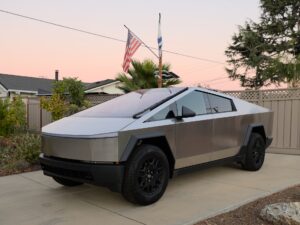

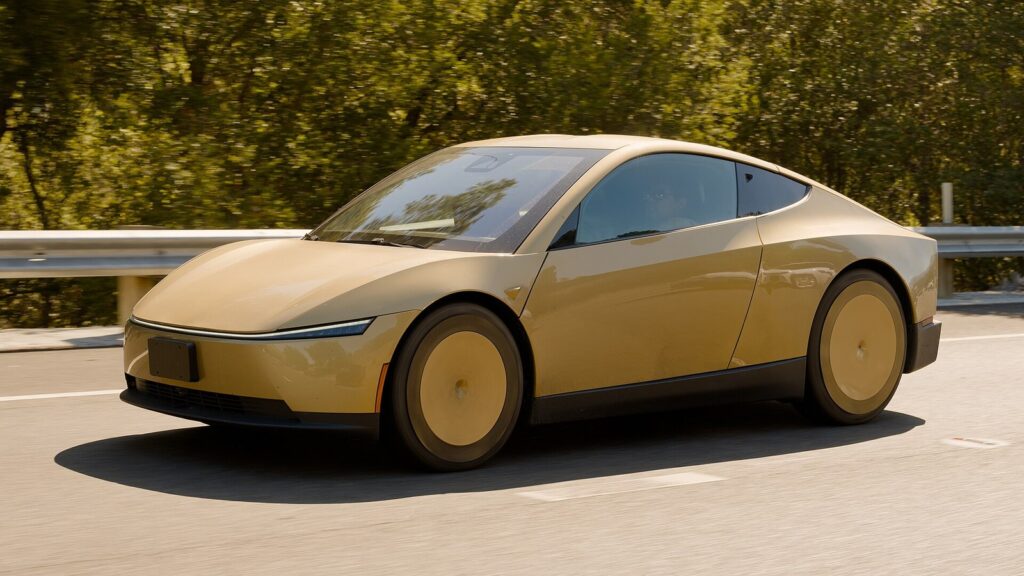
Tesla’s Cybercab, the two-seat robotaxi with no steering wheel and no pedals, already has eight crashes on file with federal safety regulators. That’s about two months after Tesla started selling rides in it in Austin. The reports, filed under the National Highway Traffic Safety Administration’s crash-reporting order, were first tallied by Electrek on Nov. 16.
Four of the crashes happened in Tesla’s driverless ride service in Austin, all at 5 mph or less, with no injuries. The other four happened during supervised testing on public roads in Austin, Philadelphia, Lehi, Utah, and Tampa, with a test driver aboard and Tesla’s driver-assist system engaged. One of those was a 53 mph collision on a Philadelphia highway at 2:19 a.m. Two of the test crashes caused injuries.
What happened in the eight Cybercab crashes?
Here’s what the federal filings show, according to The Auto Wire, which pulled the raw NHTSA data on Nov. 18:

- Austin, August (driverless): drove into a large, water-filled pothole in a parking lot with a safety monitor aboard.
- Austin, September (driverless): an empty Cybercab was hit by a car backing out of a parking space. It was towed.
- Austin, September (driverless): an empty Cybercab stopped in traffic was rear-ended by a pickup truck. Also towed.
- Austin, September (driverless): with a rider inside, it drove over a raised concrete edge, crossed a sidewalk and went down a curb.
- Philadelphia, September (test driver): hit a passenger car at 53 mph on a highway. The other car’s airbag went off and Pennsylvania State Police are investigating.
- Austin, September (test driver): an SUV hit the Cybercab at about 5 mph on a highway. Someone was hospitalized with a minor injury.
- Lehi, Utah, September (test driver): an SUV hit the Cybercab while it turned right at 11 mph. One minor injury.
- Tampa, September (test driver): the Cybercab was stopped on a highway at 10:37 p.m. when a car hit it. Property damage only.
The filings don’t assign fault, and in several of these the Cybercab was the one that got hit. But we can’t read Tesla’s side of the four test crashes. Tesla redacted the written narratives on all four, marking them as possible confidential business information. GM and Ford don’t redact theirs. The test cars also had a steering wheel installed, so a human could grab it. Customers riding in the production Cybercab don’t have one.

Can anyone take over a Cybercab if something goes wrong?
Not in the way you’d take over a normal car. The production Cybercab has no steering wheel, no brake pedal and no gas pedal. The only manual control is an on-screen joystick on the 21-inch touchscreen, which can nudge the car forward, back and sideways at up to 2 mph. Tesla’s ownership rules say it’s for short moves and isn’t meant for public roads, Not a Tesla App reported. If the car makes a bad call at 35 mph, the person inside can’t steer around it or stomp a brake.
That’s exactly what federal regulators are asking about. NHTSA opened an audit of Tesla’s safety certification on Sept. 3, the day paid rides began, and followed up with a Special Order demanding sworn answers to 21 questions. Among them: how the Cybercab meets a federal rule that says brakes “shall be activated by means of a foot control,” what the touchscreen controls let riders do, and whether Tesla relied on temporary steering wheels and pedals to certify the car before taking them out. The order threatens civil penalties of up to $139 million for not answering.
Tesla asked for more time, and NHTSA pushed the deadline from Sept. 30 to Oct. 30, EVwire reported. Neither Tesla nor NHTSA has said publicly whether Tesla has answered. Tesla hasn’t commented on the crash reports either.
Where can the Cybercab drive, and how fast?
Only inside fenced-off service zones. Tesla’s Austin robotaxi area grew to an estimated 440 square miles on Nov. 9, per EVwire, but Tesla didn’t say whether Cybercabs cover all of it. Electrek reports the robotaxi service sticks to low-speed routes and largely avoids highways, which fits with every driverless crash happening at 5 mph or less. Tesla opened Cybercab rides in Dallas on Nov. 19, its second city.
NHTSA wants Tesla to spell those limits out. The Special Order asks for every place the Cybercab operates and its “maximum speed, road type/geometries, geographical limits, time-of-day restrictions.” Tesla hasn’t published those numbers. It’s also now taking orders from individual buyers at $29,990 plus a required $299-a-month autonomy subscription, with deliveries targeted for December.
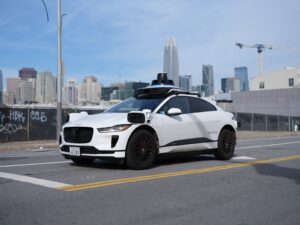
If you live in Austin or Dallas, you’re already sharing the road with these cars. If you’re in Florida, Tesla is testing them here too, as the Tampa report shows. Compare that with Waymo, which just recalled its robotaxis over closed freeway lanes, and a Miami police cruiser that crashed into a Waymo. We covered the Cybercab’s planned launch back in August.
The BeezLoop Take
Eight crashes in two months isn’t proof the Cybercab is dangerous. The driverless ones were low-speed bumps at parking-lot speed, and several weren’t its fault. The problem is what we can’t see. Tesla is redacting what happened in its test crashes, hasn’t published its speed and area limits, and is selling a car with no wheel or pedals to the public while the federal government is still asking whether it meets basic brake rules. That’s backwards. Show the data first.
If the Cybercab only works safely at low speeds inside a fence, what happens when Tesla sells it to owners who want to drive it on the highway?
Sources: NHTSA Special Order AQ26002 · Electrek · The Auto Wire · EVwire · Not a Tesla App · Teslarati · Auto Aspect (video)