
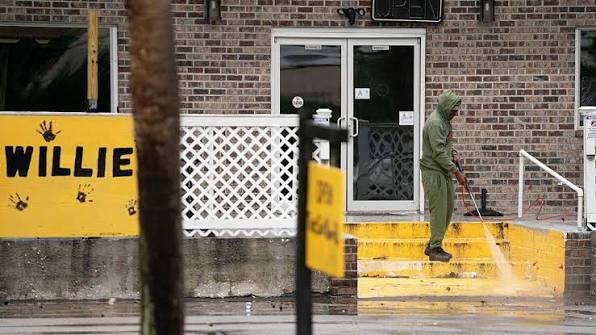
Three people are dead and four are hurt after a shooting at an after-hours club in Richland County, South Carolina. Investigators say it may have started with an argument over a cellphone.
What is known
The Richland County Sheriff’s Department is investigating an overnight shooting at an after-hours strip club. An argument turned into gunfire.
- Three people killed.
- Four more injured.
- Investigators believe the dispute may have begun over a cellphone.
Names have not been released. No arrest has been announced. The sheriff’s department has not said how many people fired or whether anyone is in custody.

That is genuinely all that has been confirmed. Anything more detailed circulating right now is ahead of the department.
What an after-hours club is
Worth explaining, because it matters to how these scenes unfold.
After-hours venues operate past the legal cutoff for alcohol sales, which in South Carolina is 2 a.m. They tend to fill up exactly when licensed bars empty out, they are frequently outside normal inspection and security rules, and they concentrate a lot of people who have been drinking for hours into a space with limited staffing.
Police departments across the country have flagged them as a recurring problem for precisely this reason.
The BeezLoop Take
Seven people shot over a phone. That is the sentence, and no amount of context makes it make sense.
We have now written this story repeatedly in different cities in a matter of weeks. A Memphis woman got 30 years for killing a co-worker over a drive-thru order. A seven-month-old in Spartanburg was shot in his mother’s bed in a targeted attack, 40 miles up the road from here. Eight people were shot at a Florida memorial gathering held for a teenager who had been killed. The specific dispute changes. The structure does not: a small conflict, a gun within reach, an outcome nobody can take back.
The after-hours element is the part with an actual policy handle, and it is a local one. These venues operate in a gap between liquor law and zoning enforcement, and county councils generally leave them alone until something like this happens. Richland County has an answer available that does not require anyone in Washington to agree about anything.
What we would resist is the reflex to make this a national gun-policy story before the facts are in. Nobody has said how many shooters, what weapons, or whether anyone involved was legally barred from possessing one. Those answers determine which policy argument this case even belongs to, and they are not available yet. Anyone already certain what this proves is telling you about themselves.
Three families are being notified today. That is the only thing about this story that is finished.
The question
What stops an argument over a phone from becoming seven gunshot victims? And why do after-hours clubs keep producing these scenes while county officials treat them as somebody else’s problem?
Sources: WIS TV · Live 5 News · WBTV