
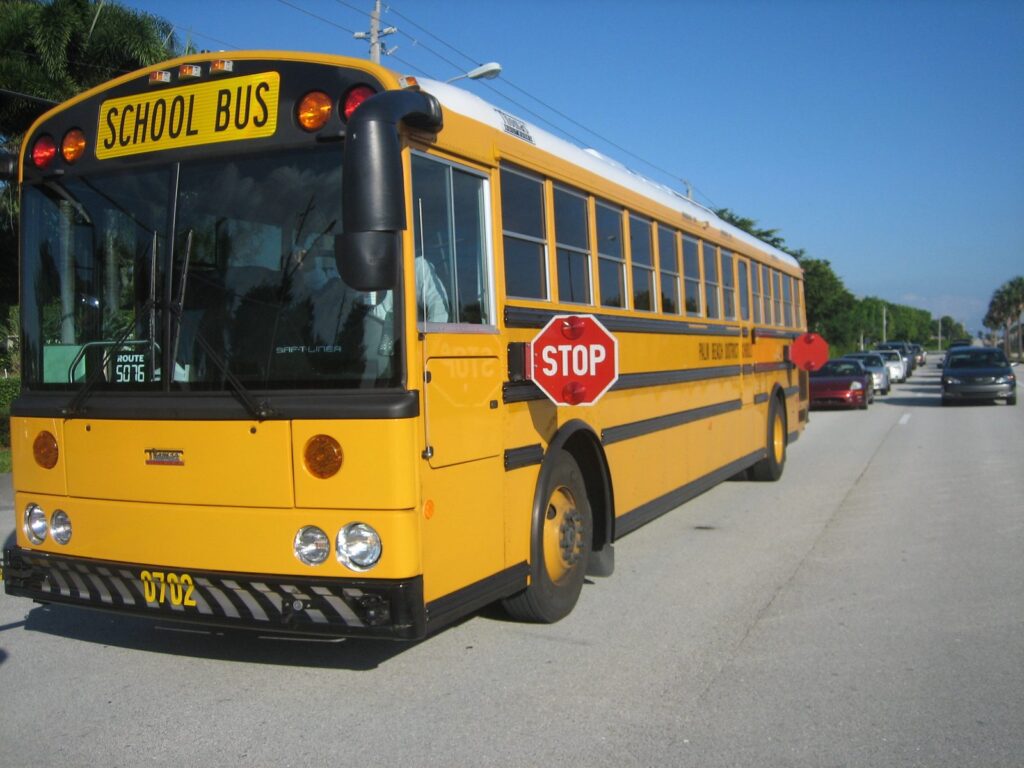
Pittsburgh Public Schools welcomed students back for the 2026-27 school year on Monday, August 24, with its full fleet of buses now equipped with AI-powered stop-arm cameras through a partnership with BusPatrol that’s designed to catch drivers who illegally pass a stopped school bus. The district first partnered with BusPatrol in 2023, and the program has been building toward full enforcement since.
Data the district released for the 2024-25 school year found that just under 11,000 vehicles passed a stopped Pittsburgh school bus with its red lights flashing between August 26, 2024 and June 12, a volume the district has cited as the reason for expanding camera enforcement rather than relying on driver self-reporting or occasional police presence at bus stops.
How the Enforcement Actually Works
The cameras are mounted on the buses themselves and use AI detection to identify vehicles that pass while a bus’s stop-arm is extended and its lights are flashing, generating citations without requiring an officer to witness the violation in person. Districts using this kind of system elsewhere have typically run an initial warning period before citations carry fines, giving drivers a chance to adjust before enforcement has real financial consequences.
The Debate Around Camera Enforcement
Automated traffic enforcement programs like this one have drawn scrutiny in other cities over concerns about ticketing errors and the financial arrangements between school districts and private camera vendors, who often take a share of citation revenue rather than charging a flat fee. Pittsburgh Public Schools has faced its own questions about ticketing accuracy from local reporting, even as the underlying safety numbers, nearly 11,000 illegal passings in a single year, make the case for some form of enforcement difficult to argue against entirely.
Related from BeezLoop: Robotics Startup Skild AI Triples Its Valuation to $14 Billion, Lucas Fire Grows to Nearly 3,500 Acres Along Mendocino-Lake County Line, Forcing Evacuations and Two Teens Arrested in Separate School Shooting Threat Cases in Kentucky and Massachusetts.