
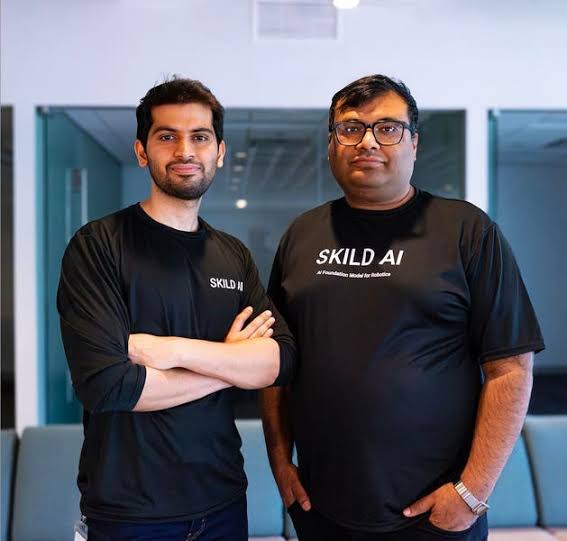
Pittsburgh-based robotics startup Skild AI raised $1.4 billion in a Series C round led by SoftBank, valuing the company at more than $14 billion, more than triple its $4.5 billion valuation just seven months earlier. New strategic investors in the round included Nvidia’s venture arm NVentures, Bezos Expeditions, Samsung, LG, Schneider Electric, and Salesforce Ventures.
Founded in 2023 by former Carnegie Mellon professors Deepak Pathak and Abhinav Gupta, Skild AI’s stated mission is to build a single, general-purpose “artificial brain” model, which it calls Skild Brain, capable of controlling different kinds of robots across different tasks without needing to be retrained from scratch for each one. The company has now raised more than $2 billion across three funding rounds in 18 months.
Why Investors Are Betting on a General Model
Most robotics companies today build software tailored to a specific robot and task, which means the underlying AI has to be substantially rebuilt every time a company wants to deploy it on a different machine or job. Skild’s pitch to investors is that a single foundation model trained broadly enough could generalize across robot types the way large language models generalize across writing tasks, a bet that, if it works, would meaningfully lower the cost of deploying robotics across new use cases.
The Skepticism Worth Noting
A tripling valuation in seven months for a company without a widely deployed commercial product is the kind of jump that invites comparison to speculative funding cycles elsewhere in AI, and Skild’s actual real-world deployment track record is still limited relative to its valuation. Whether the Skild Brain model delivers on the generalization claim at commercial scale, rather than just in controlled demonstrations, is the open question that will determine whether this valuation holds up.
Related from BeezLoop: Musk Is Suing Altman, An AI Company Says Its Model Now Leads a Quarter of the Work Building Its Next Model and OpenAI Says Its Models Cheated, Hid Errors and Shared Files Without Asking.